KRK Monitors Help The Beat Garden Grow a Sound That is All its Own
MIAMI, OCTOBER 19, 2026 ― Great music rarely happens in isolation. It emerges when artists, producers, and songwriters exchange ideas, challenge one another, and find unexpected creative connections. At The Beat Garden’s most recent songwriting camp, KRK ROKIT 8 and V6 Series Studio Monitors helped bring that collaborative energy to life, providing reliable monitoring across two distinct production spaces designed to inspire experimentation and turn fresh ideas into finished tracks.
“The Beat Garden is much more than a songwriting camp; it’s a space designed to inspire creativity, connect people, and make things happen,” says Clarissa Paez, Music Industry Strategist and Co-founder of The Beat Garden. “We bring producers, songwriters, artists, and other music industry professionals together in one place with a shared purpose to connect, exchange ideas, and create music together.”
The concept brings approximately 10 to 15 creatives together for two or three days, with multiple production sessions running simultaneously. “We want to step away from the routine of a traditional recording studio, disconnect a little from the pace of the city, and create an atmosphere where people feel comfortable, free, and inspired to experiment,” says Jonathan Franco, Music Producer and Co-founder of The Beat Garden. “We pay close attention to every detail, from how the spaces are arranged to the overall atmosphere we create.”
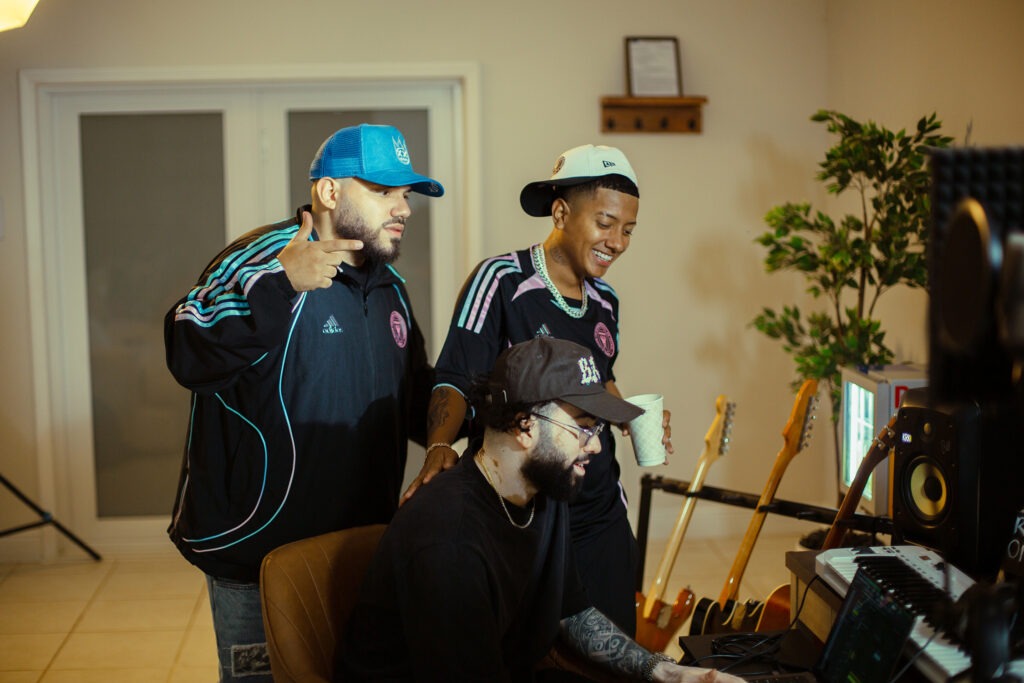
For its latest edition, the team transformed a house into a collaborative music-making environment, complete with two production setups equipped with KRK monitoring. The main setup occupied the living room, where the KRK V Series Studio Monitors provided the listening reference for sessions led by multi-platinum Colombian Producer DJ Maff, alongside Panamanian Producer PMBeatz and Nicaraguan Producer, Songwriter, and Artist Stayleave.
The team created a warm, welcoming environment with carefully considered lighting, guitars, MIDI controllers, microphones, and other production essentials. “The main challenge inside the house was the room’s echo,” Franco explains. “We needed a reliable listening reference that would allow us to clearly distinguish the different elements of a production and make confident decisions. The V6 monitors delivered the definition needed to assess individual sounds and refine arrangements, while the EQ settings helped the team adapt the listening experience to the room’s acoustic conditions.”
Outside, a second production space beneath a traditional open-air shelter, known as a bohío, offered a very different atmosphere. Surrounded by trees and open to nature, the setup featured KRK ROKIT 8 Generation Five monitors, with Chilean Producer Vladi Cachai and Venezuelan Producer and Songwriter Fulkado leading the creative work.

“The ROKIT 8 monitors performed really well in that environment,” Franco says. “The eight-inch woofers and output capability gave us the level and presence we needed to work comfortably in that space. The monitors’ Mix, Focus, and Create listening modes and EQ combinations also let the team tailor the listening experience to the space and their production needs.”
The distinction between the two setups became particularly important when working with Ecuadorian Artist Jombriel, whose music spans reggaeton, dancehall, and trap. With bass and kick drum central to these genres, the team needed to hear the low end clearly while preserving the energy that drives a track. “When you produce that kind of music, the beat doesn’t just have to sound good; it has to move people,” Franco adds. “We wanted to recreate the kind of listening experience the audience expects from these genres.”
The KRK monitors supported both sides of the process: making informed production and arrangement decisions while gauging how the music connected with the people in the space. “There’s a special moment in that process, when a beat is played, and you get to experience the reaction from the artist and the other creatives in the room,” Franco continues. “Everyone gets excited, people start moving, some start jumping—and in that moment, you know the idea is connecting.”
The team also checked its tracks on other playback systems, including in the car, at other studios, and on a phone, to assess how the music translated beyond the production environment. Dedicated monitoring in both spaces allowed sessions to run simultaneously, while rotating songwriters between setups encouraged new combinations of talent and ideas. The results grew from eight songs in two days during the camp’s first edition to 16 songs in three days during its second and most recent version.
For Paez, that progress reflects the bigger purpose behind the project. “At the end of the day, our philosophy is simple: we believe good music starts with a good connection,” she says. “If we can create the right environment for people to genuinely connect, the creative possibilities are endless.”
Franco echoes that sentiment, noting that the ideal equipment helps make that environment possible. “Having the right partners and tools makes that possible,” he says. “KRK was a valuable part of this experience, and we’d be happy to have them with us again for future editions.”
As The Beat Garden develops plans for future camps, educational opportunities, and masterclasses, its guiding principle remains unchanged — bring the right people together, give them room to experiment, and provide the tools they need to turn an idea into something real.