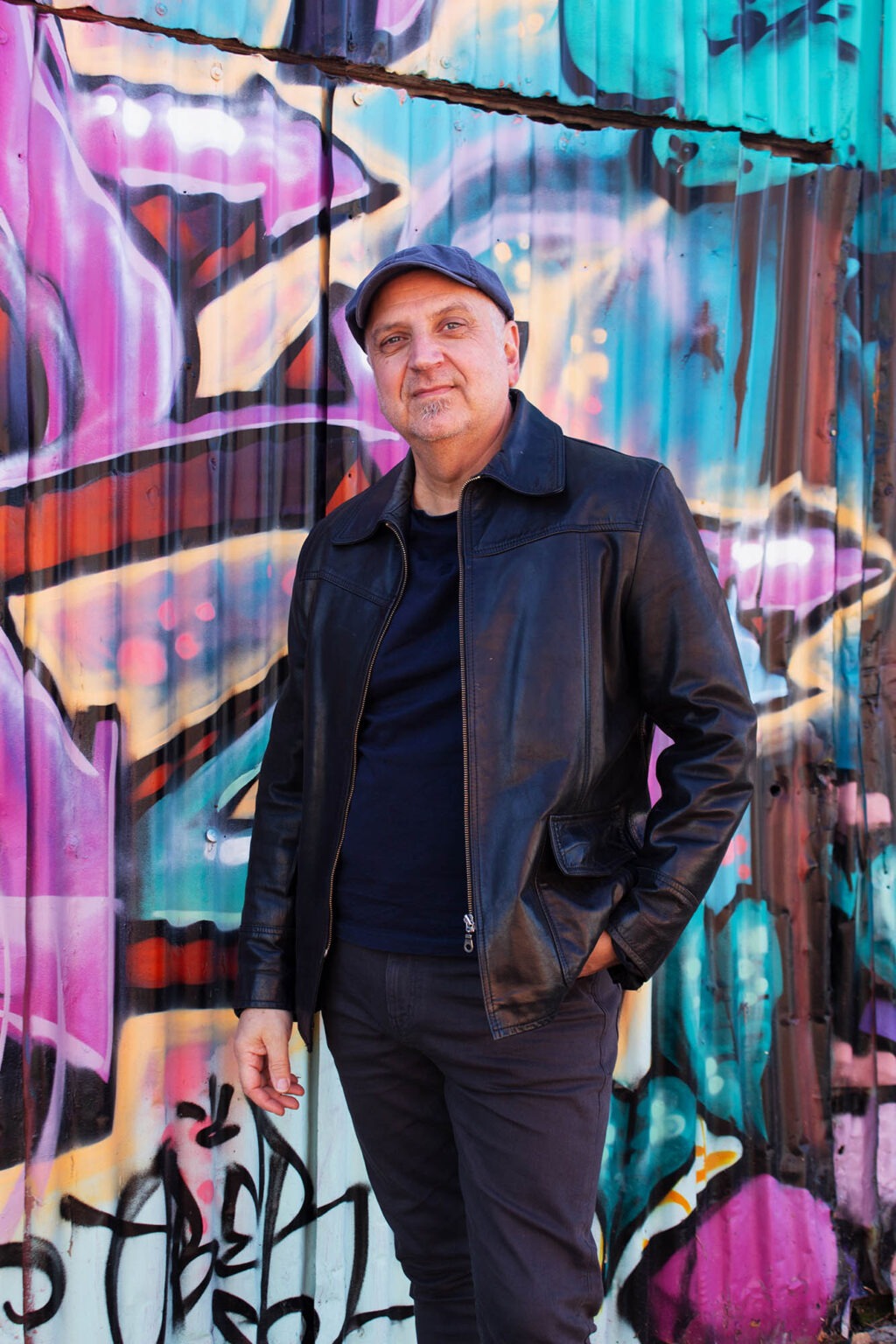
Con Raso, CEO and founder of music cloud platform Tuned Global
The ‘Superfan’ Economy: Music’s Most Valuable Audience in the Tech Era?
By Con Raso, CEO and founder of music cloud platform Tuned Global
The music streaming industry is shifting from passive, algorithm-driven consumption toward a “superfan” economy. By prioritizing community engagement, local repertoire, and direct patronage tools, platforms are evolving into participatory ecosystems. This transition represents a fundamental change in how artists generate sustainable revenue and how deeply listeners connect with music culture.
Industry research suggests that roughly one in five listeners qualifies as a superfan, and that that group accounts for the majority of music spending.

I recently joined a panel of music streaming leaders, where we discussed how the the future of music platforms lies in community, local scenes, and giving fans meaningful ways to participate, create, and shape what comes next
The session, titled The Future of Streaming in the Superfan Era, was moderated by Janishia Jones, CEO and Founder of Encore Music Tech Solutions. I was joined by Brian “Z” Zisook, Co-Founder and Executive Vice President of Global Operations and Head of Artist and Label Services at Audiomack; and Jordan Pettinato, Senior Director of Business Development at SoundCloud.
Streaming has been the dominant format for music consumption for more than a decade
In that time, the focus of many conversations in the industry has largely centered on catalogue size, subscriber growth, and personalisation algorithms.

But the next phase would look quite different. The focus is shifting from passive listening to active participation, from global charts to local scenes, and from broad audiences to the small group of deeply engaged fans who drive most of the revenue.
“We often conflate words like fans, followers, listeners and audience as the same thing, but they all actually mean something different,” said Audiomack’s Zisook.
“Someone could follow an artist, but that could simply be for timeline entertainment. They have no vested stake in that artist. They might not even know that it is an artist. They might find them to be funny.
“Superfans are an extension of that, meaning that they’re supporting [an artist] with [their] time and money. So, beyond just whatever it costs per month to subscribe to a DSP, they’re going out of their way to purchase merch.
“They’re going to see you when you are performing in their city. They’re joining your fan club. They want to buy a physical version of your album so that it’s tangible and they can hold it.”
Examples of how streaming experiences can adapt to the superfan era
Tuned Global’s Social Radio solution is a great example of how streaming experiences can become more participatory and community-driven. The format allows listeners, artists, and DJs to become creators themselves by hosting live shows that combine music mixing, commentary, and audience interaction.
In that sense, streaming platforms are increasingly evolving from passive listening services into participatory communities.
While all of us experts work with a different model, the common ground is clear: badges, leaderboards, and patronage features that give fans a way to publicly back an artist and unlock something in return.
The most useful thing a platform can do is enable communities to form organically, with superfans driving those groups, rather than platforms trying to manufacture them. Line Music in Japan, one of Tuned Global’s music backend clients, is one example of how these engagement mechanics can work at scale.
Line in Japan is like a WhatsApp of the rest of the world, and Line Music is their music streaming service, which is very successful in that market. In that case, it’s more about providing badges to superfans.
Line Music has a dedicated team that manages benefits for those superfans, including merchandise and meet-and-greets. The badges serve a social function as much as a transactional one, signaling fandom not only to the artist but to the rest of the community.
There’s this real engagement that’s occurring between the artist and the fan, and the fan really just wants to not only use that badge to show their fandom to the artists themselves, but it really is about community. So they want to show that badge to everyone else in the community and really vie for that as well.
Monetising the superfan phenomenon
Audiomack runs a parallel system through its Supporters feature, launched in 2021. Zisook described it as a patronage tool that lets fans purchase a support badge priced from 99 cents to $25, with the revenue sitting on top of standard streaming royalties.
Artists can offer extras in exchange, including merchandise discount codes, unlisted YouTube links, and presale ticket access.
“This is revenue that is bucketed on top of traditional royalties,” Zisook said.
Patronage features add a new revenue layer, but the underlying royalty structure of streaming has long favoured the biggest artists.
Jones noted that less than half a per cent of artists on Spotify earn more than $10,000 a year through streaming, despite the platform paying out 65 to 70 per cent of revenue to rights holders. Calling out the disparity, raised what newer payout models had achieved in practice.
Pettinato referred to SoundCloud’s fan-powered royalties model, launched in 2021, which pays artists based on what each individual user listens to, rather than pooling all subscription and advertising revenue and dividing it by overall stream share.
The idea behind the model was that small but highly engaged audiences should generate more income for the artists they actually listen to.
“In the first year, we showed that independent artists on SoundCloud made on average 60% more through streaming royalties than they had the previous year, or if they had not been on fan-powered,” Pettinato said.
“Will Page, who was the former chief economist at Spotify, did a report with us, and he basically did a case study on Lil Uzi Vert, and it showed that 6% of his fans on SoundCloud actually generate about 78% of his royalty income.”
Pettinato also noted that the headline figure does not always translate to large absolute sums, with many independent artists seeing increases of a few hundred to a few thousand dollars. Those step changes, he said, are meaningful for artists still trying to make music a full-time pursuit.
Innovative ways to amplify discovery in the superfan era
Before discovery comes engagement, and both Pettinato and Zisook pointed to a quieter but telling signal of how superfans actually behave on their platforms: they build their own libraries and playlists, and return to them.
Zisook said he was particularly proud that of all the possible stream sources on the Audiomack platform, the listener library is the number one stream source.
“That means someone heard a song, liked it enough to know that they wanted to return to it, and then returned to it. It signifies great resonance and stickiness, as opposed to opening up a streaming service, pressing play on personalized recommendations or an editorial playlist, and just having the music exist in the background.”
Pettinato said the SoundCloud platform also sees and revels in this trend.
“We see most users in SoundCloud starting sessions from their library. And, specifically, the custom playlists that they’ve made themselves are not algorithmic playlists, not recommended playlists, but the ones that they’ve designed themselves. There’s high intent when they go to listen.”
Of course, for users to build those libraries and playlists in the first place, they need to find the music. That brings the conversation back to discovery, and to a long-standing criticism of the major streaming services: that their recommendation systems favour global hits over regional repertoire.
Diversity, community and algorithmic challenges
Drawing on Tuned Global’s work powering streaming services in markets including Greenland, Mongolia, and Egypt, we find local repertoire often punches well above its weight when given a fair chance, while flagging a subtler algorithmic problem.
In some examples, and I won’t mention necessarily the country for confidentiality reasons, we power services that are say 95% international content and 5% local content, and they have millions and millions and millions of tracks.
But because they really focus on fandom and they focus on local repertoire of fandom and supporting artists, they actually get 80% of their streams from the 5% of repertoire. That really shows what that audience wants to listen to if they’re given the chance to discover content in a more equitable way than just, hey, here’s the front page.
The challenge there is that, especially when content is of the same language, like english, then local artists even get less of a go. Because the algorithms will actually work at a language level, not at a cultural level.
For the platforms that are really doing a lot of work looking at the cultural aspect and the regional aspect beyond the language of performance, it’s really important. The more diversity that we see, we think the happier that we are, rather than getting vanilla every time.
What the next phase of streaming looks like
Experts agreed that the next phase of streaming will need to surface music that resonates within specific cultures and geographies, not just within shared languages.
Audiomack’s Zisook discussed how the company rebuilt its approach with a sensitivity to what was more locally relevant, focusing on geography rather than relying solely on listening history.
“What we did was we created global cohorts, which are groupings of countries and regions within these countries, with similar musical tastes. And now, depending on where you are in the world, your experience on the Audiomack app will feel uniquely tailored to those markets so that when you open the app, you don’t see Drake and Taylor Swift immediately,” he said.
“You see artists who look like you, who sound like you, who speak the same language that you speak. And that sort of connection, I think, is priceless.”
To check out the full presentation, visit this link.
About Con Raso, Managing Director of Tuned Global
Con Raso is an entrepreneur passionate about innovation, new technologies, and start-ups. Over the last few decades he has focused on creating innovative mobile and online distribution models within the B2C entertainment market, enabling brands to utilise music as a marketing tool, via unique customer engagement strategies. Being inherently well-versed in both technology and music, Con ensures our solutions are aesthetically pleasing, engaging and disruptive.
About Tuned Global
Tuned Global is the data-driven music cloud platform that empowers businesses to integrate commercial music into their apps and launch complete streaming experiences using advanced APIs, real-time analytics, licensing solutions, rights management systems, Ai-enabled music discovery, and customisable white-label streaming apps.
Our turnkey solutions for music, audio, and video — coupled with advanced AI capabilities and a broad ecosystem of third-party music tech integrations — make us the most comprehensive platform for powering any digital music project.
We streamline complexities in licensing, rights management, and content delivery, enabling rapid innovation and bringing new ideas to life. Since 2011, we’ve supported 40+ companies in 70+ countries — across telecom, gaming, fitness, health, media, aviation, and more — to deliver innovative music experiences faster and more cost-effectively.