
Streamers Need to Cooperatively Compete
Content Insider #981 – Better Numbers
By Andy Marken – andy@markencom.com

Source – “Game of Thrones” HBO Entertainment
“When you play the game of thrones, you win or you die. There is no middle ground.” – Cersei Lannister, “Game of Thrones,” HBO Entertainment, 2011-2019
Despite or thanks to a pandemic, a series of extended Hollywood strikes and people’s growing interest in experiencing stories from near and far, in-home streaming has become Le choix préféré for entertainment.
Honestly, you simply can’t find that depth and breadth in theaters because they focus on who puts their seats in seats – Gen Alpha/Gen Z, mostly guys.

The old pay TV channels spend all their time/effort/money on reaching the old folks who aren’t interested in change and, dare we say, the lowest common denominator.
Sure, local streamers – Netflix, Disney, Amazon, Tencent Video, iQIYI, Joi, Hotstar, BBC, Canal and about 400 others – want a reasonable (profitable) share of the 1.6B folks with a internet/screen.
Source – Digital TV Research
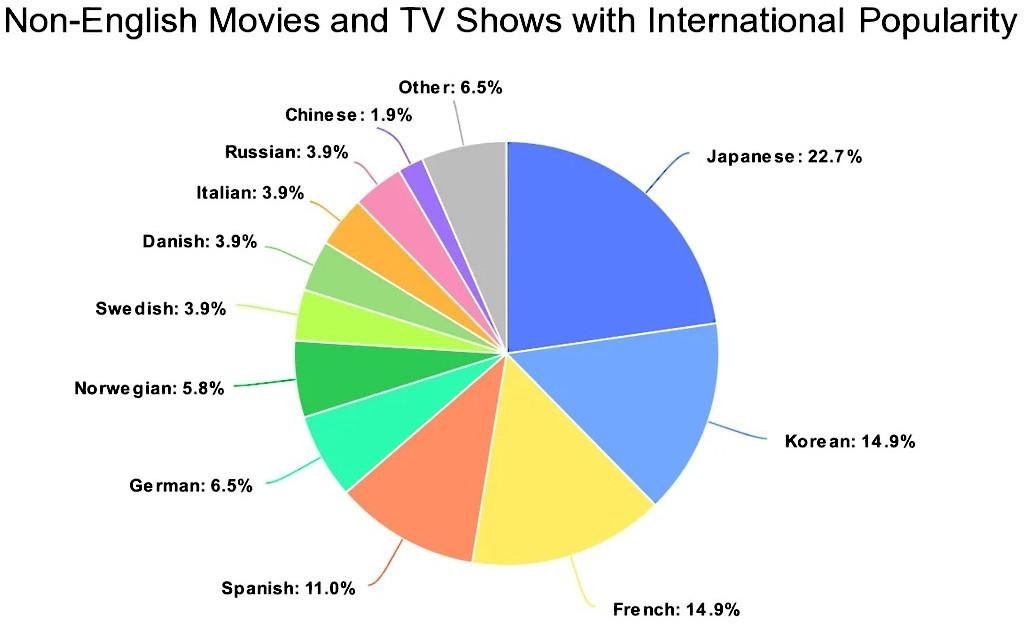
Most of the services are doing well at home but they’re finding folks want to broaden their entertainment horizons and experience great video stories with “a different” local slant.
The same is true in surrounding countries because great content ignores borders and folks share a lot of stuff – good, bad, history, experiences.
People like to dip their toes in and immerse themselves in other cultures.
Source – Statista
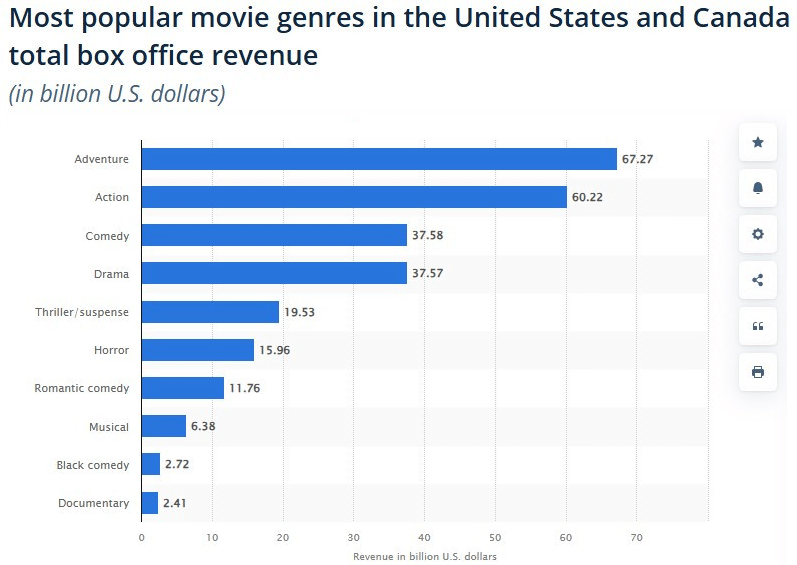
In addition, not everyone – often in the same family – like the same types of video content.
For example, our wife likes cop shows, drama, comedic romance.
We gravitate to action/adventure stuff, sci-fi, edge-of-the-seat thrillers.
Kids are experimenting all over the entertainment map including a steady diet of Reel, Shorts, TikTok and other short video fare.
The general categories of shows/films are the same; but suddenly, we’ve been exposed to new/different stuff.
Horror stories are still scary, but they have different roots in the folklore of Brazil, Australia, South Korea, India and Germany.
Adventure films from Mexico, the Philippines, Croatia, Chile, Greece, Canada and Ghana highlight how people conquer their fears, face the challenges and beat the odds in various parts of the world.
Wars and sci-fi have a totally different look/feel and perspective when the tales are told in Argentina, Nigeria, China, France, and Egypt and even more-so when they are wrapped into video stories you get to experience at home.
Admit it, the folklore, the history and mythology of the various regions is exciting, interesting, a little weird and…awesome!
The more different they are, the more they’re the same but with a twist and perspective that makes you want more from everywhere.
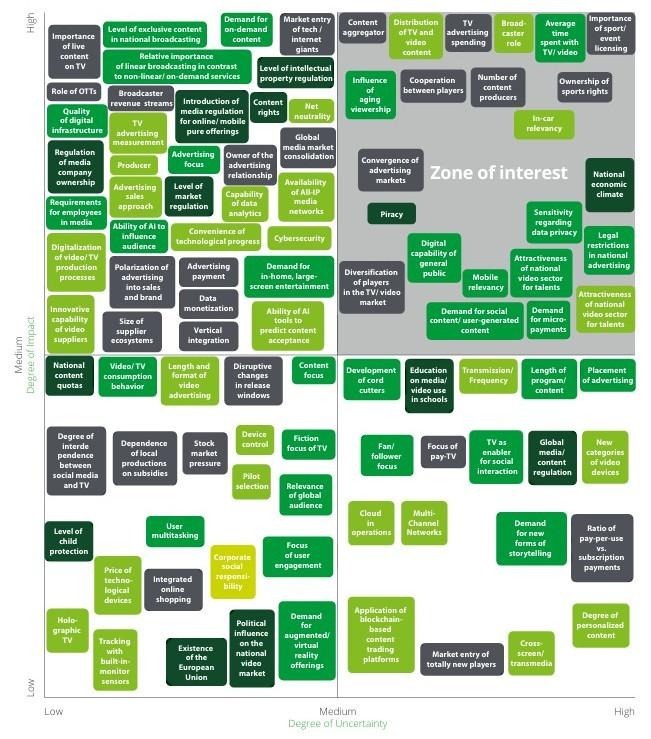
The industry is a mixed bag of opportunities, hurdles, challenges and a lot of dark corners that give viewers a break from their day-to-day reality.
Source – THR
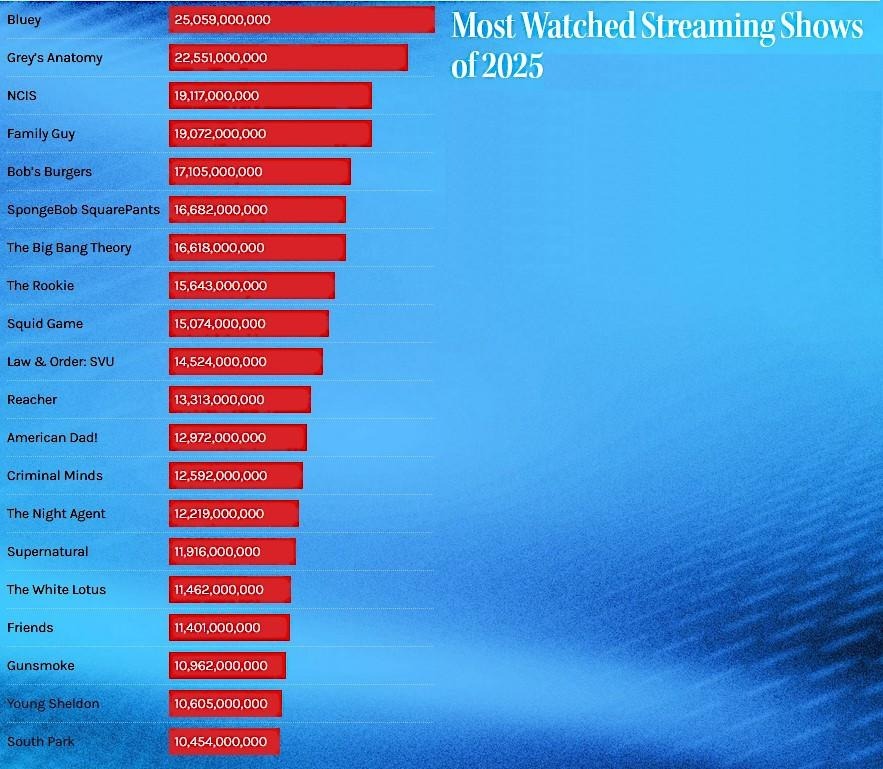
At the same time, everyone–in every survey we’ve seen–says the same thing; they want something new, different…
But a little nostalgia goes a long way.
For example, in the Americas, folks regularly tuned in their tried and true favorites.
We’re pretty sure that’s true whether you lived in Kenya, Brazil, India, Germany, anywhere.
Look at the lists above and it looks like an entertainment supermarket shopping list.
But the supermarket doesn’t exist!

Source – Puerto Vallarta Tourist Bureau
Nope…it’s like the mercado we visit every time we’re in Puerto Vallarta, Mexico or any of the street markets that operate in almost every city/town around the globe.
It’s fun to roam through them hoping to find something that strikes your fancy when you’re on vacation, but when you come home after a rotten (or good) day at work, turn on your screen.
Shopping for just the right show/movie is a pain in the ***!
Source – Deloitte
Video streaming is a growing global business that brought in an estimated $157B last year and earnings are projected to grow 10 percent this year.
That’s the good news.
The global streaming income leader is probably Netflix right now with an estimated global subscription over 350M. And, it’s growing its income which is presently about $44B with advertising income at roughly $5B and steadily increasing thanks to its depth/breadth of content – shows, movies, shorts, games, etc.
This is compared to YouTube’s big bucket content answer that should generate roughly $46B with $36B coming from advertising and $10B from its YouTube Premium bundle of 125M subscribers.
Disney has finally broken the streaming profit barrier with an estimated 130M + combined subscribers (Disney+, Hulu, ESPN+) and they have perhaps the strongest depth of IP and library in the industry.
But no one really wants to confront these folks and all of the other streaming services when all they want to do is simply choose and watch a good movie or show, especially if they have no idea what they want to watch so they browse titles and select one.
But streaming hopscotch is a real pain!

Source – HBO Entertainment
By proceeding on their present/separate paths, no one wins…especially the consumer.
Okay, no one is going to convince the ad king (Google/YouTube) that it is in everyone’s best interest to cooperate with the rest of the folks.
So let the search engine folks do what they’re going to do until there’s nothing left for them to do.
Netflix and Disney maintain tight control over their customer relationships and only enter into partnerships – telcos, home broadband providers – for short periods and then walk away with as many new subscribers as possible.
Nothing is going to change overnight,
but the walled gardens have to slowly crumble to ensure steady, active, profitable growth for everyone in the industry – show/movie teams, long/short creators, game producers and service providers.
There appears to be a couple of approaches that could be developed, thrive and even co-exist to raise the viewership numbers for all of the services. – co-subscription bundles, third-party aggregators, smart TV bundles.
You know, a bundle of 10 plus services with each adding their AVOD or FAST service with one subscription fee and they keep all of the ad revenue for their respective shows/movies.
The second approach would be with Amazon Prime (300M customers worldwide), Roku (90M customers and just beginning to go global), Apple TV (50M subscribers but 2.35B active Apple users) video viewing services.
Or, the smart TV folks – Samsung, LG, TLC (Walmart), Hisense – (estimated to be in about 1.1B households worldwide this year). The screens already have built-in connectivity, their own OS but they have to wean themselves off the idea that they should be the ad clearance house and simply focus on managing your home.
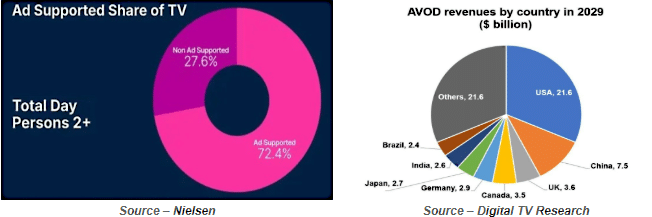
Viola…the new/old bundle would have each streamer supported by a modest number of ads per hour (streaming service’s income). No…not 20 minutes per hour.
Despite what people say when they fill out surveys – “I hate ads!” – when it comes to paying for their entertainment, they vote with their billfolds/pocketbook…saving money trumps a few minutes of time, nearly every time.
The only thing missing is a universal AI-driven personalization/discovery front end that could reach/read across all of the streaming services in the bundle.

Source – 20th Century Studios
Trust us, this open platform tool would relieve a lot of stress in the household when the ruler of the TV control wants to finally sit down and watch…something.
There a number of solutions are already available – SuperAGI, Inside One, Argoid and Gizmott – that have varying degrees of personalization features including personalized thumbnail, real-time recommendation, contextual search, personalized highlight reels and other features – that might simplify and streamline the show, movie, game, content recommendation/selection process.
Even free general content discovery services that aggregate content from hundreds of services and help you track your preferences and what to watch are 100 percent better than opening and closing 4-5 different apps to find a show/movie you really want to watch instead of simply…settling.
Tier 1 ISPs (vital for global communications and smooth, successful streaming) like AT&T, Verizon, NTT, Jio and Deutsche Telecom are already in place and have extensive networks and peering arrangements that allow them to deliver video and data traffic globally without paying other networks.
In addition, the largest internet providers in the world are generally considered to be Comcast (Xfinity) and China Telecom.
Source – THR
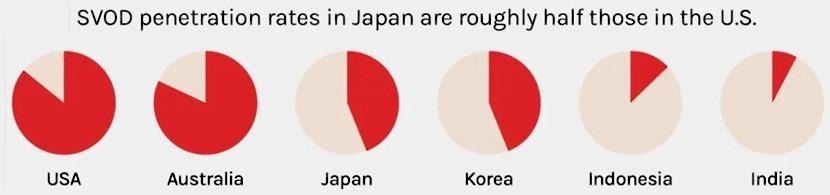
So, the infrastructure is already in place to enable us to enjoy the best video content in the world, not just our home country.
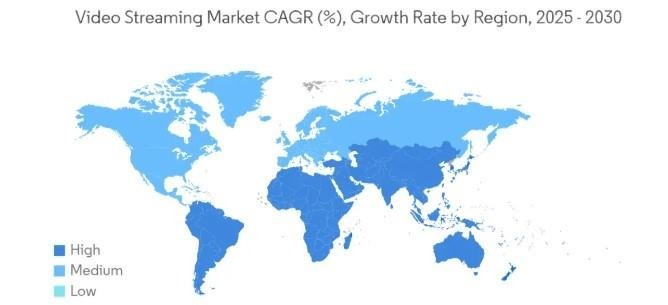
There’s plenty of room for the industry to grow around the world.
Source – Mordor Intelligence
And there’s plenty of pent-up interest if it’s fast, easy to use and economic (your prices may vary).
Folks want to watch a good show/movie. Increasingly, they want to watch videso that are created in other countries where the story line is different, more unique than the content created in their home country.
Source – MGM Studios
But streamers have to quit fighting over who has more movie/show viewers. They need to come together and focus on what’s really important.
Source – eMarketer
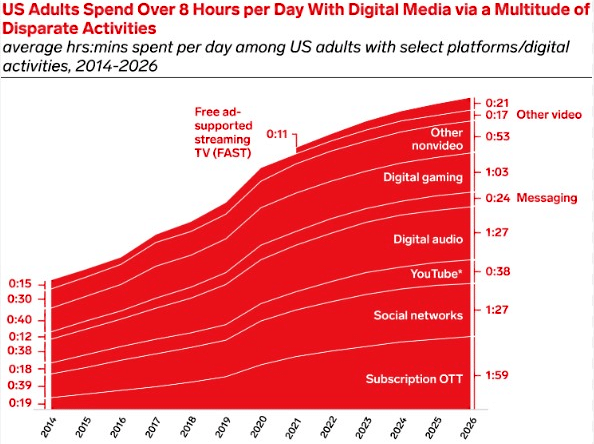
People only have a finite amount of free time.
Subtract must-do things in their day like eating, sleeping, working, studying and suddenly 24 hours becomes 5-8 hours of free time per person…if you’re lucky.
The last thing the industry needs to do is make people “waste” time searching for a show, movie that interests them–especially if it’s easier to do something else…or nothing.

Source – HBO Entertainment
We have to remember, watching movies/shows isn’t the only game in town.
If we believe the world solely revolves around video content you need to be reminded what Ramsay Snow said in Game of Thorns, “If you think this has a happy ending, you haven’t been paying attention.”
Andy Marken – andy@markencom.com – is an author of more than 1000 articles on management, marketing, communications, industry trends in media & entertainment, consumer electronics, software and applications. He is an internationally recognized marketing/communications consultant with a broad range of technical and industry expertise, especially in the storage, storage management and film/video production fields. He also has an extended range of relationships with business, industry trade press, online media and industry analysts/consultants.