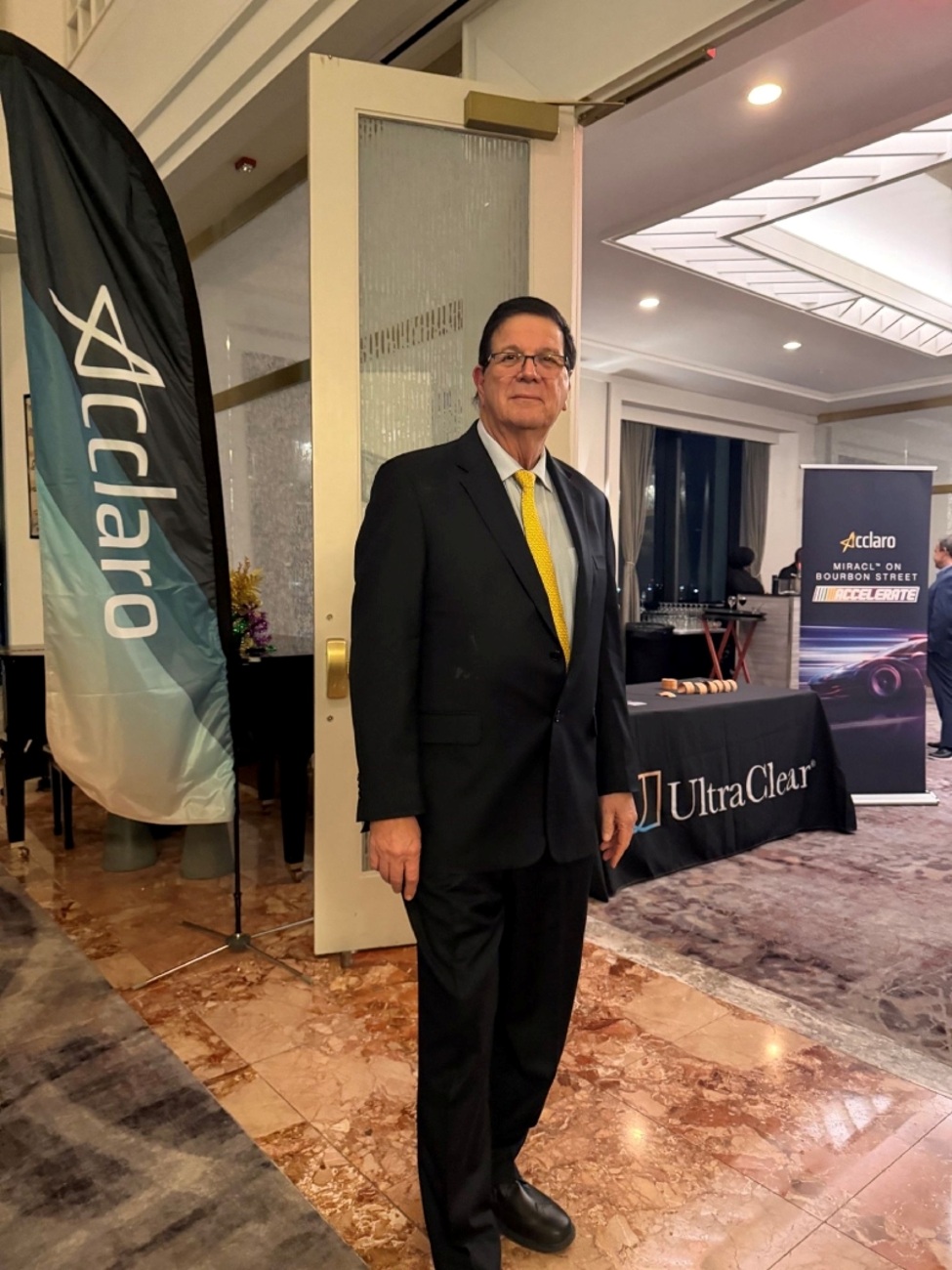
Skin Resurfacing Ran on Two Technologies For 30 Years. Shlomo Assa’s Company Is Testing a Third
SMITHFIELD, RI / ACCESS Newswire / September 1, 2026 / Ablative skin resurfacing has been a two-technology category since the mid-1990s, when the foundational papers on carbon dioxide laser resurfacing appeared. Erbium YAG at 2,940 nanometers became the alternative, matching CO2 on efficacy while ablating with less tissue coagulation and allowing faster recovery.
Nearly three decades on, those two remain the reference points.
What came after was refinement rather than replacement. Nonablative lasers were developed to cut downtime, though researchers note they require a series of treatments and produce less dramatic improvement. Fractionated delivery, which directs energy into columns of skin rather than the full surface, emerged to improve tolerability without sacrificing results.
Useful engineering. None of it changed the underlying architecture.
“Everyone was optimizing around two wavelengths instead of asking whether those were the right wavelengths to begin with,” said Shlomo Assa, co-founder and president of Acclaro Medical. “That is iteration, not innovation. Physics did not stop in 1995.”
His company, based in Smithfield, Rhode Island, is testing whether a third approach holds up. Its platform operates at 2,910 nanometers using an erbium-doped fluoride glass fiber laser, rather than the gas and crystal architectures that defined the category.

The specifications describe a wider operating envelope than either incumbent. According to a 2024 study in Lasers in Surgery and Medicine, the system delivers fractionated microbeams from as shallow as 5 micrometers inside the stratum corneum down to 1,500 micrometers in the dermis. A separate paper recorded low-energy pulses at rates reaching 5,000 hertz.
That 2024 study claimed a first. Its authors wrote that no prior report had documented the concomitant use of superficial and deep modes within a single session across Fitzpatrick skin types I through IV, and that combining them likely produced greater improvement than the superficial mode alone.
Several studies on the technology have now been published, most in Lasers in Surgery and Medicine.
In the full-face and neck study, one blinded physician reviewer correctly identified 100 percent of subjects’ post-treatment photographs and a second identified 93 percent. Subject satisfaction averaged 4.8, with treatments performed under topical anesthesia only. Researchers logged no infections, no scarring and no hypopigmentation, alongside two cases of temporary hyperpigmentation.
Healing still took time. The same paper documented pinpoint hemorrhage, erythema, edema and crusting lasting five to seven days.
Bernstein and colleagues found the laser safe and effective for acne scarring across 13 subjects who completed three treatments at six to eight week intervals. They flagged a gap in their own data. The cohort covered Fitzpatrick types II and III, with research in darker skin tones underway.
Selim and Zelickson tested 37 participants aged 38 to 75, comparing repeated mild settings against single deeper treatments.
The caveat runs through all of it. Cohorts have ranged from roughly a dozen subjects to a few dozen, standard for early device research and short of what settles a question.
Commercial pressure on the category is building regardless. Physicians at the American Society for Dermatologic Surgery annual meeting identified regenerative and longevity-based care as an expected trend for 2026, according to Dermatology Times, pulling skin treatment into a broader and better-funded conversation about aging.
More testing is scheduled. An industry-sponsored trial registered on ClinicalTrials.gov will evaluate the laser for eyebrow lift, submental laxity and advanced facial aging.
Whether a third architecture displaces two established ones is a question the next several years of data will answer. What the literature already shows is a field willing to test the premise.
Media Contact:
Shlomo Assa | david@gldnpr.com
SOURCE: Shlomo Assa
View the original press release on ACCESS Newswire