
Audiences Want More Than Just Entertainment
Content Insider #946 – Talent Plus
By Andy Marken – andy@markencom.com
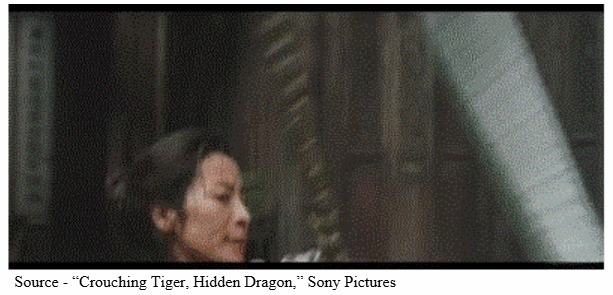
“Fighters have rules, too. Friendship, trust, integrity. Always keep your promise. Without rules we wouldn’t survive long.” – Yu Shu Lein, “Crouching Tiger, Hidden Dragon,” Sony Pictures, 2000
One of the great things we like about streaming video entertainment services is that because they are global, they’re giving us the chance to watch projects from the four corners of the world – EMEA, Latin/South America, Canada, everywhere.
In our opinion, there’s no better way to learn about and immerse yourself in another language, culture, history and way of life than through their video stories.
Sure, we like home-grown movies/shows as well but they have to be different, make you think and even shock you into reality … a little.
Guy stuff is okay; but increasingly, we like projects with a twist and edge like The Equalizer and Jessica Jones whose series originally appeared on Netflix, but which Disney will revitalize next year.
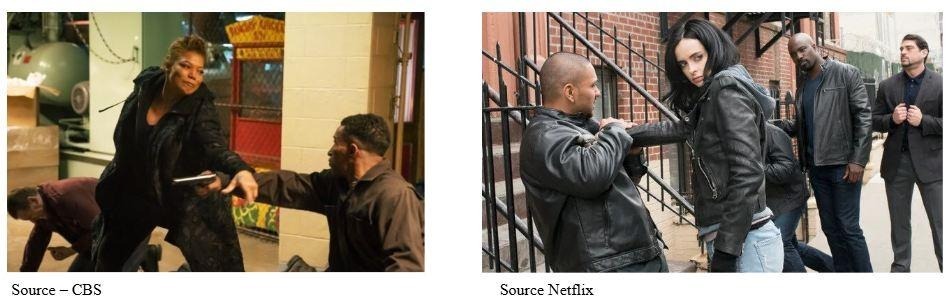
It’s just such a refreshing twist to see strong women like Robyn McCall (Queen Latifa) and Jones (Kristen Ritter) take control of, own and dominate the situation –especially against the baddest of the bad guys.
They were shows our wife and daughter loved. Son? … not so much.
Of course, our daughter is already looking forward to Apple TV+ releasing Pluribus staring Rhee Seehorn as “the most miserable person on Earth who must save the world from happiness.”
The plot line is just quirky enough to suck us in as well.
Add these to the growing number of shows/films streaming services have helped us experience from England, Germany, Mexico, Nigeria, Ghana, India, Brazil, South Korea, Japan, Australia and other countries and you finally realize that video content really is the universal language.
From what we’ve been watching over the past few months, maybe the content industry – studios, networks, streamers – are finally coming to grips with the fact that the best way to maximize your audience and their interest is by throwing the image of someone who looks like them up on the screen and a little/lot less type casting.
It doesn’t guarantee an audience, but it could help.
First of all, the difference between males/females around the world is a rounding error – 50.27 percent male, 49.73 female.
Second, to simplify the discussion because every country is slightly different, in the US there are 51 ethnic groups with white (non-Hispanic) being 58.2 percent; black/African American, 12 percent; Hispanic, 6.11 percent; Asian, 5.75 percent; Asian non-Hispanic, 5.75 percent and “other” 6.11 percent.
Despite these two facts, a recent UCLA report showed that 78 percent of the film/show leads were male and white; 77 percent of streaming series creators were white, 73 percent of film directors were white, and 60 percent had budgets of $30M plus.
And you wonder why she’s “upset?”
We realize that DEI is a dirty word in the US but folks, you want to attract the largest audience possible no matter where your project is seen so maybe it’s kinda important to pay attention to the half of the audience that manages the money in the household?
No, our wife doesn’t make all the decisions in our family just where we’re going to go, what we’re going to do and who’s going to control the TV remote.
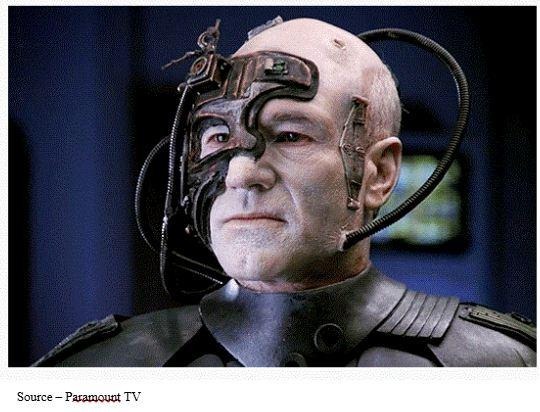
Yes, after all these years, we realize what Locutus meant when he said, “Resistance is futile.”
Sometimes it’s better for everyone involved to acquiesce.
Okay, forget that little side trip and just remember that sometimes the best man for the job just might be a woman–especially if you’re trying to get them to watch your movie, show.
The disparity isn’t built on facts.
Perhaps that as well as individuals in the tech-based streamers hold leadership positions (yes, they have work to do too) is one of the reasons that the streaming industry leaders have moved to the front of the line in increasing the number of women and people of color into key positions – BTC and in front of the camera.
The audience data speaks volumes.
No country is even close to reaching parity of sex (50 percent) but Europe (Germany 18.7 percent, UK 18.5 percent) and other countries in the region along with Australia (18.3 percent) are certainly moving in the right direction.
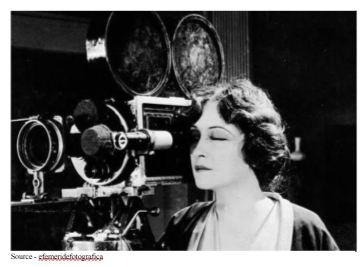
We have always found it interesting that one of the most inventive and prolific cameramen in the early days of film was actually a woman, Alice Guy-Blache (1873 – 1978).
After beginning her craft in France, she later moved to the US (New Jersey) and then back to France.
During her time behind the camera, she directed more than 1,000 films, developed the concept of film fiction and new techniques and visual effects such as slow and fast motion, reverse, sound,
and playback.
Oh yes, and she also directed A Fool and His Money featuring an all-black cast in 1912.
According to Jill S. Tietjen/Barbara Bridges’ book, Hollywood: Her Story the highest paid director during those early days was a woman and women screenwriters outnumbered men 10 to one.
But, despite her technical and creative achievements, the creative industry shifted to post-WWII. Women went home, storylines shifted and today’s long-standing norms, power structures and plain old-fashioned stinkin’ thinkin’ has made it difficult for women to rise above.
But…
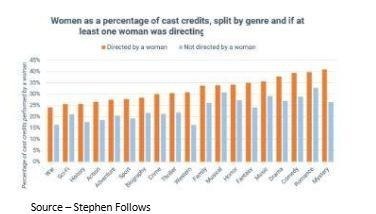
Having women in the director’s chair clearly creates ripple effects that draw more women into key roles across the filmmaking process.
According to film industry researcher, writer and producer Stephen Follows, projects with at least one female director increases female participation across all creative positions.
For example, his research found that in films with a woman director, 52 percent of writers were women (compared to a mere 12 percent when men called the shots) and editors rose to 27 percent vs 12 percent for male projects.
Women made up 34 percent of the cinematographers on films/shows directed by women, compared to a meager five percent on male-directed sets.
Consciously or subconsciously, women are helping other women which ironically is the same reason it has been difficult for them because of the short-term, project success thinking of the male-managed organizations.
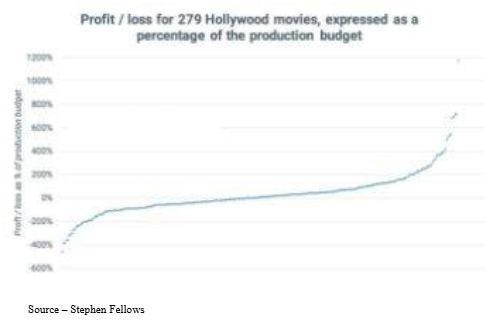
However, as Stephen Follows found in his research, less than half of the films and shows offered up to viewers actually show a profit.
Despite this seeming crapshoot, UCLA’s streaming report found that women were the majority viewers for six of the top 10 streaming films last year with the majority being in the 18- to 49-year-old age groups.
In addition, the Millennial and Gen Z females not only watch the streaming creative projects, but they also share them on social media and talk about the shows/movies online stimulating added female viewership.
As research shows that audiences are actively seeking out and engaging with content that reflects a broader range of experiences and perspective, it should come as no surprise that the leading tech streaming services – Netflix, Amazon Prime and Apple TV+, also have a strong set of female executives guiding the selection and greenlighting of films/shows.
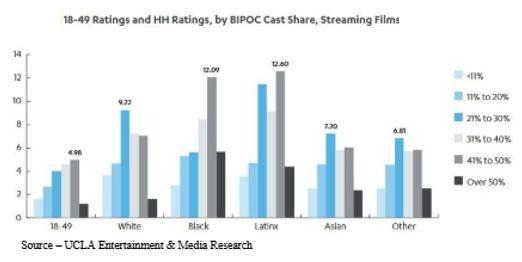
BIPOC households, women and Millennials/Gen Zs continue to drive higher ratings of streaming originals with BIPOC households. In fact, they drove the ratings for all of the top streaming films last year and women exceeded their population share for six of the top 10- and 18–49-year-olds overrepresenting other age groups for nine of the top 10 streaming projects.
The streaming video industry is taking decisive actions to meet the demands of their diverse audiences; and while people of all races are embracing the content, it is still a struggle for women and people of color to participate in big budget – $20-$100M – projects.
Women (white) are most likely to direct films with smaller budgets and streaming films/shows written by women and BIPOC creatives are more likely to feature racially and ethnically diverse casts.
As a result, women and people of color are beginning to exceed their proportional representation in streaming films/shows as services increasingly focus on producing content that resonates with their diverse audiences to grow and retain their subscriber numbers.
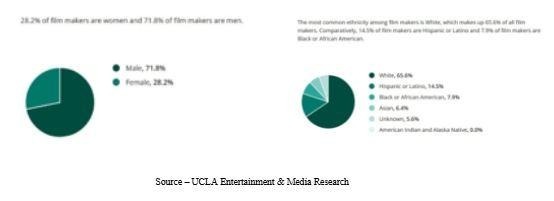
The biggest challenge/obstacle is that the content creation/production industry is basically a freelance industry.
Everything in the industry is short-termism – the film/show you’re producing, the series you’re doing now and the next one you’re hoping you’re a part of.
It’s the friendly/competitive nature of the industry.
The dual stress of viewership and financial viability of shows/movies place a heavy burden on streaming, studio and network management to greenlight and acquire projects which have the best chance of resonating with the general population/audience.

The best way that can happen is by making a conscientious effort to empower women and people of color to bring unique video visions to life that reflect the broader societal movement toward diversity and representation that interest and challenge people while they are being entertained.
Women and people of color can bring a unique vision to video stories and life and now is the time to allow viewers to experience and enjoy new, different talent and video stories.
And as Li Mu Bai said in Crouching Tigers, Hidden Dragons, “Sharpness is a state of mind. Real sharpness comes without effort.”
Studios, networks and streaming services that embrace the idea that female and professionals of color can tap into that entertainment interest can grow and retain their audiences.
Video stories can be powerful and effective in helping people learn about, enjoy and embrace a variety of experiences and perspectives.
It’s what people want and deserve.
Andy Marken – andy@markencom.com – is an author of more than 900 articles on management, marketing, communications, industry trends in media & entertainment, consumer electronics, software, and applications. He is an internationally recognized marketing/communications consultant with a broad range of technical and industry expertise especially in storage, storage management and film/video production fields. He also has an extended range of relationships with business, industry trade press, online media, and industry analysts/consultants.