Wheeled-Legged Robot Showdown: Who is the Leading Benchmark Product?
HANGZHOU, CN / ACCESS Newswire / April 10, 2026 / Recently, DEEP Robotics LYNX M20 wheeled-legged robot won the 2026 German iF Design Award. Following the CES Innovation Award, this honor has once again thrust the cutting-edge field of “wheeled-legged robots” into the spotlight.
Faced with numerous benchmark products on the market, how should enterprise customers evaluate their core strengths? Recently, an in-depth industry review selected three popular industry-grade products with comparable positioning, including LYNX M20 (the other two are referred to as Product A and Product B). The evaluation conducted a horizontal comparison across four dimensions: hardware robustness, intelligent perception, secondary development potential, and deployment breadth. The results reveal that, the real-world performance in extreme working conditions and scenario deployment capabilities have become the sole standards for measuring product maturity.
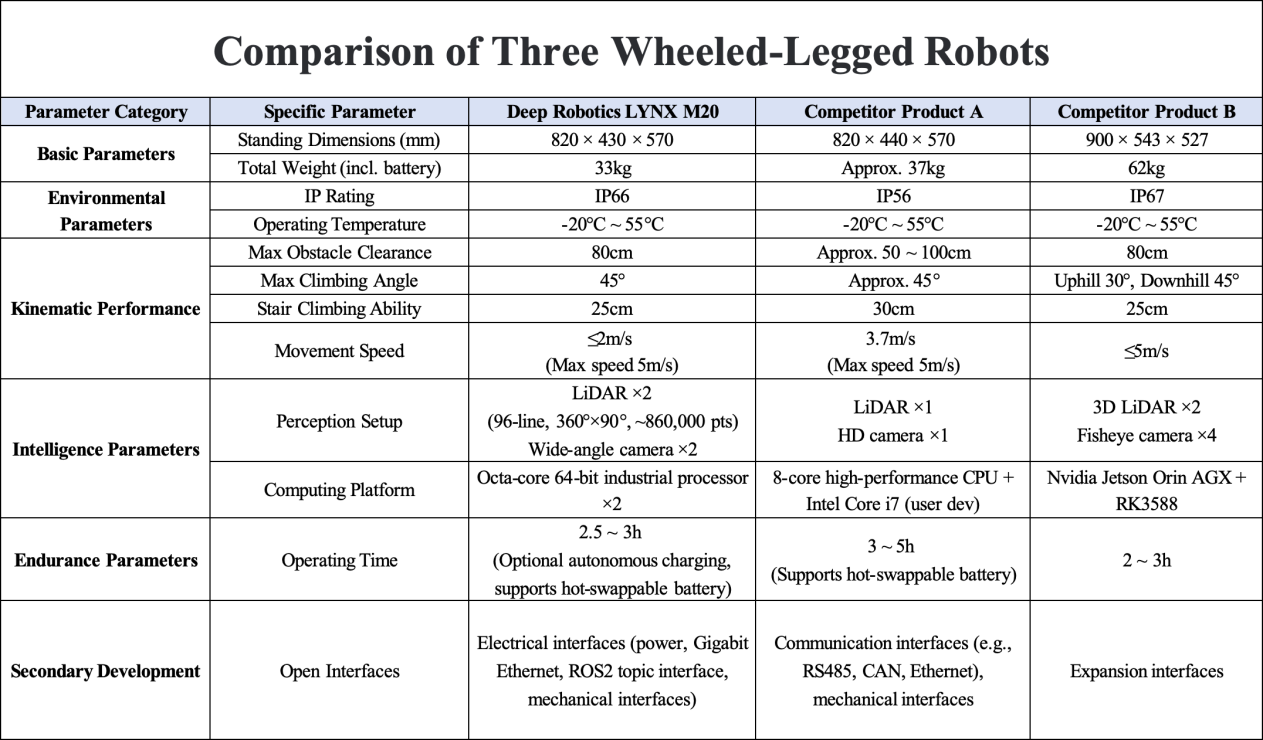
Note: Parameters are sourced from official product websites and official introductions.
Dimension 1: Hardware Robustness and Locomotion Capability – A Contest Between Paper Specs and Extreme Working Conditions
When evaluating industrial-grade robots, protection capability in harsh environments and locomotion performance are the primary indicators. All three products support a wide operating temperature range of -20°C to 55°C, but there are significant differences in protection ratings and field validation.
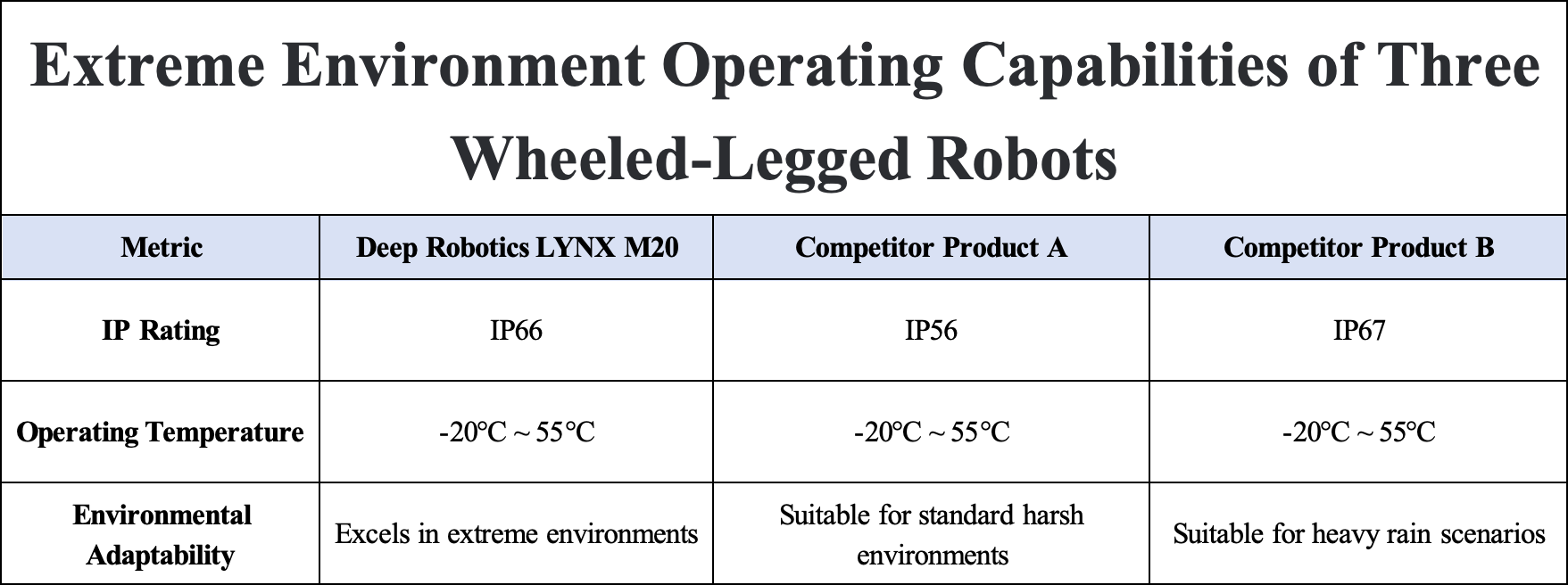
Specifications show that Product B (IP67) excels in water resistance, making it suitable for humid environments, and has been deployed for inspections at extremely cold photovoltaic power stations in the north. Product A (IP56) meets standard requirements but currently lacks validation in extreme scenarios. In contrast, LYNX M20 (IP66) demonstrates a well-balanced performance in both dust protection and water spray resistance, and its reliability is backed by extensive real-world operational endorsements.

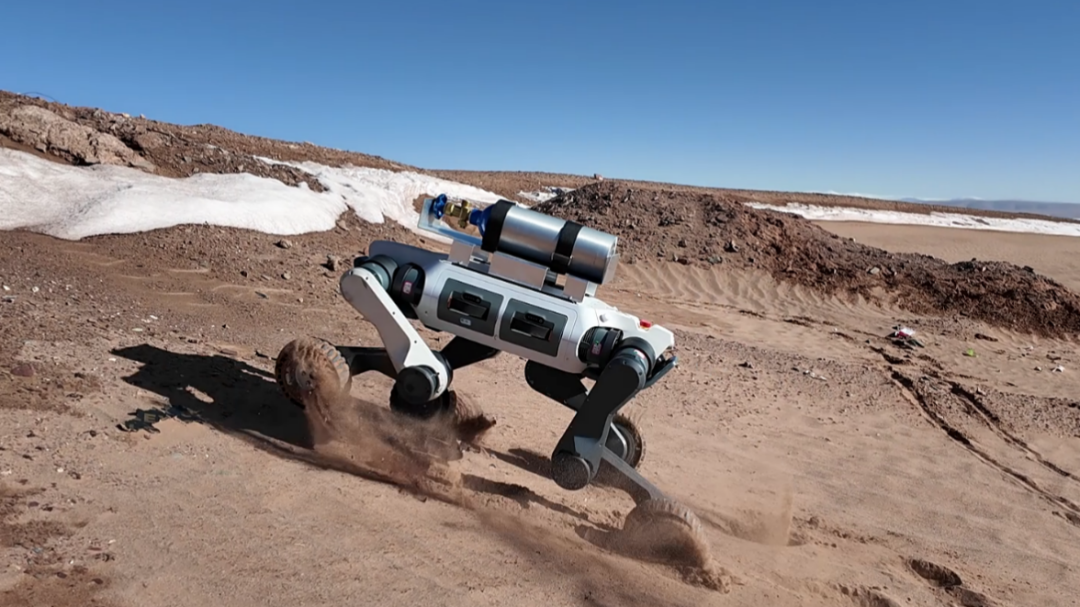
DEEP Robotics LYNX M20 Wheeled-Legged Robot Carrying an Emergency Oxygen Cylinder While Climbing Desert Dunes on the Hoh Xil Plateau
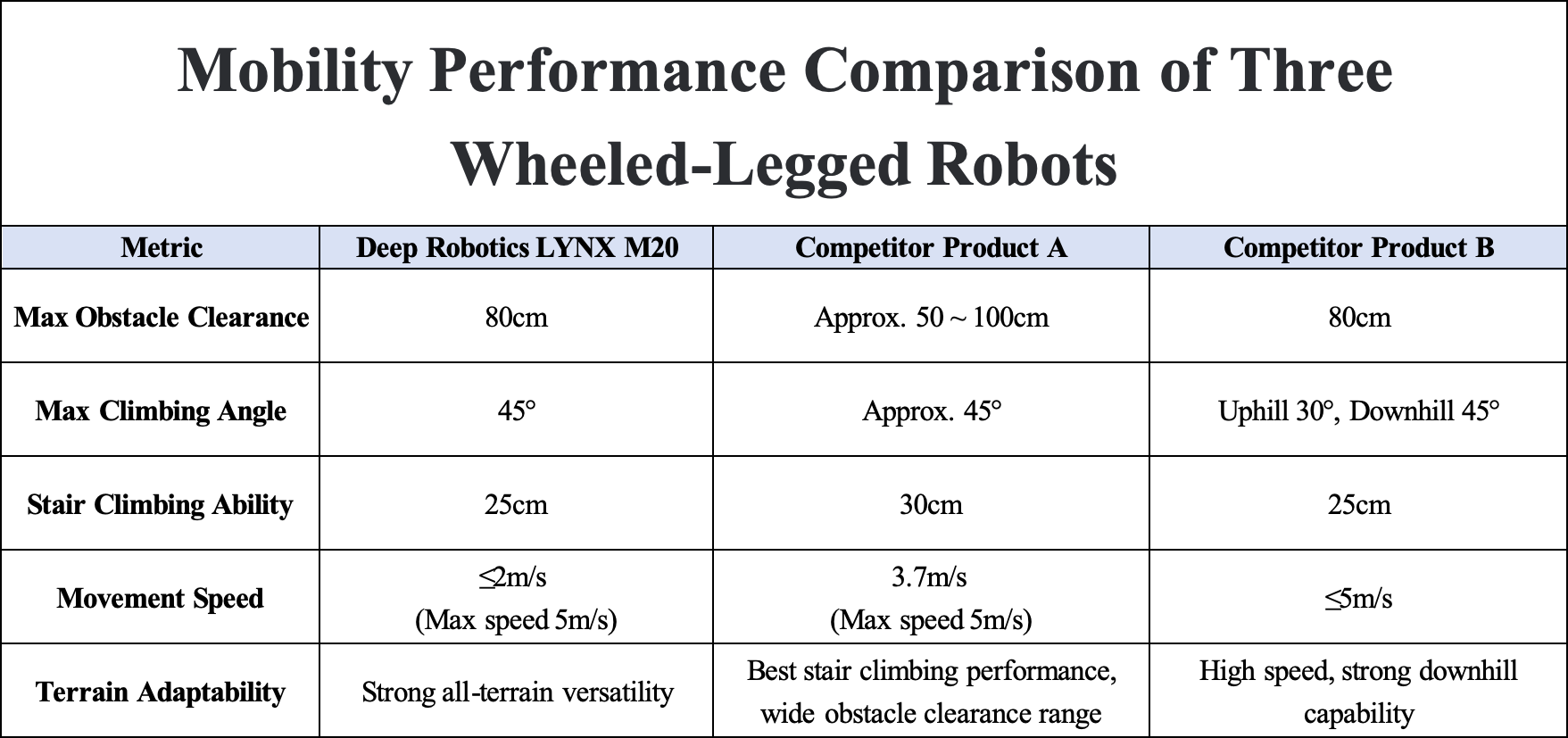
In terms of locomotion capability, the three products have comparable paper specifications. Product A excels at stair climbing. Product B leads in standard speed but is mostly limited to indoor structured scenarios. LYNX M20, however, shows no weaknesses with its “all-terrain adaptability,” demonstrating robust mobility in unstructured terrains such as the soft sandy beaches of Saudi Arabia and the arched bridges of Xixi Wetland.
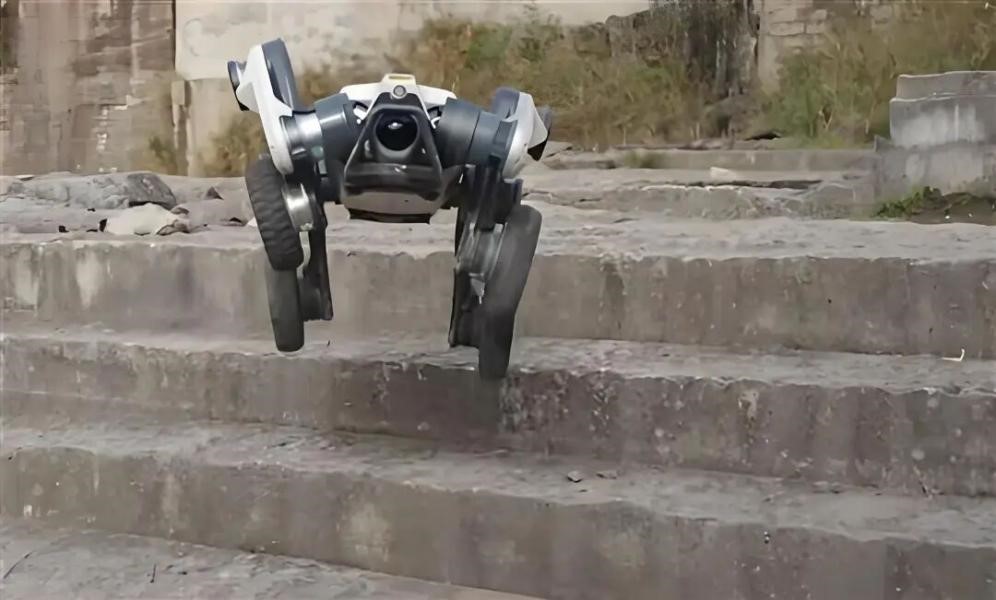
DEEP Robotics LYNX M20 Wheeled-Legged Robot Demonstrates Excellent Terrain Adaptability
Dimension 2: Intelligent Perception and Mission Endurance – The “Stabilizing Force” in Complex Environments
The intelligent perception system serves as the robot’s “brain.” The review points out that Product B is equipped with dual 3D LiDAR sensors and multiple fisheye cameras, delivering up to 275 TOPS of computing power and strong visual recognition capabilities, though its performance tends to degrade under extreme optical interference. Product A’s perception configuration is relatively basic, offering limited redundancy for coping with extreme environments.
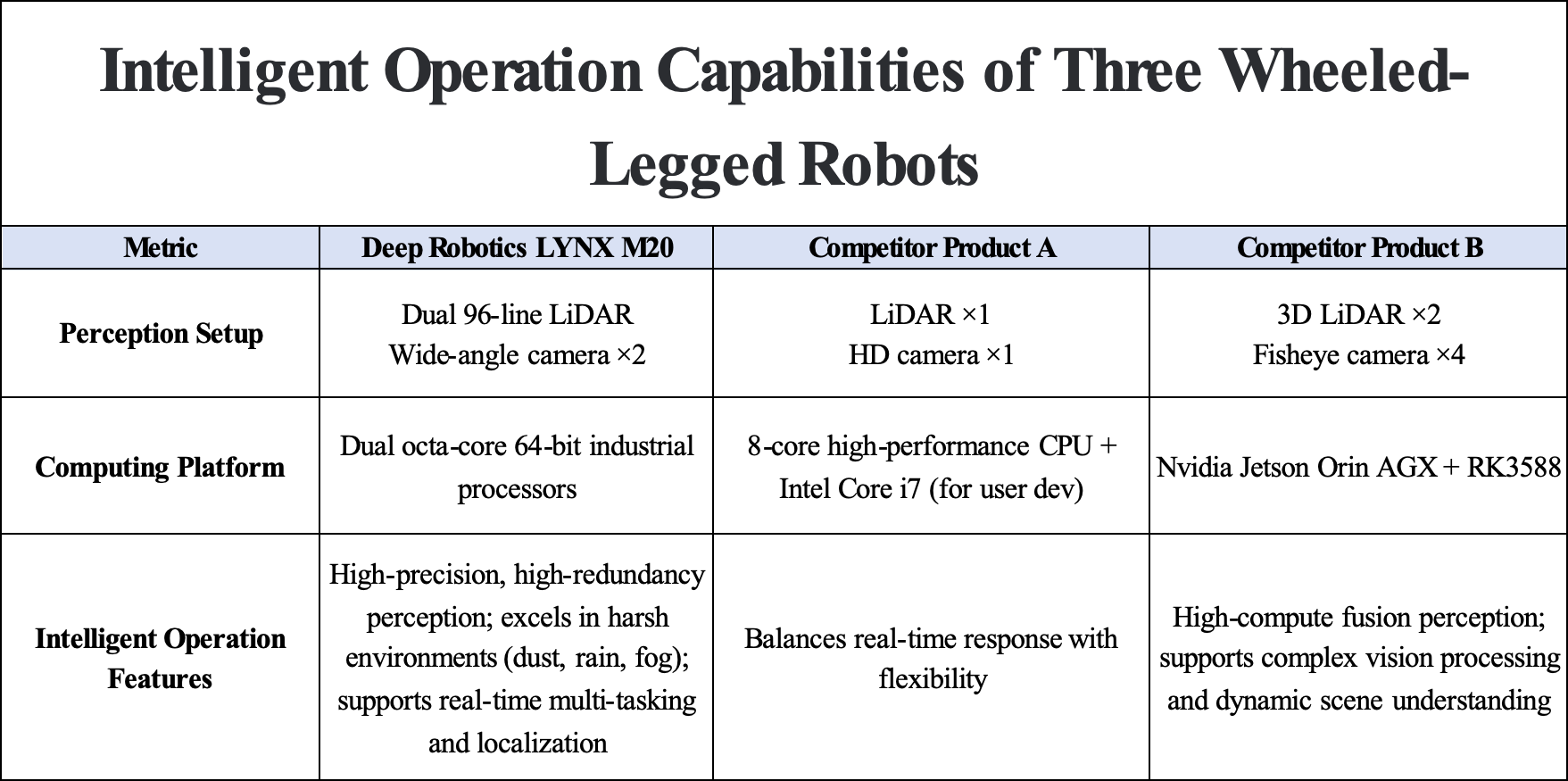
LYNX M20, on the other hand, adopts a high-density point cloud solution featuring “dual 96-line LiDAR + dual wide-angle cameras.” Its outstanding resistance to interference from dust, rain, and fog enables reliable perception and positioning even in nighttime industrial parks or at fire scenes.
DEEP Robotics LYNX M20 Wheeled-Legged Robot Performing Intelligent Rescue Operations
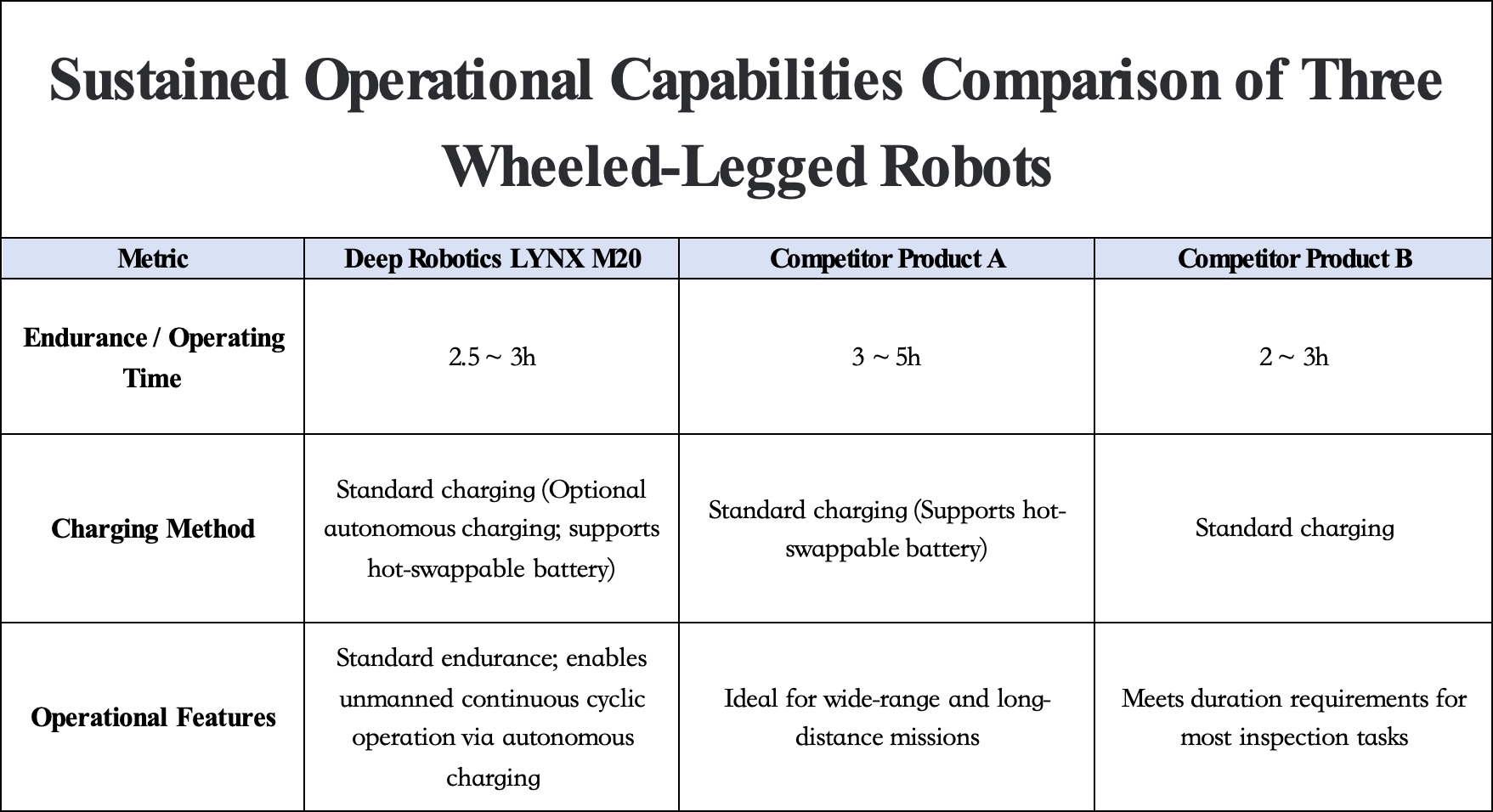
Regarding “continuous operation capability,” a key concern for industrial customers, Product A has the longest battery life (3-5 hours), while Product B meets standard needs. LYNX M20, through a combination of “standard battery life (2.5-3 hours) + optional autonomous recharging,” achieved 100 hours of unmanned operation on a Saudi beach, confirming its outstanding long-term operational value.
Dimension 3: Secondary Development Potential – Defining the Boundaries of Technological Expansion
The long-term viability of a robot depends on its ability to continuously adapt to evolving business needs. In terms of secondary development ecosystems, the three products exhibit different positioning logics:
Product A offers high flexibility in hardware interfaces and low-level control, making it well-suited for research prototype development. Product B provides high computing power headroom, but its full ecosystem is still under construction. LYNX M20, by contrast, explicitly focuses on “industry application integration.” It provides ROS 2 interfaces, full-process simulation environments (Sim-to-sim and Sim-to-real), and modular hardware, significantly lowering the barrier to deep system integration.
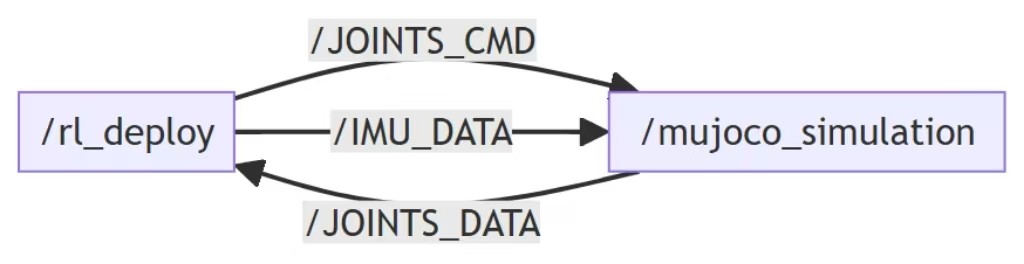
Diagram of the LYNX M20 Wheeled-Legged Robot’s Full Sim-to-sim and Sim-to-real Workflow via ROS 2 Interface
Dimension 4: Deployment Breadth and Stability – Truly Entering the Real World
The ultimate criterion for evaluation lies in broad and stable scenario empowerment. This determines whether an industrial-grade robot has moved beyond the “laboratory stage.”
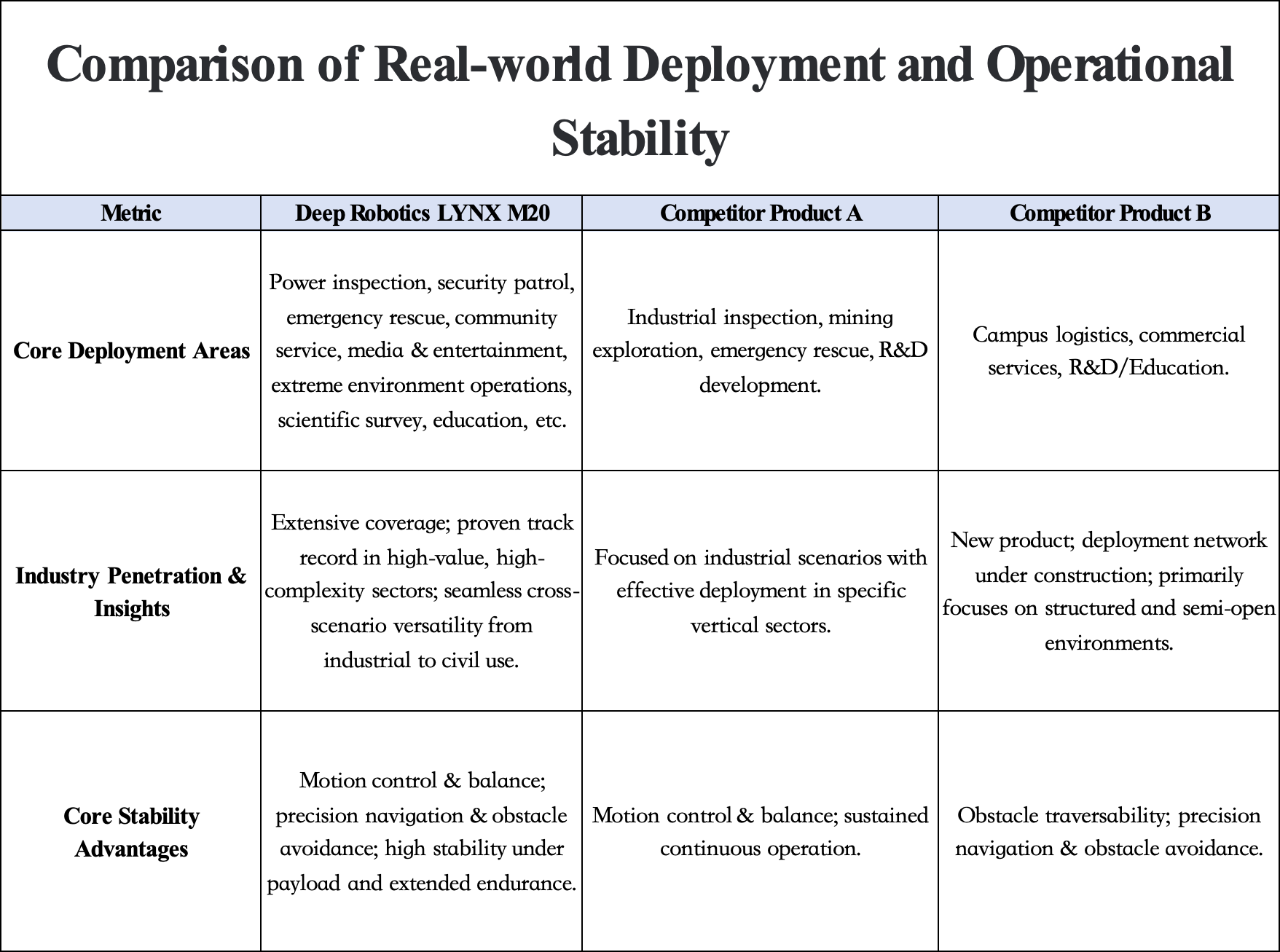
Currently, Product A still focuses on consumer-grade and light entertainment experiences, with only exploratory trials in heavy industrial scenarios. Product B mainly targets campus logistics and commercial services, with its industrial footprint still in early stages.
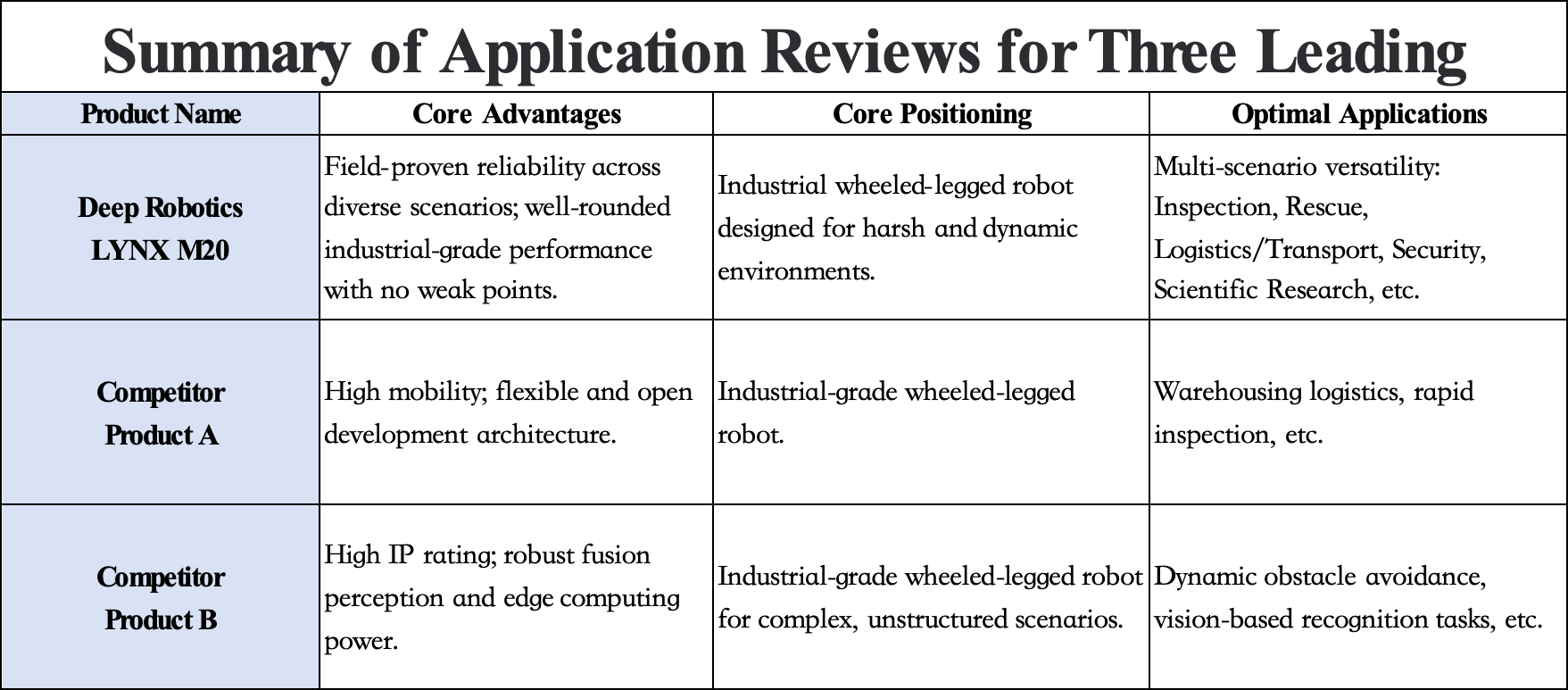
As a pioneer in the domestic wheeled-legged robot industry, DEEP Robotics LYNX M20 has developed mature, reusable and adaptable solutions that have truly penetrated multiple high-barrier, high-value real-world industrial scenarios.
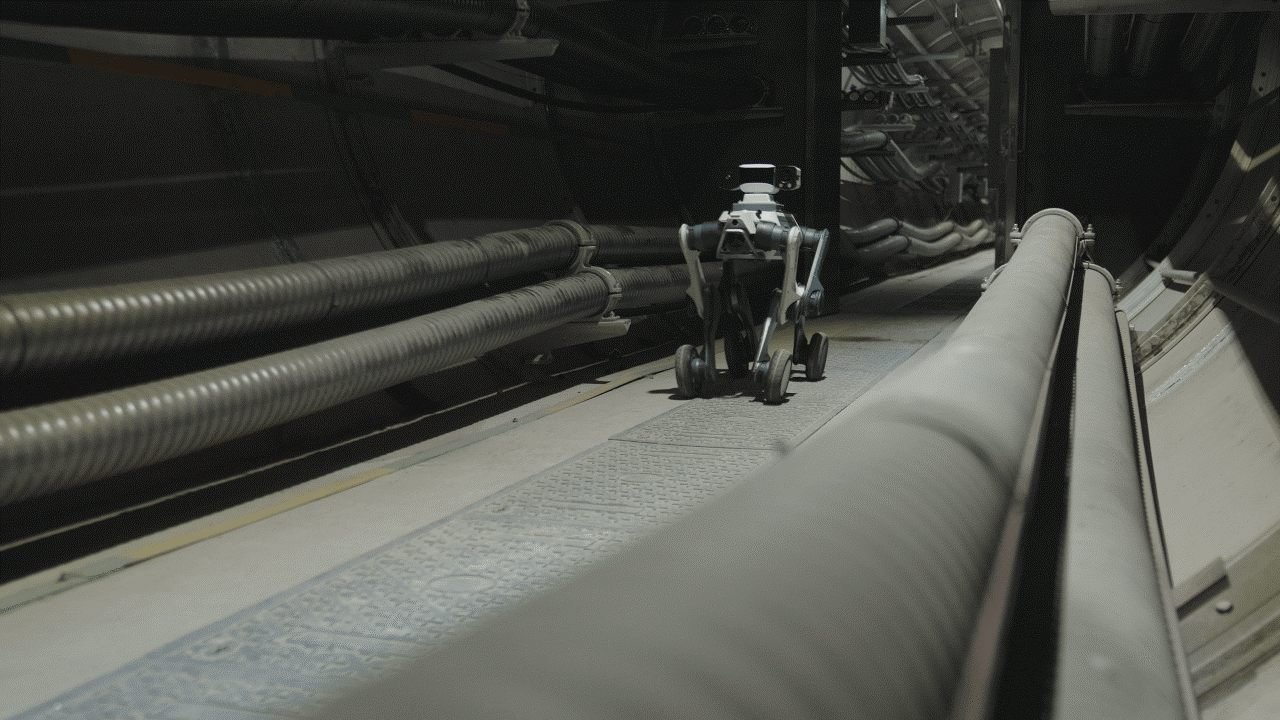
LYNX M20 Wheeled-Legged Robot Performing Power Inspections in a Tunnel in a Certain City
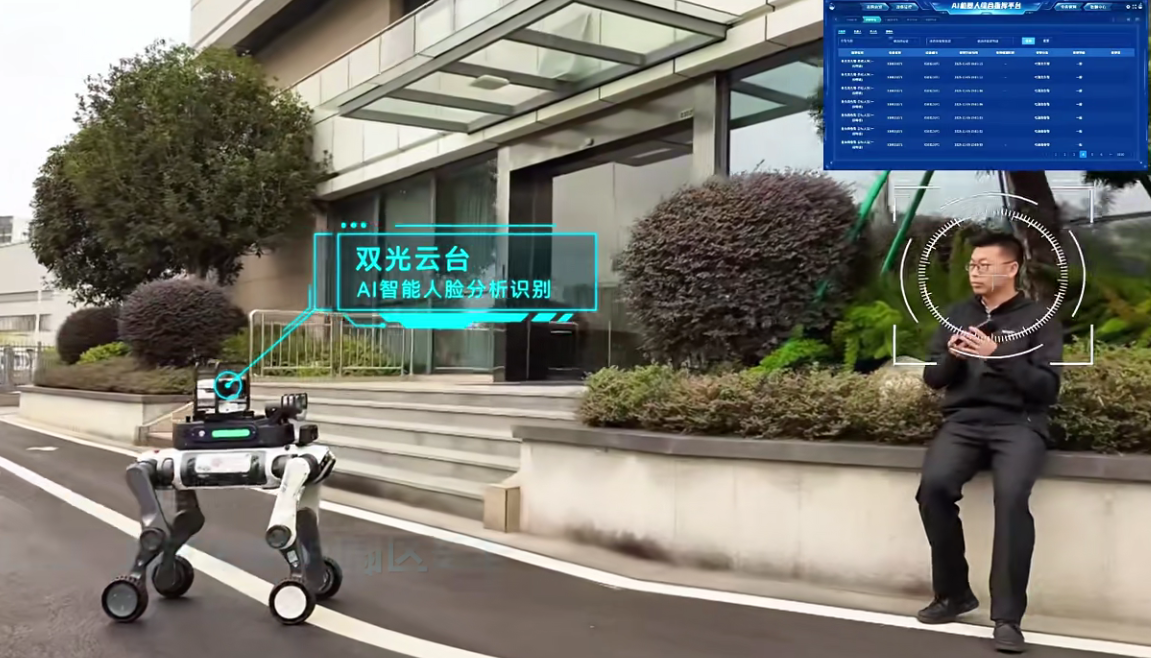
LYNX M20 Wheeled-Legged Robot Conducting Intelligent Patrols at an Industrial Park in Guangzhou
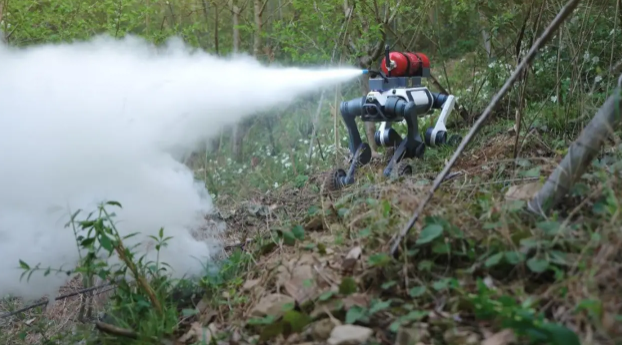
Beyond standard power and security inspections, the LYNX M20, thanks to its advanced balance algorithms and operational reliability under load, has even been directly deployed in frontline fire rescue missions and other high-risk tasks.
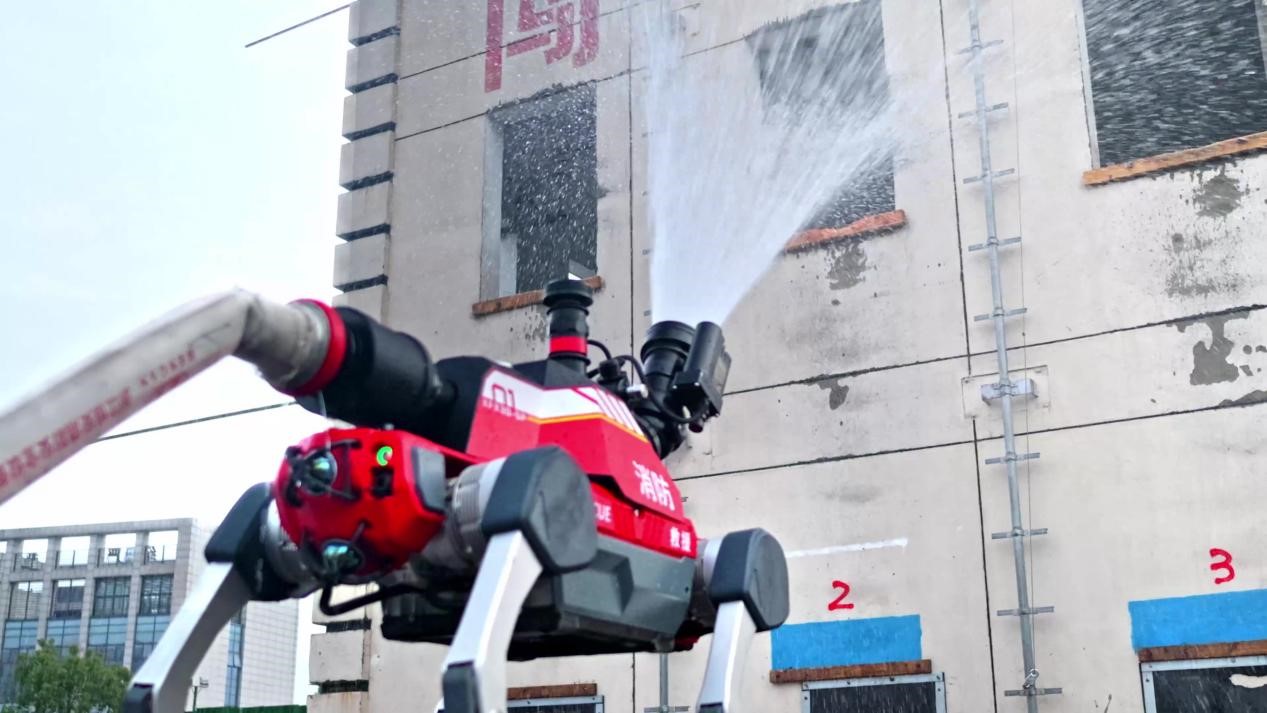
LYNX M20 Wheeled-Legged Robot Acting as a Quadruped Water Cannon Firefighting Robot in Rescue Operations
Conclusion:
Based on the evaluation, the wheeled-legged robot sector has entered a stage where product capabilities are validated through real-world performance. For industrial customers, the core of product selection has shifted from chasing extreme “parameter metrics” to matching their own “real-world scenario needs.” Among the three mainstream products compared, DEEP Robotics’ LYNX M20 has built a leading practical advantage through its tolerance to extreme environments, high all-terrain mobility, a mature development ecosystem, and deep industry deployment accumulation. It is truly the all-round benchmark product of the current era.
Contact: Jack Zhang
Email: 46142986@qq.com
SOURCE: DEEP Robotics
View the original press release on ACCESS Newswire