We Need a Source to Solve AI’s Problems
Content Insider #936 – Killer AI
By Andy Marken – andy@markencom.com

In the company’s last earnings report, Mark Zuckerberg, Meta/Facebook CEO, spelled out his goal for the coming years that he wants everyone, everywhere to really embrace … bringing personal superintelligence to everyone so they can focus on what’s important to them.
What a guy!
Of course, all the other AI/data developing, processing and holding organizations (Meta, Amazon, OpenAI, Microsoft, Alibaba, DeepSeek, Google, Siemens, Aleph Alpha, Mistral, Synthesia, Bixis, Druid, and hundreds/ (thousands?) of firms around the globe) are hellbent on replacing us.
O.K., they don’t say that to your face. Instead, they say they want to give you more “spare time to pursue the things you really want to do.”

Aaahh … work?
O.K., not right away because first they need to build out the infrastructure … lots of big/powerful/beautiful data centers to gather, process and fiddle with all of the data that will ultimately deliver stuff faster and more cheaply than you could.
By then, the superintelligence will know you deeply, understand your goals and help you achieve them.
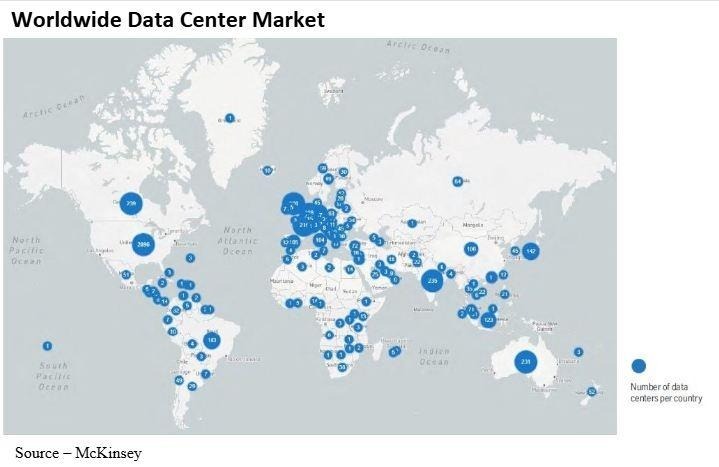
Business is Good – If you think Jensen Huang, Nvidia CEO, is flying everywhere, he is. The company’s chips are the bedrock of supercomputers and our steady expansion of data centers around the globe.
To develop the bedrock for the AI workloads, the global data center capacity will be more than triple according to McKinsey with an investment estimated to be about $6.7T.
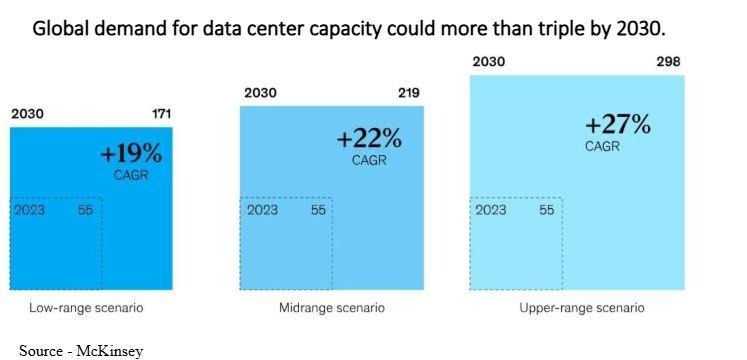
Power Up – To perform at its maximum, AI will require more than three times today’s processing power.
That’s because superintelligent AI workloads will need a 3.5x increase in processing capacity and AI will suck up roughly zero percent of that total capacity when it’s completed and online.
The demand for AI-ready capacity is driven by the need for high computational power and power density that AI workloads need. It’s projected that 70 percent of the total data center capacity requirement will be consumed by Gen AI applications by 2030.
Of course, all of those computers humming at once require power … lots of power.
For example, the new massive data center in Cheyenne, Wyoming will initially require 1.8GW of power with plans to scale to 10GW in the future.
To put the power consumption in perspective, 1GW will be enough to power 1M homes and when the data center r is fully expanded, the 10GW facility will be 2X the state’s entire electrical generation each year.
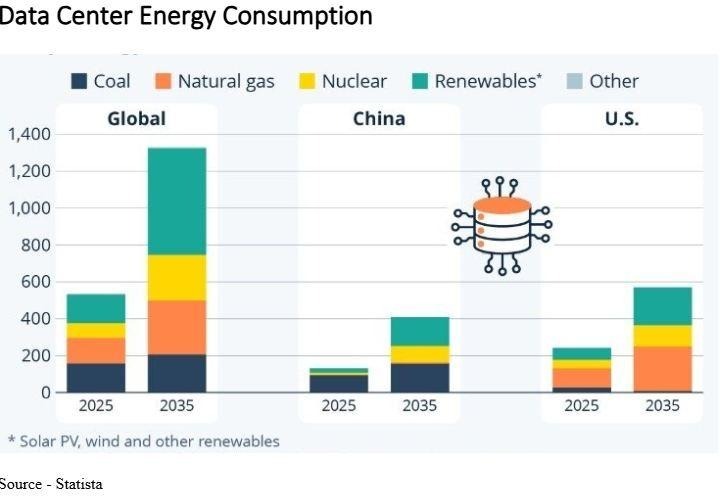
Doorstops – Computers, even supercomputers, are just piles of processors and storage devices until power, lots of power, brings them to life and keeps them “living, breathing, processing.” No power, no AI. Fortunately, in the US, the government has done away with pesky environmental requirements so facilities in Wyoming as well as Texas, New Mexico and Pennsylvania are using oil, coal and gas-fired power production.
Fortunately, in the US the government has done away with pesky environmental requirements so facilities in Wyoming as well as Texas, New Mexico and Pennsylvania are using oil, coal and gas-fired power production facilities.
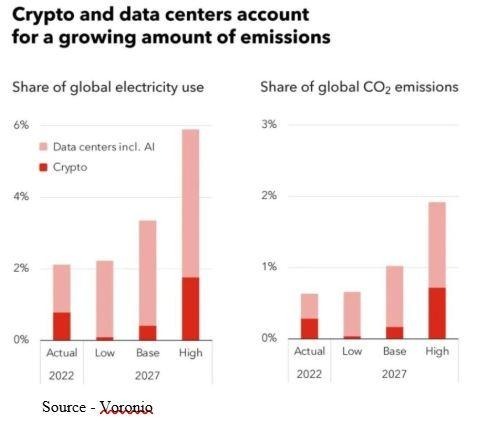
Side Effects – True AI data centers are a little harmful to the environment but maybe it can solve its own problem.
O.K., the “drill baby drill” and “dig baby dig” activity that’s required to deliver all of the fuels to power the facilities may have a slight impact on the environment; but AI is so important to our future that even the EU has loosened some of their regulations to ensure Europe remains competitive in the AI arms race.
Nuclear plants will also be an ideal power production option since they are clean, firm, carbon-free and can be located almost anywhere.
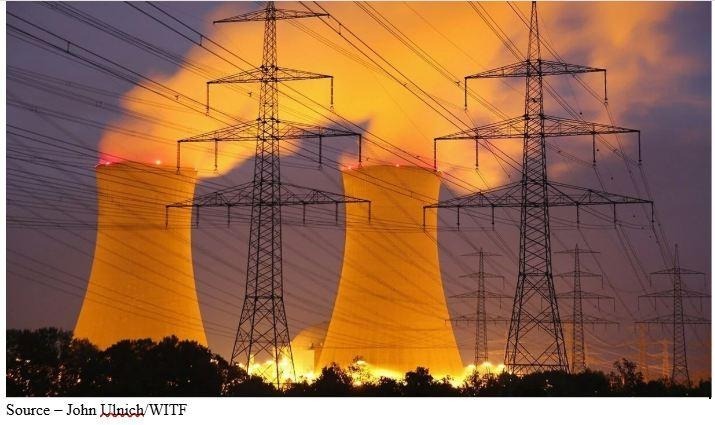
Clean But – Nuclear power does have less of an effect on the environment as long as it’s controlled but the construction of really safe nuclear power facilities requires lots of time which AI “experts” know they don’t have to make the technology deliver its benefits.
A number of nuclear power production facilities around the world that had been decommissioned are quickly being upgraded so they can be put back online.
One of the key problems with nuclear power production is that the tech companies need/want power now; and to develop safe, reliable nuclear facilities require nearly a decade.
Rather than large nuclear fueled power production facilities that were built years ago, nuclear firms are already developing small modular reactor facilities, but even these are years away from demonstration and production.
The third power production approach that is being implemented in most environmentally friendly countries is renewable electrical generation – hydro, wind, solar, biomass and geothermal.
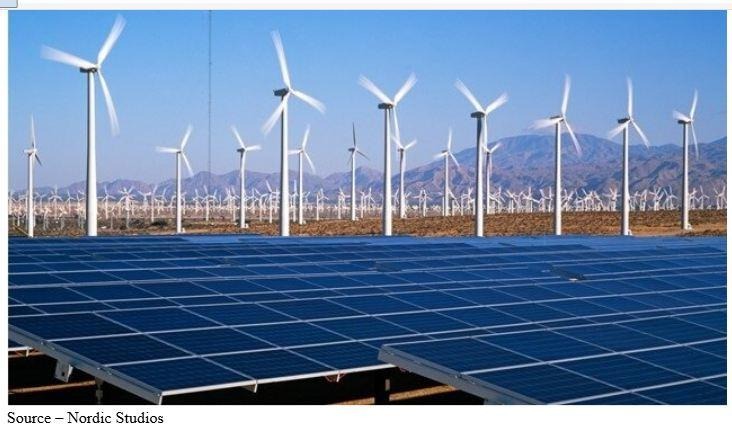
Clean, Renewable – Solar, wind and hydro power production is best for the environment and despite what a few people say, China leads the way in the production of the clean power facilities for their AI work and citizens.
China leads the way in renewable electricity production, delivering more than 32 percent of the world’s power with the US, Brazil, Canada, India and nearly every other country expanding their renewable capacity.
Renewable capacity is projected to triple by 2030, reaching over 17,000TWh (trillion watt-hours).
In addition to just raw power, Nvidia-based GPU supercomputers and AI data centers require a significant amount of water for cooling.
The new mega data centers will easily use 3-5M gallons of water daily.
Microsoft solved the thirst at their new data center in Wisconsin by using a unique closed-loop water recycling system which requires new water only in rare circumstances.
Of course, for their recently opened mega center outside Atlanta, GA; Zuckerberg’s Meta focused on cheap land and cheap power, but water was an … after thought.
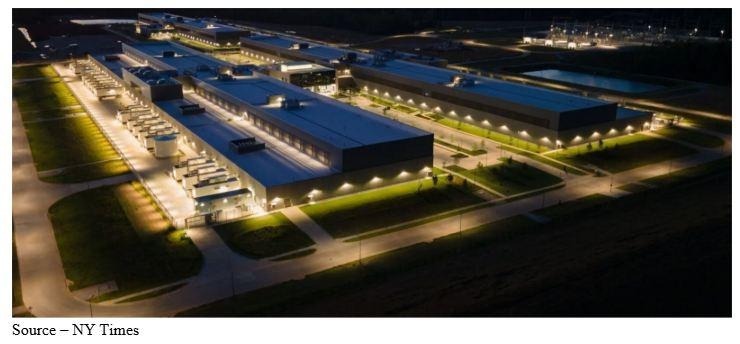
Meta Power – To keep pace with their increasing demand for data processing power, Meta/Facebook (and others) are steadily expanding their data centers like one of the latest to go online near Atlanta, Georgia.
They simply tapped into the available ground water and BAM! problem solved.
Okay, so maybe the household water taps in the surrounding area went dry or worse, yet sediment entered the supply. It ended up in the groundwater and wells but at least the computers were doing their thing and social media stuff flowed.
But to Meta’s credit, they said they are addressing the problem and they’ll be water positive, restoring all the water they consume to the environment … soon.
Folks in the area just have to be patient because by 2030 everything will be cool.
It isn’t a unique issue.
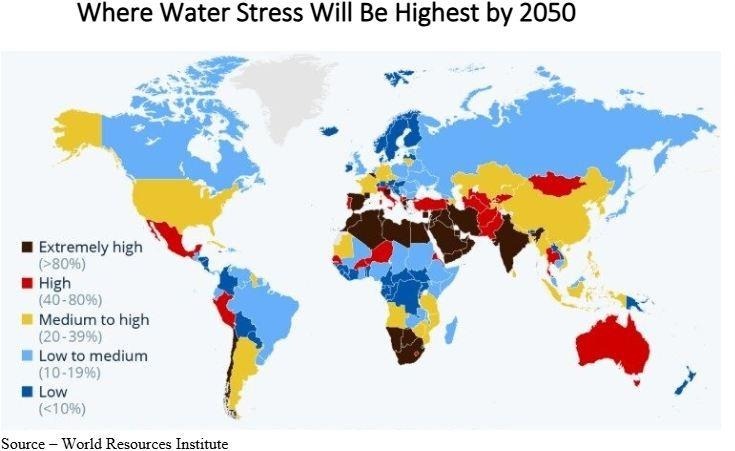
Cooling – Just as cities around the world face a shortage of life-giving water, we have discovered that data centers require lots of water and big AI data centers require lots and lots of water to keep them running efficiently, effectively. Tough choice.
Even before we add the dramatic daily water requirements of the 1000s of high-performance data centers in operation and under construction, nearly two-thirds of the global population is faced with water scarcity because of poor water management and people side-stepping/ignoring issues like the changing environment.
.
Running Low – Despite frequent spot floods in some areas around the globe, many countries and cities are running critically low on water for hydropower, data processing, plant growth and human consumption.
Several major global cities are already facing severe water shortages and are at risk of running out of water including Cape Town, Mexico City, Cairo, Jakarta, São Paulo, Beijing, Bangalore, and Tokyo.
As you can see from the list above, water scarcity is not limited to emerging countries but to a greater or lesser degree by every country on the globe.
We know it’s not as cool or as much fun as everyone having personal superintelligence or using the AI tools to write your term papers or legal briefs or business proposals.
And it’s almost a dull idea compared to creating deepfake images of friends and enemies that will embarrass and/or humiliate folks but what the h**l.
Those opportunities will always be there, and superintelligence will know you and your goals even better.
Of course, the industry’s two leading technology countries (US and China) have divergent ideas on how to deliver up the technology to us.
In its usual ham-handed manner, US officials say they’re going to dominate the technology.
At WAIC (World Artificial Intelligence Conference) in Shanghai in July, China’s Premiere Li Qiang said their country is intent on being a ready collaborator to share development experiences and technology to help countries around the world.
We’ll let AI work it out since mere mortals can’t agree!
Of course, not everyone thinks releasing AI products/services/tools into the wild is a good idea because techies, politicians even religious folks say “Wait!”
Before he passed away, Pope Francis warned against AI’s ability to be misused and “create statements that at first glance appear plausible but are unfounded or betray biases.”
‘
Ultimately, it would possibly be used for “fueling conflicts and hindering peace.”
That’s probably because of AI stupid stuff like human empathy, reasoning, creativity, and emotional expression.
What “experts” like to slide over or minimize is that AI algorithms are written by people and acknowledge it or not, people have biases when they are creating and releases the tools/products into the wild.
In addition, AI is trained on personal, private and public data, which is also biased, and the machine/technology solution can only be … plain, bland, fast and biased.

One of the first places movie/TV show viewers will see it is in the content that is churned out based on … data.
Ask a studio, project or streamer boss what he/she thinks of the “typical” video content writers room … uncontrolled chaos, laughing/crying/raised voices/whispers, a big waste of time/money that somehow turns out a fantastic foundation for a good to great film, show/series.
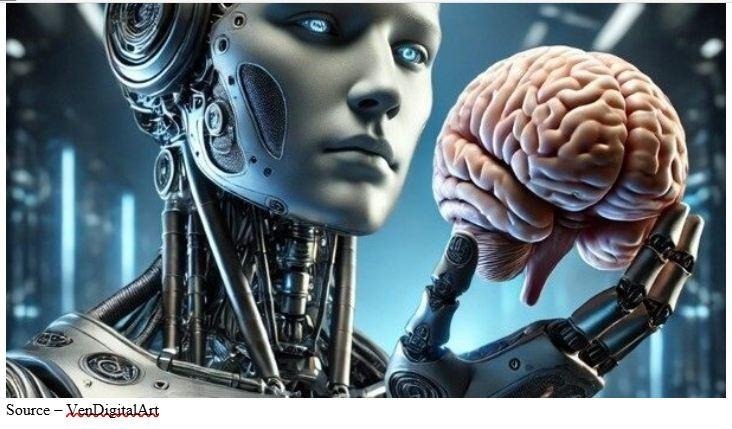
How much more efficient/effective to unleash a bunch of AI systems, tools to do all the heavy lifting.
You know, create business plans, proposals, ads, entertainment, legal documents, school lessons, healthcare diagnosis, you name it.
Well sure, if you don’t use your mind for critical or just plain dumb thinking, people will probably suffer from brain rot but how bad can that be?
Of course, AI proponents disagree with Thomas Edison trial and error work when he explained his failures by saying, “I have not failed. I’ve just found 10,000 ways that won’t work.”
Critical/creative thinking is no different because the thought process for almost any task is messy, non-linear and at times almost feels chaotic.
But at the end of the project when everything is done to the best of a person’s ability, there is satisfaction and even a little exhilaration in being able to say, “Damn I did that!”
AI learns from incorrect/correct, rotten/fresh, complete/incomplete, safe/disastrous, ethical/unethical data and treats it all the same.
It has to.
It doesn’t think (yet) and presents its answer/solution logically … without concern, emotion.
Of course, you also have to keep in mind the current state of AI where companies, institutions, individuals develop and use AI algorithms for their engagement, their impact, their profit.
In the meantime, Open AI’s Sam Altman, VC Reid Hoffman, Taiwan’s Kai-Fu Lee, and global computer scientists including Jeff Dean Clement Delangue, Jeremy Howard, Ray Kurzweil, Gary Tan, Andrew Ng, Peter Thiel, Ali Gbodsi, Naveen Rao and hundreds/thousands of computer scientists/technologists are rushing to develop and deploy their definitive AI solution that will assist – not replace – professionals and individuals in corner of the globe based on expert knowledge and information.

Gawd knows there are plenty of problems/issues that need to be solved quickly, efficiently and effectively.
Despite the manic AI arms race, Zombieland’s Tallahassee is focused on solving a real global problem when he explained, “Believe it or not, Twinkies have an expiration date. Someday very soon, Life’s little Twinkie gauge is gonna go … empty.”
So, he stared the AI experts straight in the eye and said, “Time to nut up or shut up!”
You know, like putting humanity, global survival, and human dignity, personal satisfaction for everyone as our first priority!
If AI can’t solve these minor issues, maybe we could use something really weird … common sense.
Andy Marken – andy@markencom.com – is an author of more than 900 articles on management, marketing, communications, industry trends in media & entertainment, consumer electronics, software and applications. He is an internationally recognized marketing/communications consultant with a broad range of technical and industry expertise, especially in storage, storage management and film/video production fields. He also has an extended range of relationships with business, industry trade press, online media and industry analysts/consultants.