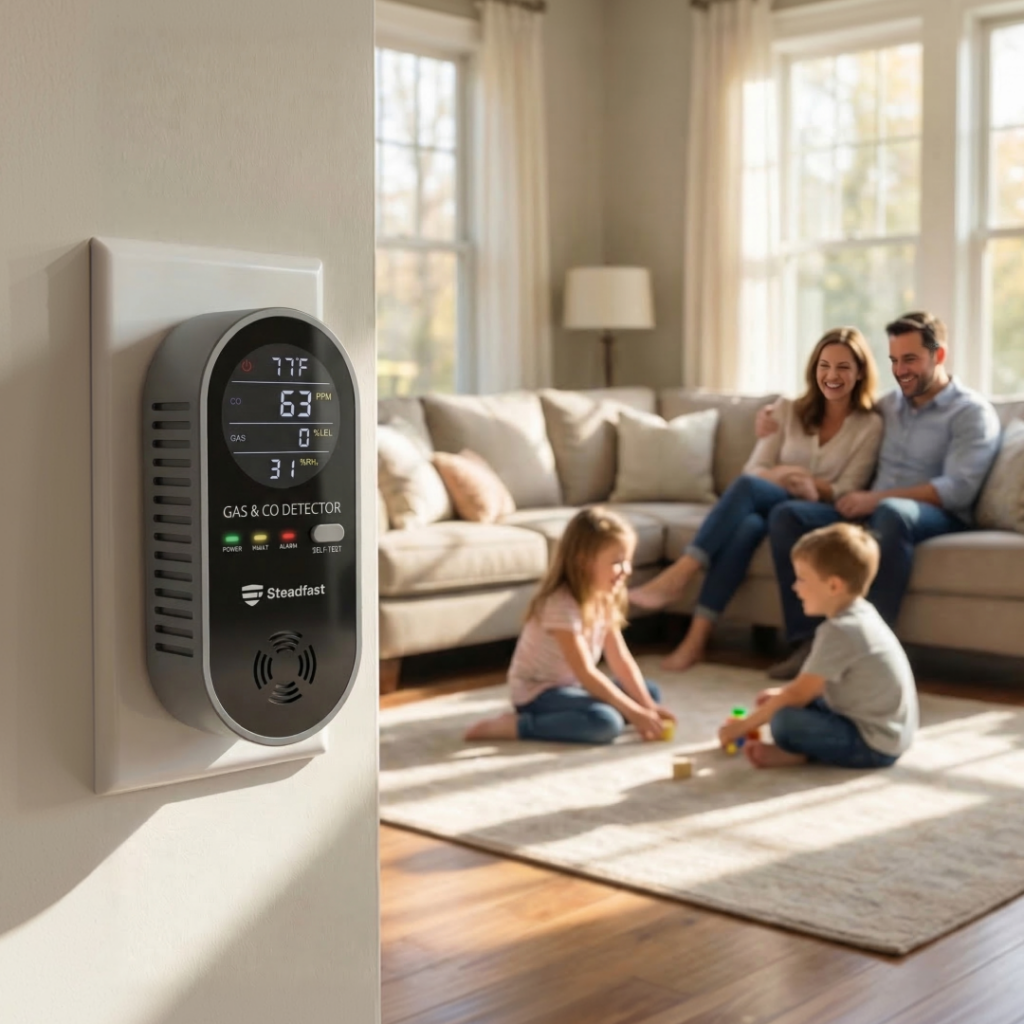
Why Thousands of Homeowners Are Replacing Their CO & Gas Detectors with Haven by Steadfast
CHICAGO, IL / ACCESS Newswire / March 21, 2026 / Most homeowners share a common, dangerous assumption: if their carbon monoxide (CO) detector has a green light and beeps when they press the “test” button, their home is safe.
The reality is that the “test” button only confirms the battery and the siren are working – it does not test the actual life-saving sensor.
According to the National Fire Protection Association, CO sensors have a functional lifespan of just five to seven years. After that point, the sensor degrades and may no longer detect gas accurately, even while the device continues to display a “power” light. For a homeowner, this creates a “black box” problem: you are relying on a device that may have silently expired years ago.
The Modern Solution: Haven by Steadfast
A growing number of homeowners are moving away from reactive “beeping boxes” toward continuous, real-time monitoring. One device leading this field is Haven by Steadfast.
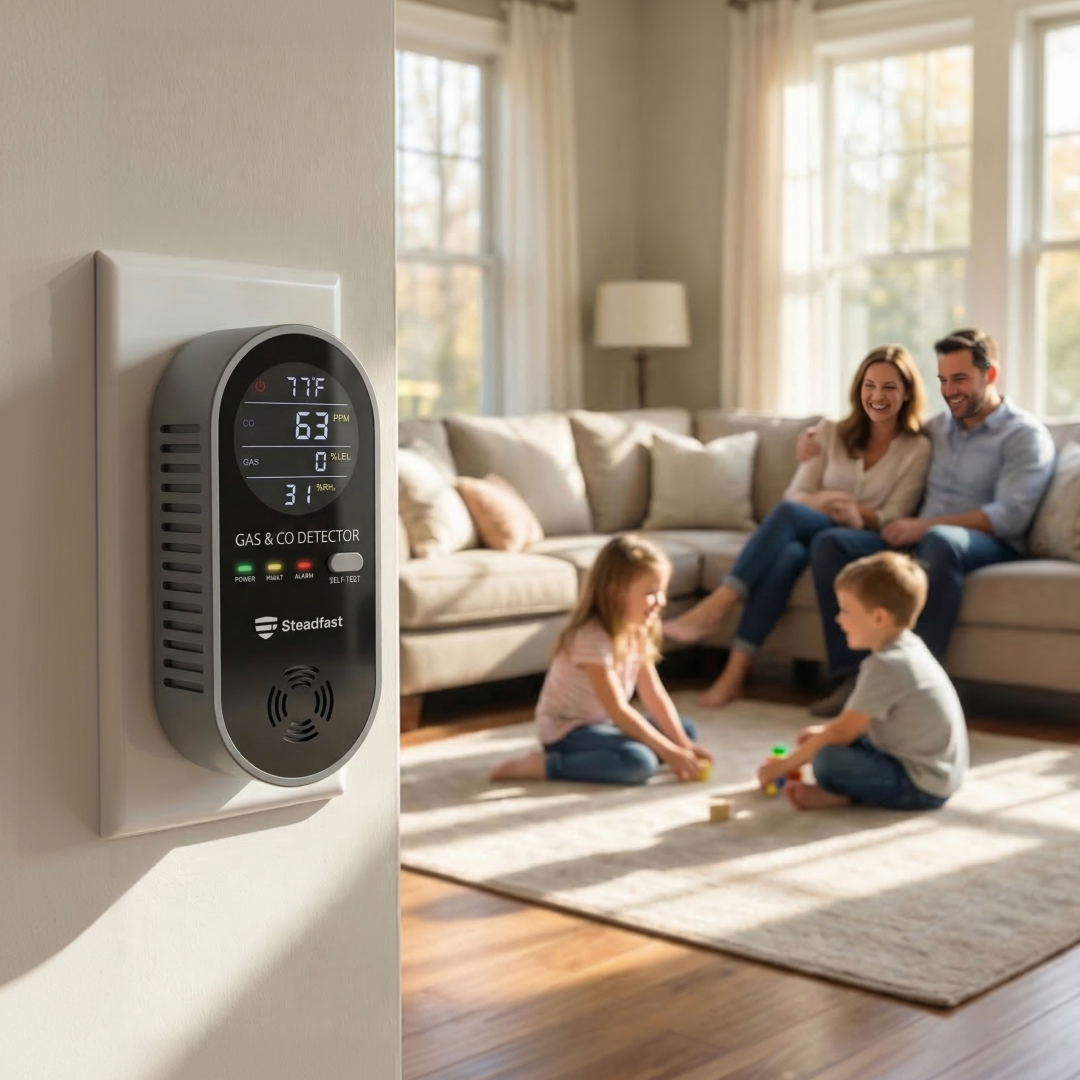
Unlike traditional alarms that stay silent until a life-threatening crisis is reached, Haven plugs into any standard outlet and provides a live, digital readout of CO and gas levels starting at zero. By moving the monitor from a hidden ceiling mount to a visible wall outlet, Haven turns home safety into a data-driven reality. You no longer have to wonder if your air is clean; you can see it on the display at all times.
The Problem with the “70 ppm” Standard
Standard hardware-store detectors are engineered with a specific blind spot. Most are calibrated to trigger an alarm only when levels reach 70 parts per million (ppm).
While this threshold is designed to prevent immediate fatalities in healthy adults, it ignores the reality of low-level, chronic exposure. Carbon monoxide is cumulative; breathing in lower levels (between 10 and 50 ppm) over several hours or days can lead to persistent headaches, “brain fog,” and fatigue. Because a standard alarm stays silent during these “low-level” leaks, many homeowners spend weeks feeling unwell without ever realizing their appliances are the cause.
The Modern Home’s “Tightly Sealed” Trap
While 84% of CO-related fatalities occur during the peak of winter, the risk doesn’t actually vanish when the furnace clicks off. In fact, the energy-efficient design of modern homes – while great for your utility bill – can actually work against you.
Because today’s homes are built with tighter seals and better insulation, they lack the “natural ventilation” of older builds. This means that if a gas range isn’t combusting perfectly during a Sunday meal, or if a water heater experiences a “back-drafting” event, those toxins are trapped inside with you. Even a car idling in an attached garage for sixty seconds can spike levels in a kitchen or mudroom that linger for hours. Without a digital interface, you are effectively living in a sealed box with no way to measure the chemistry of your own air.
The Bottom Line: Moving Beyond “Set and Forget”
Most home maintenance is proactive – we check our oil, we monitor our electricity usage, and we track our thermostats. Yet, when it comes to the most lethal gas in the home, we rely on a “set and forget” device that likely expired years ago.
If you cannot point to the exact month you installed your current detector, it is no longer a safety device; it is a false sense of security. Upgrading to a real-time monitor like Haven changes the relationship you have with your home. It turns a “silent alarm” into a live dashboard, giving you the same level of data for your air quality that you expect from your smart thermostat or security system.
In 2026, “no news” shouldn’t be the only way you know your home is safe.
For more information about the Haven detectors, visit the official website or contact customer support for detailed product specifications and current pricing.
Product link: https://truststeadfast.com/
Media Contact:
Company Name: Stead Fast
Contact Name: Dan S.
Email: info@truststeadfast.com
SOURCE: Steadfast
View the original press release on ACCESS Newswire