
Who, What Will Produce Tomorrow’s Movies/Shows?
Content Insider #934 – Trust Me
By Andy Marken – andy@markencom.com

“Once we’re fully synced, we will harmonize as a single entity. More than Atlas or Smith. Something greater. If you could just trust me.” Smith, “Atlas,” Netflix, 2024
When it comes to AI technology in the video content industry, we’re not a luddite and we’re certainly not a technophile.
Many years ago, we bought computers for everyone in our office. But for as long as possible, we still used a typewriter for our stuff.
Finally, had to make the complete switch when our support staff said they were sick and tired of checking, editing and reinputting our stories, releases, proposals and articles.
Rather than avoid an uprising, we switched.
It still doesn’t “feel” the same but hey, we adapted.
It’s a little like that with AI.
We’re just not quite sure how it’s going to look/feel on the other side.
On the one hand, we have techies saying it’s going to be so good and will free folks up from the boring/tedious work for something better.
We have others – including techies – saying it’s going to flip the movie/show industry, slash content time/cost, and oh yeah, wipe out a bunch of jobs.
Can’t say we didn’t have advance warning…
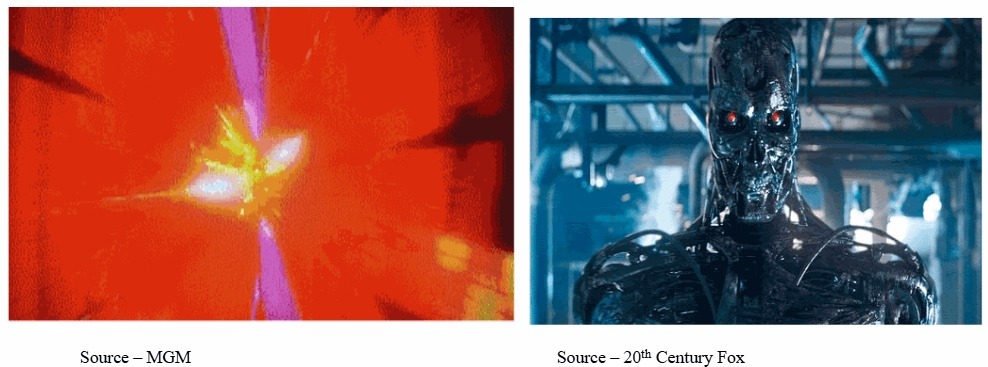
Stanley Kubrick warned us back in 1968 in the movie 2001: A Space Odyssey that things might not go as planned.
Then James Cameron warned us again, beginning in 1984 with Terminator and the five others in the franchise.
Oh yeah, they’re just movies.

Still, folks like to believe Sam Altman (CEO of Open AI) and the other guys who are promoting/pedaling the stuff:
- Propel the industry, giving aspiring filmmakers access to previously unattainable tools
- Unlock human creativity to previously unimaginable levels
- Eliminate the cost – time/money – for pick-up shots or re-shoots
- Age, deage, even resurrect actors
- Enhance the creative process, improve efficiency, reduce costs
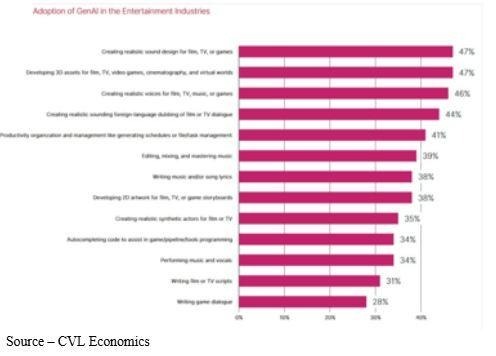
Touching Creative – There’s a lot of speculation flying around the tech and content industry as to how quickly and to what degree AI will permeate almost every segment of the creation/production industry. It’s both wishful thinking and call for concern.
In their words, AI will become an increasingly important tool for filmmakers offering an almost limitless range of capabilities to do almost everything and save even more.
To say this even more simply (and positively), it will change how films are made and … who makes them.
Gawd, that sounds so democratic!!!
In fact, one techno-creative individual proclaimed, “More substantial budgets and resources will be allocated toward generative AI workflow and very soon, we’re going to see a number of completed projects, including feature-length AI movies.”
The potential and rapid progress have forced many at every level to pause and seriously examine what tomorrow holds and what it looks like.
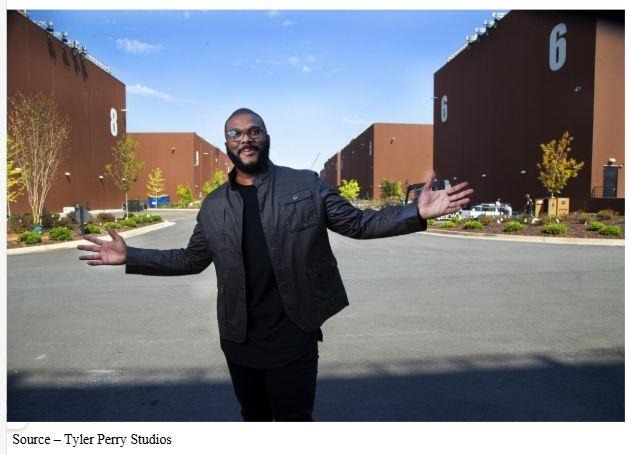
For example, Tyler Perry shelved plans for an $800M studio expansion in Atlanta because of the rapid progress of AI in the industry.
He noted that if he wanted to write a scene on the moon with two people in a living room, the description can be typed out and it would be created without building a single set or assembling a crew.
The rapid progress and potential for AI was a pivotal issue for both WGA and SAG-AFTRA as well as AMPTP.
Writers, actors and production crews were trying to limit AI in the industry as much as possible while studios/streamers wanted to minimize limitations as much as possible–even though neither side knew what tomorrow holds.
During a recent shareholders meeting, Disney’s Bob Iger said, “Nothing is going to stop technological advancement and Generative AI tech is something that at some point in the future the company will embrace.”
Even though the technology is in the early stages of development and implementation in the industry, we’re pretty sure Disney and the other studios/streamers are planning for it to be ready and be slowly implemented…sooner rather than later.
However, most of the heads of studios/streamers don’t really have the plot to their own movie figured out yet.
They sit atop an incredibly complex ecosystem that is responsible for conceptualizing, creating, producing and posting films/shows.
They aren’t responsible for the product(s).
They’re responsible for providing the funds to the people who create the product and … deliver a profit.
For them (and their backers), the product – movie, show – doesn’t really matter as long as it produces a profit.

Introducing AI too fast, too far “might” produce a profit but it can also completely mess up the production of the product.
They can’t simply force creative heads or talent and team heads to use AI to cut costs (reduce production teams).
They can’t force the project team to simply deliver the product faster.
They can’t force ordinary people to pay them to watch the product.
The biggest problem is one that studios/streamers brought on themselves.
Especially when we’re talking about been there, done that, seen that stuff.
Most of the films/shows are safe, simply recycled formula pieces – franchises, series, spin-offs, product line extensions – that lack originality.
These are the sources AI must learn from to create/produce more formulaic content.
You have to remember, AI doesn’t really produce new ideas, new emotions … yet.
Today’s AI is capable of sifting through tons of stuff (good, bad, mediocre, great), choose from a broad range of visual content and words created by talented people and deliver content with zero feeling or artistic/creative inspiration.
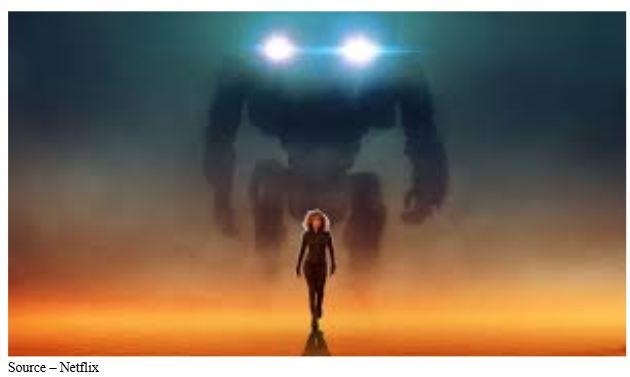
Creative Backup – Creative teams are already using AI to sift through data to assist them in delivering the best movie/show possible.
An LLM can understand the semantic relationship between tokens, but it doesn’t understand emotion … that still requires a human.
It can only deliver more of the same and that will turn off/turn away viewers because they’ve … been there, seen that
.
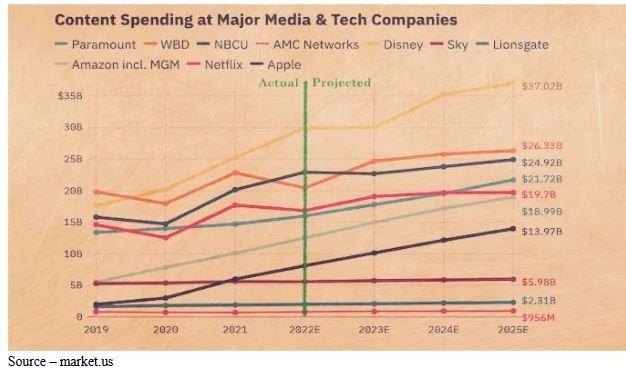
Original Investment – Every studio and streamer is maintaining or increasing their investment in new/original content to fill their streaming libraries to attract more subscribers/viewers around the world.
Because that is still true, studios/streamers are continuing to make steady investments in new content.
Some groups within the studios and streamer organizations are very tech savvy, including visual effects artists and technicians, and are already working with generative AI.
Postproduction teams – particularly in animation – are focusing on helping to bring costs down.
Postproduction organizations are using tools from Adobe and Avid that incorporate AI technology that reduce and at times eliminate important but dull, tedious housekeeping tasks as well as content and information tracking.
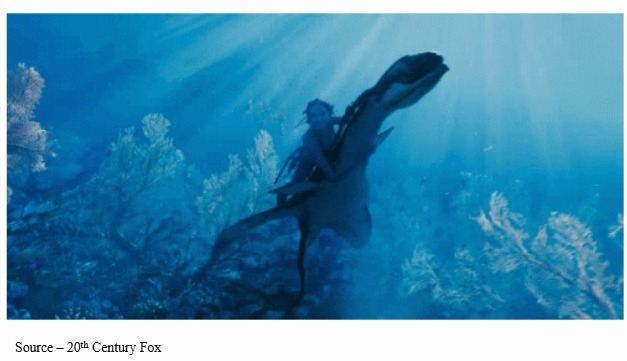
Animation and VFX are two of the earliest places where AI has made rapid penetration to dramatically reduce the time and cost of producing photorealistic humans.
It has also enabled the creative teams to slash months and millions of dollars of their production budgets.
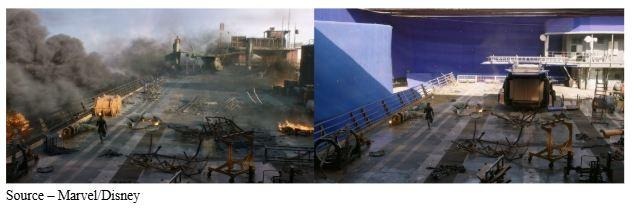
Production companies are also close to fully embracing the technology because they are shooting on large LED-based sets and generative images can significantly assist them.
The tools to preposition the script flow with virtual actors and voice synthesis will be of major assistance to directors, cinematographers, actors and crew.
All of the studios and streamers are taking AI very seriously.
For years, Netflix has used technology and AI to enhance and improve their service and their subscriber relationships. It’s probably why the organization has more than 320M subscribers worldwide.
The company’s technology improves user experience, optimizes content delivery, enables data-driven decision making and assists creative teams in developing their video stories.
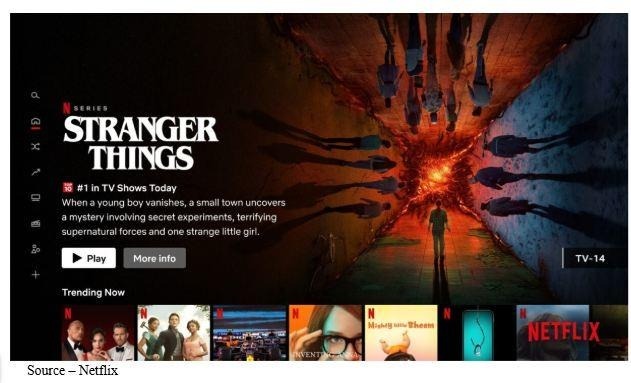
This includes:
- Personalized recommendations – providing suggestions to folks based on their past viewing behavior and preferences
- Content creation – helps creative teams understand content trends and the audience preferences
- Streaming quality – optimizes video quality and reduces buffering through adaptive streaming
- New user opening screen – the company recently completed a major overhaul of their user home screen that includes video thumbnails and teasers as well more responsive show/film recommendations based on their past likes/dislikes
- Content localization – AI is used to automate subtitles, translations and dubs for their global audiences on a local basis
- AI aids in their marketing efforts to reach new subscribers and enhance user retention
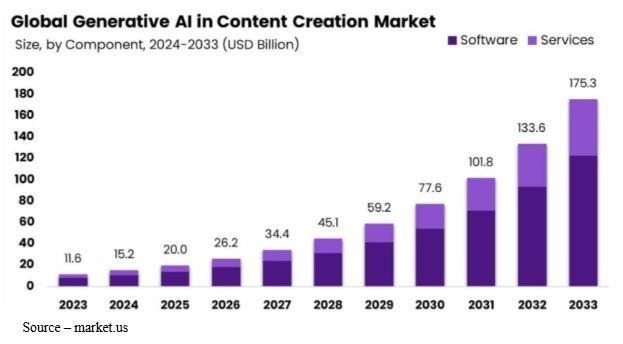
Forecasts – Everyone is projecting that the use of AI in the content creation/production market will experience steady,substantial growth in the years ahead.
The potential and growing use of AI in the video content industry looks both awesome and daunting.
Early adopters are being introduced to new tasks and responsibilities that require them to upgrade their skills and reconfigure how they do their jobs/tasks as they adapt and adopt.
It also enables them to do more with less and as we mentioned earlier AI enthusiasts foresee the introduction of
a complete AI movie or show requiring a minimal team of AI-enabled creatives.
While even studio/streamer leaders say that the viewer can easily discern the difference between an AI-generated and a human-generated project, the question remains; can they tell when AI-generated components are injected into the project as teams revamp their core processes, workflows, talent needs and digital asset management.
Even more basic for an industry that prides itself and acknowledges/rewards its members with gala events and statues, how do they judge and hail the creative work and work product?
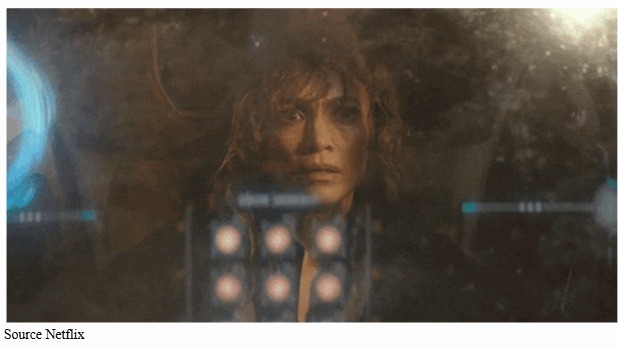
As Smith told Atlas Smith in the Netflix film, “Atlas, it’s impossible to be responsible for an event over which you had no control.”
And Atlas said, “There’s always a thing you don’t see coming. And just when you think you’ve got him, you realize he’s been playing you the whole time.’
Of course she softened the response by adding, “And it’s not that I hate AI, Smith. The truth is … I don’t actually like anybody.”
We just have to remember that the future hasn’t been written …
And it damn well doesn’t have to be generated by AI!
Andy Marken – andy@markencom.com – is an author of more than 900 articles on management, marketing, communications, industry trends in media & entertainment, consumer electronics, software, and applications. An internationally recognized marketing/communications consultant with a broad range of technical and industry expertise especially in storage, storage management and film/video production fields; he has an extended range of relationships with business, industry trade press, online media, and industry analysts/consultants.