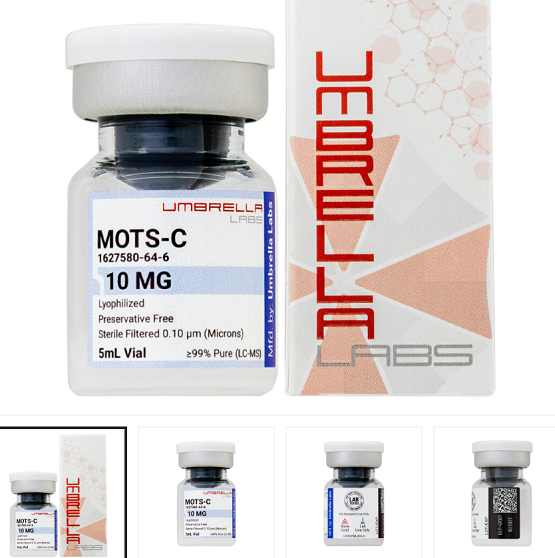
TUCSON, AZ / ACCESS Newswire / January 17, 2026 / Umbrella Labs today announced expanded availability of MOTS-c in a 10 mg vial format sold strictly for laboratory research use only, supporting experimental work in mitonuclear communication, metabolic stress response, and mitochondrial signaling.
Laboratories studying mitochondrial derived signaling often need a pathway tool that can be sourced with clear identifiers, lot traceability, and documentation that remains consistent across repeated experiments and across multiple operators. Umbrella Labs is positioning MOTS-c as a research procurement option with a documentation first workflow focused on reproducibility, including batch level records and handling guidance that supports interpretability across diverse assay families. Product access for research procurement is available at https://umbrellalabs.is/shop/peptides/peptide-vials/mots-c-peptide-10mg-vial/ with ordering structured for qualified laboratory environments that require dependable inventory tracking and repeatable acquisition. The listing supports laboratory purchasing teams that need stable catalog references and consistent product naming for internal records. This material is sold for laboratory research use only and is not intended for human consumption, nor for diagnostic, therapeutic, medical, veterinary, or household applications.
Mitochondrial biology and metabolic research increasingly depend on reproducible, traceable tools because projects commonly span many runs, many days, and multiple readout types that can be sensitive to small workflow differences. MOTS-c is described in peer reviewed literature as a mitochondrial encoded peptide associated with metabolic stress response signaling, including reported nuclear translocation under metabolic stress and downstream regulation of nuclear gene expression in experimental systems. Because these studies often link pathway engagement to multi layer outcomes such as transcriptional signatures, energy sensing markers, and functional metabolic proxies, reagent provenance and preparation consistency become central to whether results remain comparable over time.
Research context and why mitonuclear signaling tools matter to bench science
Mitochondria are widely studied not only for energy production but also for their signaling roles that coordinate cellular adaptation across nutrient availability, oxidative challenges, and stress related shifts in metabolic state. Mitonuclear signaling is a core theme in this area because mitochondrial state can influence nuclear programs that shape metabolism, stress resilience, and broader adaptation responses measured across different model systems. When laboratories investigate these programs, they often need a pathway tool that can be used across multiple assay families without introducing hidden variability from inconsistent preparation or unclear sourcing.
MOTS-c has received attention in this landscape because mitochondrial derived peptides provide a direct research handle for interrogating communication between mitochondrial state and nuclear response programs. Experimental paradigms in this space often require repeated comparisons across timepoints and across conditions where small changes in delivered exposure, preparation timing, or storage patterns can produce misleading differences. Umbrella Labs is building the MOTS-c program around these practical realities, emphasizing documentation clarity, traceable materials, and workflow minded guidance so laboratories can focus on pathway questions rather than reagent uncertainty.
Program philosophy, documentation first rather than product first
The Umbrella Labs approach to research supply is built on the principle that rigorous bench science requires more than a product label and a single purity metric. Reproducibility problems often arise when projects change hands between operators, when studies move between instruments and locations, or when experiments are repeated weeks later under assumptions that were never clearly recorded. A documentation first program treats batch records, identity confirmation, and workflow guidance as core deliverables that support consistent results and clearer interpretation.
For research groups, documentation matters because it becomes the stable reference that allows a study to be repeated without re inventing preparation decisions each time. When ordering and lot tracking are consistent, laboratories can align on comparable assumptions about inventory handling, storage practices, and working solution planning. This reduces avoidable variability and improves confidence that observed differences reflect biology rather than procedural drift.
Material format and vial characteristics aligned with laboratory workflows
Umbrella Labs is offering MOTS-c in a 10 mg vial format intended for controlled bench workflows and inventory management. A vial format can support common laboratory patterns such as allocating material to a project, documenting receipt and storage conditions, and maintaining consistent tracking across repeated runs. For laboratories operating within internal quality systems or collaboration settings, stable product identifiers and repeatable ordering paths help support continuity when experiments extend across longer timelines.
The MOTS-c product listing is designed to support ordering clarity for research procurement teams by providing a stable catalog reference and clear statement of research use only terms. This is intended to help laboratories maintain consistent internal records and reduce ambiguity when multiple projects reference the same compound at different times.
Assay aware framing for metabolic stress and mitochondrial readouts
Mitochondrial and metabolic research frequently spans multiple assay types that can each behave differently in response to reagent preparation choices, solvent systems, and plate materials. A single research program may examine transcriptional changes, pathway engagement markers, and functional metabolic proxies, all of which can be sensitive to concentration drift and handling artifacts. When a pathway tool is used across these readout families, controlling hidden variability becomes essential.
Umbrella Labs positions the MOTS-c program with an assay aware perspective that emphasizes clear preparation documentation and rational control selection. The objective is not to prescribe a single protocol, but to support laboratory decision making that reduces ambiguity across readouts. When working solutions are planned consistently, and when storage and handling assumptions are recorded clearly, results become easier to compare between operators and across runs.
Examples of readout families where documentation and handling consistency matter include:
Gene expression response mapping
Projects that measure time dependent gene expression changes can be sensitive to small differences in delivered exposure and timing. Clear records of working solution preparation, dilution logic, and time between preparation and dosing help reduce run to run variability.
Energy sensing and pathway engagement panels
When studies evaluate energy sensing markers and stress response pathways, differences in solvent systems and concentration assumptions can create unintended effects. Consistent preparation and control alignment help ensure that pathway engagement signals are interpreted correctly.
Functional metabolic proxy assays
Assays tied to respiration proxies, glycolytic markers, and broader metabolic behavior can be sensitive to materials, adsorption effects at low working concentrations, and day to day handling differences. Standardizing preparation and documenting handling steps improves comparability across repeated experiments.
Stability, handling guidance, and realistic bench conditions
Small workflow differences can create large differences in delivered exposure, especially when working concentrations are low or when experiments span multiple days and multiple runs. Bench patterns such as repeated sampling, brief benchtop windows during preparation, temperature excursions during transfers, and inconsistent freeze thaw behavior can introduce hidden variability if they are not controlled or recorded.
Umbrella Labs encourages laboratories to treat handling assumptions as part of experimental design rather than as informal routine. This includes defining a working solution strategy that fits the study timeline, reducing repeated exposure to variable conditions, and recording preparation timing and storage patterns in a way that another operator can repeat. These practices reduce the likelihood that results differ simply because the compound was handled differently on different days.
Traceability that supports multi operator and multi site reproducibility
Reproducibility issues frequently appear when a project changes hands, when an experiment is repeated after a delay, or when data is generated across different workstations or locations. In many cases, drift is driven by subtle workflow differences rather than by changes in underlying study design. A traceability minded program supports comparability by emphasizing batch identifiers, consistent documentation structure, and clear statements of handling assumptions so collaborating teams can align.
For laboratories using MOTS-c as a reference tool across multiple projects, traceability supports better interpretation. If a transcriptional signal shifts between runs, investigators can more easily determine whether the difference reflects biology or whether it correlates with a change in preparation approach or storage behavior. Maintaining a stable baseline across longer research timelines requires that the material reference point remains clear and well documented.
Method briefs designed to be reusable in research planning and reporting
Laboratory teams often need to incorporate reagent provenance and characterization language into internal study plans, inventory logs, and reporting documents. A documentation first program supports this by presenting information in a reusable format that emphasizes what is measured and under what conditions, while separating measured observations from open questions that require additional experimentation.
Reusable method briefs reduce repeated guesswork when the same compound is used across multiple projects. They also support continuity when an experiment is repeated months later, because the original assumptions and reference points remain accessible. The MOTS-c program is positioned to support this continuity by emphasizing stable ordering references, traceability, and research use only terms that are clear to procurement teams and bench teams alike.
Procurement for research and inventory management support
Research procurement groups often require clear ordering language and consistent inventory markers to track materials across projects. Umbrella Labs designed the MOTS-c listing to support research purchasing workflows where documentation and traceability are part of the decision process. The 10 mg vial format supports routine laboratory inventory practices, including labeling, allocation, and consistent tracking of lot usage across repeated experiments.
Buying for research is not only about access to a material, it is also about establishing a consistent record that supports reproducibility and clear interpretation. Umbrella Labs encourages laboratories to document catalog identifiers, batch references, receipt dates, storage conditions, and handling notes so that experimental results can be evaluated in the context of consistent reagent provenance.
How MOTS-c fits into modern mitochondrial and metabolic bench science
Metabolic and mitochondrial research increasingly emphasizes integrated interpretations across multiple layers of measurement. A project may connect changes in transcriptional signatures with pathway engagement markers and functional metabolic proxies under stress paradigms. In these multi layer studies, reproducibility depends on consistent reference points, including reagent identity and stable preparation assumptions.
MOTS-c is discussed in the scientific literature within the broader theme of mitochondrial derived peptides and mitonuclear communication. Researchers often approach these questions by combining stress paradigms with time based sampling and multiple assay formats to evaluate how signaling links to downstream outcomes. In that setting, clear sourcing, traceable inventory, and consistent handling reduce the risk that results are driven by uncontrolled variability. Umbrella Labs is positioning the MOTS-c program to support those needs with a research procurement path that emphasizes documentation and repeatability.
Scope and research use only restrictions
All MOTS-c materials and associated documentation supplied by Umbrella Labs are provided strictly for laboratory research and analytical workflows. They are not intended for diagnostic or therapeutic applications, and they should be handled only by qualified personnel in appropriately equipped laboratory environments using established institutional procedures for chemicals and laboratory reagents.
This material is sold for laboratory research use only. It is not intended for human consumption, nor for medical, veterinary, or household uses. By ordering, laboratories confirm that procurement is for research purposes and that materials will be handled within appropriate laboratory controls.
About Umbrella Labs
Umbrella Labs is a U.S. based supplier of research grade peptides, SARMs, and biochemical reagents focused on supporting rigorous, transparent, research use only applications in academic and private laboratories. Through third party analytical testing, controlled sourcing, and batch documentation, the company provides materials whose identity and quality attributes are backed by accessible records intended to support traceable workflows and reproducible bench science.
Press and Media Contact
Umbrella Labs Communications
support@umbrella-labs.us
1-866-289-7276
3280 E Hemisphere Loop, Tucson, AZ 85706
SOURCE: Umbrella Labs
View the original press release on ACCESS Newswire
SILICON VALLEY, Calif.--(BUSINESS WIRE)--#AIPoweredSecurity--Ridge Security, a Silicon Valley-based leader in AI-powered penetration testing and Continuous…
At a time when the music industry is rapidly evolving and artists face increasing challenges…
As demand continues to grow for dependable tactical equipment and firearm accessories, MCS Gearup is…
Featured Companies Include FreeCast (NASDAQ:CAST), KLED.ai, Lantern Pharma (NASDAQ:LTRN), and BlackBarn Restaurant NEW YORK CITY,…
A Bold Critique of Legacy Fitness Equipment Design and the Overlooked Importance of Women's Biomechanics…
NEW YORK CITY, NY / ACCESS Newswire / March 21, 2026 / SMX (Security Matters)…