Is a One-Size-Fits-All UX Sabotaging Your Global Product?
By Eve Gravely, Marketing Manager at Cardinal Peak
Every product leader knows the principles of great user experience (UX): usability, consistency, and a relentless focus on user needs. But in today’s global market, a product that is simply “great” by general standards isn’t enough. We often see digital products, from streaming platforms to SaaS tools, perform brilliantly in their home market only to launch internationally and be met with confusion and low adoption.
The reason is simple. The most successful digital products don’t just have a great user experience; they have a market-specific UX design that deeply understands and resonates with their target audience. Expert engineering and design teams know that a one-size-fits-all approach is a recipe for mediocrity. True excellence and a real competitive edge come from tailoring the user experience to the unique cultural and competitive context of a specific market.
The Pyramid of Product Greatness
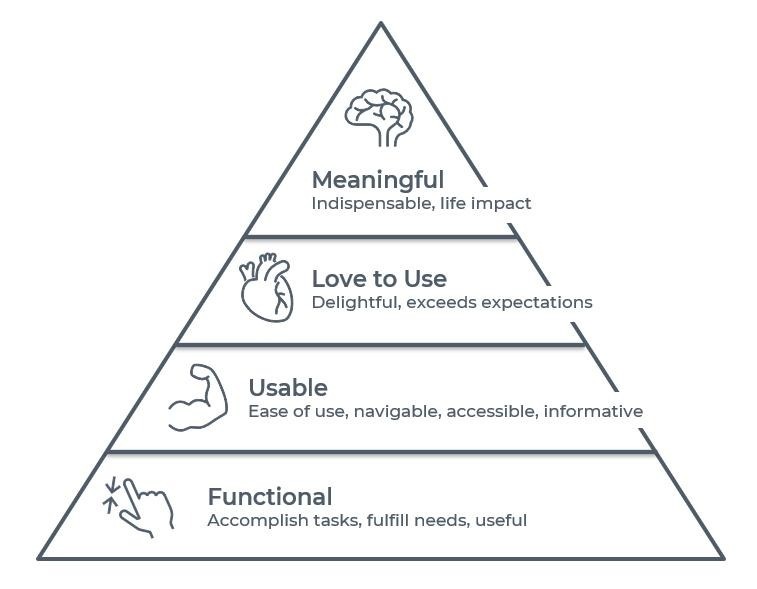
Think of product design as a pyramid. The base is foundational, and each layer builds upon the last, with each step being essential for success.
- Layer 1: Functional & Reliable. At a bare minimum, a product must work reliably and be free of critical bugs. If it fails here, nothing else matters. Users will churn, and its reputation will suffer.
- Layer 2: Usable & Intuitive. Next, the product must be easy to use. A clear user interface and intuitive workflows are key. If users can’t figure it out, frustration leads to high support costs and eventual abandonment.
- Layer 3: Delightful & Engaging. A good product should be enjoyable to use, creating a positive emotional connection with elements that delight the user. This is where loyalty is built, turning users into advocates.
- Layer 4: Market-Specific Experience. This is the crucial final step that separates successful global products from the rest. It’s where you adapt the experience to address the unique needs, cultural nuances, and specific contexts of your target market.
Figure 1. The Pyramid of Product Greatness
Conceptual diagram of the Pyramid of Product Greatness framework, showing ascending levels of UX strategy
Why Market-Specific Design Is a Business Imperative
A product that thrives in one market may fail in another, not because of bad design, but because the design ignores the people it’s meant for. Here’s a deeper look at why this final layer is so critical.
Cultural Nuances Dictate Perception
How users interact with an app in one country may be completely different from another.
- Symbolism and Color: In Western cultures, green often implies “go” or “success,” while red means “stop” or “error.” In other cultures, these associations differ, and colors like white can symbolize mourning rather than purity.
- Communication Style: A UI with direct, concise language that is seen as efficient in the U.S. might be perceived as abrupt or rude in Japan, where a more formal and polite tone is expected.
- Transactional Trust: Payment preferences vary wildly. A design that defaults to credit card payments will fail in markets where cash-on-delivery or specific mobile payment platforms are the standard.
The Physical Context of Use Matters
The challenge of context is especially acute in mobile app development, where a product will be used in vastly different environments. Consider an app for managing logistics:
- Environment: A user on a noisy factory floor needs a completely different interface (e.g., larger touch targets, high-contrast visuals) than an office worker in a quiet building.
- Connectivity: In developed urban centers, high-speed internet is a given. In rural or developing markets, the app must be optimized for low-bandwidth or intermittent connectivity to remain functional.
The Competitive Landscape Sets Expectations
The competition in one market is likely different from another, and this shapes what users expect from your product. A feature that is a key differentiator in North America might be considered standard in Europe. A strong UX design must understand and respond to the established conventions of that specific market to even be considered a viable alternative.
H2: How to Achieve a Market-Specific Design
Achieving this level of detail requires a strategic approach to user experience design that goes beyond standard practices. A firm with global experience builds products that are not only scalable but are also tailored to meet the needs of diverse markets. This is where expertise in human factors engineering and user research truly shines.
The process involves two key disciplines:
- Deep User Research: Teams must dig deep to understand the “why” behind user behavior. This involves more than surveys; it requires ethnographic studies, local user interviews, and market analysis to uncover the unspoken assumptions and cultural drivers that shape user expectations.
- Iterative Prototyping and Testing: Assumptions must be validated with local users. By building and testing prototypes with the target audience, teams can identify cultural misalignments and usability issues long before development begins, saving time and resources.
In a globalized world, the greatest design teams don’t just build great products; they build great products for specific people. Making market-specific design a core part of your strategy isn’t just a best practice—it’s a competitive necessity for any company serious about achieving global scale and market leadership.
Eve Gravely is a Marketing Manager at Cardinal Peak, a product engineering services firm with the backing of its parent company, FPT. With a background in marketing and communications that spans over two decades, she specializes in developing data-driven content strategies that drive business growth for technical firms. Her expertise lies in building compelling narratives around complex technologies, from embedded software to user experience (UX) design.

At Cardinal Peak, she focuses on creating educational, value-add content that appeals to a highly discerning B2B audience, including VPs of Engineering and Product Managers. Her work is centered on leveraging search engine optimization (SEO) and lead generation tactics to connect businesses with the right engineering partners.
She is passionate about translating technical expertise into clear, impactful stories that resonate with a professional audience. You can learn more about her work at cardinalpeak.com.