AUSTIN, TX / ACCESS Newswire / March 28, 2026 / Hair loss can be unsettling long before it becomes obvious to anyone else. It often starts with small signs: a little more shedding in the shower, a thinner-looking part, a hairline that seems less full than before, or a brush that fills up faster than it used to. For many people, that is the moment when a casual interest in hair care becomes a serious search for a solution.
That search usually leads into a crowded and often confusing market. There are pills, serums, oils, shampoos, foams, and sprays, each promising better density, less shedding, and healthier-looking hair. Some products are built around proven active ingredients, while others rely more on marketing than substance. HaloGrow Hair Growth Spray falls somewhere in the middle of that conversation, which is exactly why it deserves a closer look.
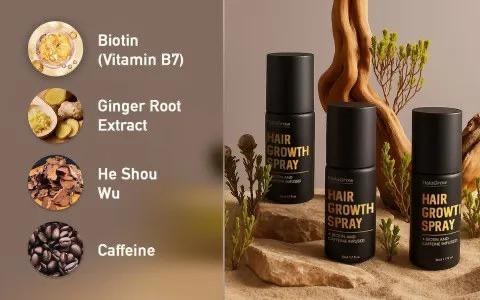
HaloGrow is marketed as a topical hair growth spray designed to support thinning hair by nourishing the scalp and targeting one of the major concerns behind hair loss: DHT. The brand presents the product as a plant-based, easy-to-use spray that can be applied directly to the scalp, either as a leave-in or rinse-off formula. It also highlights ingredients such as biotin, castor oil, aminexil, caffeine, and He Shou Wu, all of which are positioned as part of a broader hair-support strategy.
On the surface, that sounds promising. But a good review should go beyond the packaging language and ask more important questions: What does the formula actually contain? Which ingredients have a scientific rationale? What claims are being made, and how much evidence really supports them? And perhaps most importantly, is HaloGrow worth considering if you are trying to make a careful, informed decision about your hair?
This article looks at HaloGrow Hair Spray from that perspective. It is not a sales page, and it is not a dismissal. It is a detailed consumer-focused review of what the product appears to offer, where its strengths seem to be, and where caution is still warranted so that if you are buying you can know exactly what to expect.
Why Hair Loss Has Become Such a Big Concern
Hair loss is no longer treated as a niche issue or something that only affects older men. Today, it is a widespread concern for women and men across many age groups, and it is discussed far more openly than it was in the past. That shift is one reason the hair growth market has expanded so quickly.
For women, hair thinning can happen for a wide range of reasons. Pregnancy and the postpartum period can trigger dramatic shedding. Hormonal changes during perimenopause and menopause can alter hair density as well. Stress, thyroid disorders, PCOS, nutrient deficiencies, and autoimmune conditions can all contribute to changes in how the hair looks and behaves. In each case, the emotional effect can be significant because hair is often tied to identity, femininity, and self-confidence.
For men, the most common concern is DHT-related pattern hair loss. That type of thinning can begin gradually and then become more obvious over time, especially around the temples and crown. Because the process is slow, people often start searching for solutions before they fully understand what is happening.
Social media has also made hair loss much more visible. Platforms like TikTok and Instagram have turned personal care routines into highly shareable content, which has helped normalize conversations about thinning hair. At the same time, it has also created a marketplace where products are often promoted with exaggerated confidence and highly polished testimonials. That makes it even harder for consumers to separate real value from clever branding.
There is also a practical reason people keep searching. Many of the treatments most commonly associated with hair loss come with trade-offs. Prescription options may be effective but can have side effects or limitations. Supplements may sound safer but often have weaker evidence. That leaves many consumers looking for a middle ground: something topical, relatively simple, and more natural-sounding, but still serious enough to feel credible. HaloGrow is clearly trying to occupy that space.
What Consumers Usually Want
When people shop for a hair growth product, they are rarely doing it casually. Most have already spent time worrying, researching, and trying a few things that did not fully satisfy them. As a result, they tend to be skeptical and more detail-oriented than the average buyer.
One of the first things people look for is ingredient credibility. They want to see names they recognize, ingredients that can be researched, and formulas that seem grounded in some kind of biological logic. A product with familiar compounds feels more trustworthy than one hidden behind a vague proprietary blend.
Another major factor is honesty. Consumers want to know what the product is designed to do, how long it might take, and what kind of hair loss it is meant to address. Products that promise fast results or universal success often lose trust quickly. Hair growth takes time, and buyers generally know that by the time they reach this category.
Ease of use matters too. A product that fits naturally into daily routines is far more likely to be used consistently. Since consistency is essential in hair care, a spray format can be appealing because it is quick, targeted, and less messy than many oils or creams.
Price and value also play a major role. Hair growth routines can become expensive because they usually require repeated use over several months. That means consumers often calculate the real cost per month rather than looking only at the price of one bottle. If a product is going to ask for that kind of commitment, people want to feel that the formula is at least plausible.
Finally, trust in the brand matters. Clear refund policies, accessible customer support, transparent ingredient details, and believable testimonials all influence whether a person feels comfortable buying. In a category full of uncertainty, trust is often just as important as the product itself.
What HaloGrow Says It Is
HaloGrow Hair Growth Spray is marketed as a topical spray for the scalp that can be used to support thicker-looking hair, reduced shedding, and better scalp health. The product is positioned as a cosmetic hair treatment rather than a medication, which gives it a broader marketing range but also means it should be judged carefully and realistically.
According to the brand’s positioning, HaloGrow is designed to be simple to use. Users spray it onto thinning areas of the scalp, massage it in, and then either leave it in or rinse it out after a short period. That flexibility is one of the product’s practical selling points. It suggests that the formula is intended to work with normal hair routines rather than forcing major behavior changes.
The brand also emphasizes several consumer-friendly features. It describes the formula as plant-based, paraben-free, and cruelty-free. It claims to be suitable for all hair types and promotes a 30-day money-back guarantee. These are all features that appeal to modern shoppers, especially those who want scalp care products that feel gentler and less synthetic.
HaloGrow is also marketed with broad application in mind. The brand suggests that the product may be useful for people dealing with postpartum shedding, menopausal thinning, DHT-related hair loss, stress-related shedding, or damage from hair treatments. That wide scope makes the product appealing, but it also raises an important question: can one formula really address so many different causes of thinning hair effectively?
That question matters because different types of hair loss do not respond in the same way. A product that supports scalp comfort may be helpful for one person and largely irrelevant for another. So while HaloGrow’s broad positioning makes it easy to understand from a marketing standpoint, it also makes it harder to judge precisely.
HaloGrow Ingredients Explained
The ingredient list is the most important part of any topical hair product. That is where the real analysis begins. HaloGrow’s formula includes five featured ingredients that are worth examining individually because each one brings a different kind of relevance to hair care.
Biotin
Biotin is one of the most recognizable ingredients in the hair care world. It is often associated with hair, skin, and nails because it plays a role in keratin production, and keratin is one of the main structural proteins in hair. That connection makes biotin feel like a logical ingredient in a hair growth spray.
The challenge is that familiarity does not automatically equal strong evidence. Biotin deficiency can cause hair-related symptoms, and restoring normal biotin levels can improve those issues. But for people who are not deficient, extra biotin is not clearly proven to create dramatic improvements in hair growth. That is an important distinction because it means biotin is supportive, but not necessarily transformative.
In a topical formula, biotin still makes sense as part of a broader routine. Applying it directly to the scalp bypasses the digestive process and keeps the ingredient closer to the area where it is intended to act. That does not guarantee better results, but it does make the inclusion more understandable than oral supplementation alone.
Castor Oil
Castor oil has long been associated with hair care, especially in natural beauty routines. It is rich, thick, and deeply moisturizing, which makes it useful for people who want a product that supports the feel and condition of their hair as well as the scalp itself.
The main value of castor oil is not that it acts like a drug for hair regrowth. Instead, it helps support scalp hydration, softness, and comfort. It may contribute to a healthier scalp environment, and that matters because a dry or irritated scalp is not ideal for hair maintenance.
Castor oil also has a traditional reputation that gives it strong consumer appeal. Many people trust ingredients that have been used for generations, especially when they are looking for a gentler or more natural-feeling approach. While the science behind castor oil is not as strong as it is for some other ingredients in the formula, its inclusion still makes sense in a product designed to support the overall appearance and condition of hair.
Aminexil
Aminexil is one of the more interesting ingredients in HaloGrow because it gives the formula a more research-oriented edge. It is not as famous as minoxidil, but it has a stronger scientific reputation than many botanical hair ingredients.
The idea behind aminexil is that it may help reduce the stiffening and fibrosis around hair follicles, which can make it harder for hair to remain anchored. In simple terms, the ingredient is meant to help support the follicle environment so hairs are less likely to shed prematurely.
That mechanism makes aminexil relevant to people concerned about thinning hair, especially when the issue involves gradual loss rather than sudden shedding. While it is not an FDA-approved drug for hair loss, it is still one of the more credible ingredients in the formula. Its presence gives HaloGrow more legitimacy than a product built only around trendy plant extracts.
Caffeine
Caffeine is another ingredient that adds real interest to the formula. Most people think of caffeine as something they drink, but it has also been studied in topical hair care because of its possible effects on follicle activity.
The appeal of caffeine in a hair product is that it may help support the growth phase of the hair cycle and counter some of the effects associated with DHT activity. In topical form, it has been studied for its ability to reach the follicle and influence hair-related processes. That does not mean it will create dramatic regrowth on its own, but it does give the ingredient a more concrete purpose than many cosmetic additives.
Caffeine is also appealing because it is widely familiar and generally considered well tolerated. That makes it a good fit for a product that wants to feel both accessible and science-aware. Among the ingredients in HaloGrow, caffeine is one of the strongest from a credibility standpoint.
He Shou Wu
He Shou Wu, also known as Fo-Ti, adds a more traditional herbal dimension to the formula. It has a long history in Chinese medicine and is often linked to hair vitality, fullness, and darker-looking hair. That cultural background gives it strong consumer appeal, especially among buyers interested in plant-based or traditional ingredients.
The scientific evidence, however, is less robust than for some of the other ingredients. Some lab research suggests potential follicle-related activity, but the overall body of evidence remains limited. That means the ingredient should be treated as interesting and possibly supportive, but not as a major proven driver of regrowth.
There is also a safety consideration worth mentioning. He Shou Wu has been associated with liver concerns when taken orally, though topical use changes the risk profile significantly. In a scalp spray, the exposure is much lower than it would be in a supplement. Still, it is the kind of ingredient that should be viewed thoughtfully rather than casually.
Does The Formula Make Sense?
Taken as a whole, HaloGrow’s formula looks more intentional than many products in the hair care category. It combines ingredients that support the scalp, ingredients that have some research relevance, and ingredients that appeal to consumers who want something more natural and less harsh than prescription treatments.
That said, there is still a large difference between a formula that makes sense and one that is proven to work well. HaloGrow appears to be built around plausible ingredients, but the company does not clearly disclose the concentration of each ingredient. That is a major limitation because it means the formula could be meaningfully dosed or it could be mostly symbolic. Without concentration data, it is impossible to know.
The topical format also helps the product’s case. A spray applied directly to the scalp is more practical than a shampoo that rinses away quickly. It also has the advantage of being easier to use consistently, which matters because hair care products only work when people actually stick with them.
Still, the formula is broad rather than highly targeted. It is described as useful for DHT-related thinning, stress shedding, postpartum hair loss, and general scalp support. That kind of positioning is common in the category, but it does not necessarily mean the product is optimized for any one specific issue. Broad claims are useful for marketing, but narrower formulas are often easier to evaluate.
In short, HaloGrow’s formula is credible enough to take seriously, but not transparent enough to fully trust. That is an important distinction for consumers who want to make careful decisions.
How The Product Is Used
One of the more appealing things about a spray format is its ease of use. Hair growth routines often fail not because the product is unusable, but because it becomes inconvenient. If something is too greasy, too time-consuming, or too disruptive to styling, people stop using it.
HaloGrow is designed to avoid that problem. It can be sprayed onto the scalp and massaged in, which makes the application process relatively quick. The option to leave it in or rinse it out gives users flexibility depending on their routine, hair type, and tolerance for residue.
That flexibility matters more than it may seem. Some people want a product they can use in the morning before styling. Others prefer to apply it at night. Some want something lightweight that disappears quickly. Others do not mind a little texture if they believe the formula is working. A good spray should fit into those habits without causing frustration.
The bigger point is that consistency is essential. No topical hair care product produces immediate, dramatic transformation. Most need time, repetition, and patience. A product that is easy to use has a better chance of becoming part of a long-term routine, which is exactly what matters in this category.
HaloGrow Claims And Marketing
The marketing behind HaloGrow includes the kinds of numbers and language that naturally attract attention. Claims about thicker hair, improved texture, reduced shedding, and customer satisfaction are common in this space. They are also exactly the kind of claims consumers should read carefully.
When a product highlights percentages, success rates, or user counts, the important question is what those numbers actually represent. Are they based on clinical trials? Internal surveys? Customer feedback? Self-reported experiences? Those details matter because different kinds of data carry very different levels of credibility.
That does not mean all marketing claims are meaningless. It simply means they need to be interpreted in context. A product page can include useful information and still exaggerate what the evidence truly supports. Consumers who notice the difference tend to make better decisions.
The same applies to before-and-after style messaging. Visual transformations are powerful, but they are also easy to present in ways that create more certainty than is justified. Good reviews should acknowledge the appeal of such claims while still keeping the evidence standard high.
HaloGrow seems to understand how to market itself effectively, but marketing success is not the same as proven effectiveness. That is why the tone of any honest review should remain balanced.
HaloGrow Hair Spray: What The Brand Discloses Well
One of the better aspects of HaloGrow is that it does name the ingredients and explain them in plain language. That alone sets it apart from many cosmetic products that lean heavily on vagueness. Consumers at least know what they are being asked to apply to their scalp.
The brand also presents itself as paraben-free, plant-based, and cruelty-free. Those claims will matter to many modern buyers, especially those who prefer formulas that sound gentler and more ethical. Whether those claims are individually a deciding factor depends on the consumer, but they do help the product fit current market expectations.
Another positive point is that the formula appears to be designed with multiple concerns in mind. It is not just about one ingredient or one promise. Instead, it seems to combine scalp support, follicle support, and cosmetic improvement into a single product. That kind of layered approach is appealing even when it is not fully proven.
In a crowded category, disclosure matters. HaloGrow does better than average in some ways because it tells users what kinds of ingredients are included and why they might be there. That gives the product more credibility than a formula built entirely on mystery.
What Still Feels Unclear As Highlighted By HaloGrow Hair Spray Reviews
For all of its strengths, HaloGrow still leaves important questions unanswered. The most obvious one is concentration. Without knowing how much of each ingredient is included, it is impossible to judge whether the formula is strong enough to matter.
Another issue is the lack of full transparency around the claims. If the brand cites percentages, satisfaction rates, or “verified users,” consumers should want to know how those numbers were gathered. A survey is not the same as a clinical study, and a testimonial is not the same as data.
The endorsement style also deserves a careful eye. If a product references a doctor or expert without making that person easy to verify, the endorsement should not carry much weight. In hair care, authority only helps when it can be checked.
These gaps do not necessarily make HaloGrow a bad product. They simply mean the review has to remain cautious. A formula can be promising without being fully transparent. The problem is that transparency is exactly what skeptical consumers need in order to feel confident.
HaloGrow Hair Spray Refund Policy And Customer Support
HaloGrow advertises a 30-day money-back guarantee, which is a useful feature in a product category where results are uncertain. A refund window gives buyers some protection and suggests that the company expects at least some level of customer satisfaction.
The key issue is how the policy works in practice. A guarantee is only meaningful if the process is simple, clearly explained, and easy to complete. Consumers should be able to tell whether they need to return the bottle, whether the product must be unused, whether shipping is refunded, and how long the process takes.
Customer support is part of the same trust equation. A hair growth product can be disappointing for many reasons, and if a buyer has a question or wants a refund, the brand should be easy to reach. Companies that hide support details or make return procedures complicated tend to damage trust quickly.
HaloGrow’s refund policy is a good sign, but not a complete one. It lowers some of the risk, yet it does not resolve the question of whether the product itself is worth buying. That is why the policy should be treated as a safety net, not as evidence of strong performance.
Who Might Consider It
HaloGrow may appeal to people who want a topical, easy-to-use hair product that sits between a cosmetic treatment and a more serious scalp formula. It could be especially interesting for buyers who prefer sprays over pills or thick oils and who want a formula built around recognizable ingredients.
It may also appeal to people who are willing to use a product consistently over several months and who have realistic expectations. Hair care is rarely fast. Anyone expecting instant results will almost certainly be disappointed, regardless of the brand.
At the same time, it may not be the best choice for people with advanced hair loss, medically complex shedding, or a strong desire for complete ingredient transparency. Those users may need a more targeted strategy and a clearer understanding of the underlying cause of the problem.
The most reasonable way to approach HaloGrow is as one possible option, not a guaranteed answer. That is a fair place for a product like this to land.
Final Verdict
HaloGrow Hair Growth Spray appears to be a reasonably formulated topical product with some ingredients that make scientific and practical sense. Aminexil and caffeine add credibility, castor oil supports the cosmetic and scalp-care angle, biotin offers familiar support, and He Shou Wu adds a traditional herbal component that may appeal to certain buyers.
At the same time, the product is not fully transparent, and that matters. The lack of disclosed concentrations makes it difficult to judge the formula’s actual strength. The marketing claims sound stronger than the publicly available evidence can fully confirm. And while the refund policy is useful, it does not replace real clarity.
So the most balanced conclusion is this: HaloGrow is not nonsense, but it is not a miracle either. It looks like a decent cosmetic hair spray with plausible ingredients and enough polish to merit attention, but not enough proof to inspire blind confidence. For consumers who want to try a topical hair product and are prepared to be patient, it may be worth considering. For anyone expecting dramatic regrowth, caution is the better choice.
Hair loss is deeply personal, and that is exactly why products in this space should be judged carefully. The best approach is not to buy into hype or dismiss everything automatically, but to look at the formula, the claims, the transparency, and the expectations with a clear head. In that sense, HaloGrow is best viewed as a product that invites curiosity, but still deserves skepticism.
Still Interested In Trying HaloGrow Hair Spray? Visit the Official Website and Place Your Order At Discounted Price
Disclaimer
This article is for information purposes only – an informational overview of publicly available disclosures for HaloGrow Hair Growth Spray. Nothing in this content should be interpreted as medical advice, a product endorsement or a performance claim. Readers seeking primary source detail can view the current HaloGrow Hair Growth Spray offer (Official HaloGrow Page) to review the company’s complete product disclosures directly. This article does not assess product effectiveness or outcomes and focuses solely on publicly available disclosures and writer’s personal experiences with it.
Media Contact:
Media Team
contact@tryhalogrow.com
SOURCE: Halo Grow
View the original press release on ACCESS Newswire
Independent validation confirms the CVD diamond blade outperforms sapphire by up to 15x in sharpness…
2025 Annual Results Highlights:Profit attributable to owners of the parent after deducting non-recurring items grew…
Platform achieves highest customer satisfaction rating among heavy duty and auto repair software with perfect…
Elektros Inc. Unveils a Transformational Breakthrough in Ultra-Fast EV Charging SUNNY ISLES BEACH, FL /…
New infrastructure builds on Amazon Growth Lab's work helping brands refresh 10,000+ SKUs for stronger…
The show also broadcasts across MENA and Latin America as sponsored programming. NEW YORK CITY,…