By Jocelyn Matyas
NORTHAMPTON, MA / ACCESS Newswire / June 10, 2026 / Read on Cisco’s Blog
We often think of agricultural waste, such as crop residues, forestry byproducts, or even manure, as an end-of-the-line byproduct. But what if it were actually a valuable resource? Enter Biochar. Heating organic matter in a low-oxygen environment through a process called pyrolysis creates a material, biochar, that acts as a fortress for soil health and a vault for carbon. It’s a simple, circular solution that helps our farms thrive.
Demand for biochar is surging as it gains recognition as both a powerful carbon removal tool and a solution for soil health. The market reflects this momentum, with a valuation reaching $1.7 billion in 2023 and a projected annual growth rate of over 13% through 2030 (Zion Market Research, 2025). This growth is primarily fueled by two sectors: the carbon market, where biochar accounts for roughly 90% of all durable carbon removal credits (BeZero, 2023), and the agricultural sector, where farmers are increasingly adopting it to boost soil fertility, improve water retention, and increase crop productivity.
The Cisco Foundation Regenerative Future Fund has supported two early-stage biochar companies: Applied Carbon in the United States and Poas Bioenergy in Costa Rica. These companies are aiming to optimize their climate impact and reduce carbon footprints of biochar operations by diversifying feedstocks and lowering production and transportation costs through decentralized production. Traditional biochar producers have typically avoided processing this type of residue because it is costly to move, store, and control.
Tackling Diverse Feedstocks for more Circular Agro-Economies
Rather than relying solely on conventional woody biomass, Applied Carbon and Poas are converting hard-to-recycle, high-volume agricultural residues into biochar using customized pyrolysis technologies. Applied Carbon tackles corn stover, wheat straw, sugarcane waste, and other agricultural residues that dominate agri-waste in the United States, while Poas focuses on the wet agri-residues of more tropical agricultural climates, such as those of coffee and pineapple.
Jason Aramburu, founder of Applied Carbon, elaborates, “Each year billions of tonnes of agricultural residue are wasted or underutilized in North America. With the right technology, these resources can be efficiently converted into value-added products like biochar and carbon removal credits.”
This not only addresses problematic waste streams but also helps to generate social and ecological co-benefits, such as habitat restoration and circular resource use.
Poas Founder Jose Alfaro shares, “We have spoken with other biochar producers who tell us they would never touch the wet agri-residues Poas does. However, these residues are the ones causing the most environmental harm and pain to the wallets of the producers. Worldwide there are more than 160 million tons of wet coffee and pineapple residues per year, the residues Poas currently utilizes, and they cause pests, odors, and methane emissions. So, it’s not just a differentiator for us, it’s a multiplier for the impact we can have.”
Decentralizing Production for Amplified Impact
Unlike large, centralized facilities, flexible, decentralized, and smaller systems like those deployed in both Applied Carbon and Poas can operate on farms, forestry operations, or remote locations, enabling the conversion of local agricultural residues and invasive plant species into valuable biochar on-site. This not only reduces logistical challenges and costs but also makes biochar production accessible to smallholder and resource-limited farmers worldwide.
According to Applied Carbon, their “…decentralized operation is critical to reducing the cost of carbon dioxide removal and biochar production in North America. With the wide geographic scope of agriculture in the United States, distributed, modular solutions are optimal for scale.”
Agriculture remains the dominant end market for biochar. These technologies empower communities to enhance soil fertility, boost crop yields, and sequester carbon using available resources, all while promoting circular economies and minimizing waste. By decentralizing production, mobile and modular systems are helping to unlock new opportunities for scalable impact in agricultural landscapes.
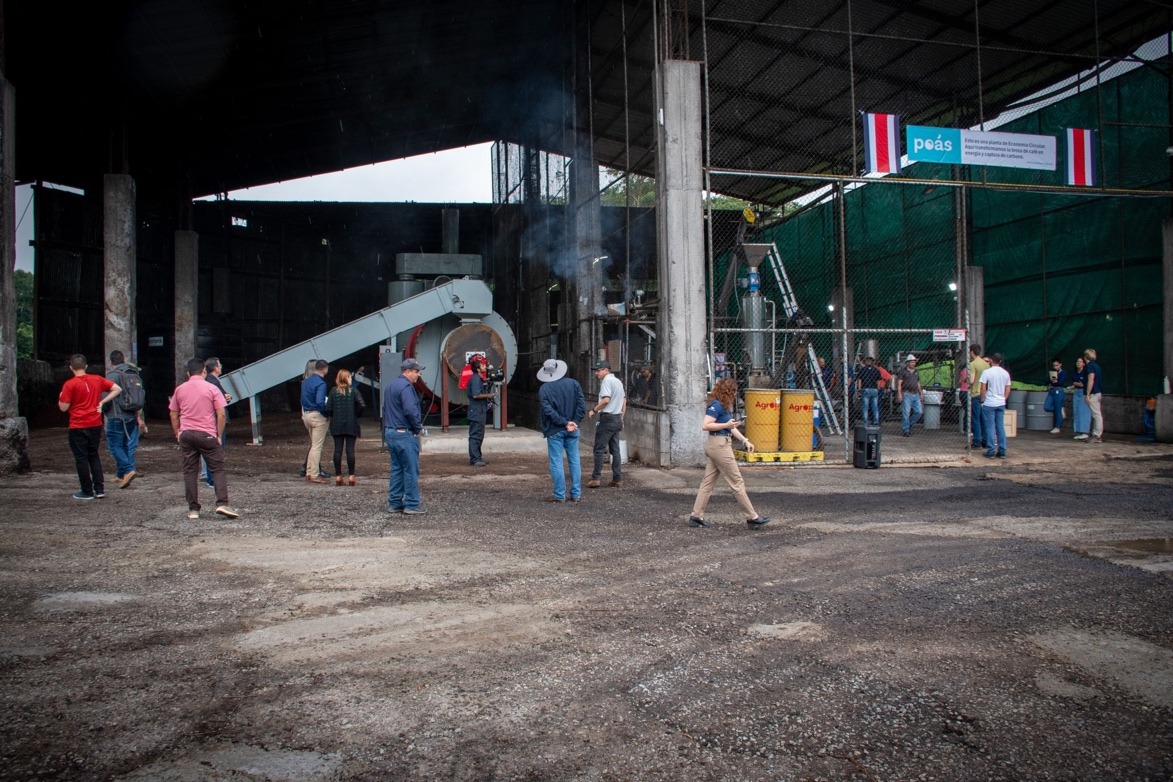
For example, Poas’s first commercial pilot is at a coffee mill in Costa Rica, where over 900 smallholder farmers deliver their product. “Every dollar Poas saves the mill in waste management by converting their residues to biochar goes directly to the bottom line of their farmers,” Jose says. “Furthermore, it gives us a channel to advertise the benefits biochar can have on their soils and a ready-made distribution center.”
As we look to the future, the next frontier for biochar lies not just in carbon credits, but in a world of uncharted opportunities – transforming waste, protecting water, and building more resilient communities.
View original content here.
Poas’s patented reactor – which produces biochar and captures syngas, a byproduct energy source that can be used on site – is used to dry coffee residues directly at Café de Altura in Costa Rica.
Find more stories and multimedia from Cisco Systems Inc. at 3blmedia.com.
Contact Info:
Spokesperson: Cisco Systems Inc.
Website: https://www.3blmedia.com/profiles/cisco-systems-inc
Email: info@3blmedia.com
SOURCE: Cisco Systems Inc.
View the original press release on ACCESS Newswire
NOT FOR DISTRIBUTION TO U.S. NEWS WIRE SERVICES OR DISSEMINATION IN THE UNITED STATES TORONTO,…
Aventura attorney recognized for work in personal injury litigation and medical malpractice law for plaintiffs…
US-based research peptide supplier broadens third-party analytical testing and per-batch Certificate of Analysis documentation across…
Sarasota digital agency recognized for client work and community investment across Manatee County SARASOTA, FL…
Food and Viewing Upgrades ATLANTA, GA / ACCESS Newswire / September 4, 2026 / As…
VANCOUVER, BC / ACCESS Newswire / September 4, 2026 / FutureGen Industries Corp. (formerly Right…