
Imagine Ads as Entertaining as Your Entertainment
Content Insider #929 – Search
By Andy Marken – andy@markencom.com
“Sometimes, to survive, you must become more than you were programmed to be. “– Roz, “The Wild Robot,” DreamWorks Animation, 2024
We were reminded of how much the industry has changed in the past few years and how utterly confused/confusing it is when we followed the ad upfronts early this year.
For people who absolutely hate ads like a couple of our normally “rational” friends, ads are the underpinnings of home and personal—and yes, theatrical–video entertainment.
Theatrical?

You think movie houses fill the first 30 minutes your seat is in the seat and are designed to prepare you for a fantastic group experience with 50-100 perfect strangers in a darkened room?
Nope!
That time is filled with ads from local companies/services and trailers of projects that will be shown in the future to convince you to come back for more expensive concessions with different strangers.
About $2.55B worldwide ($839M in the US) was invested to convince you to run out front to get more stuff to enjoy during the show, entice you to come back for another exciting film, where to eat after the movie or where to buy your next whatever.
But for folks who sell/buy their data-driven ads, that’s chump change.
This year, the total global TV and streaming ad sales are projected to reach $1 trillion.
And while linear TV (pay TV) sales are declining, ad-supported streaming is having a heyday as all of the services push to make some or more profit.
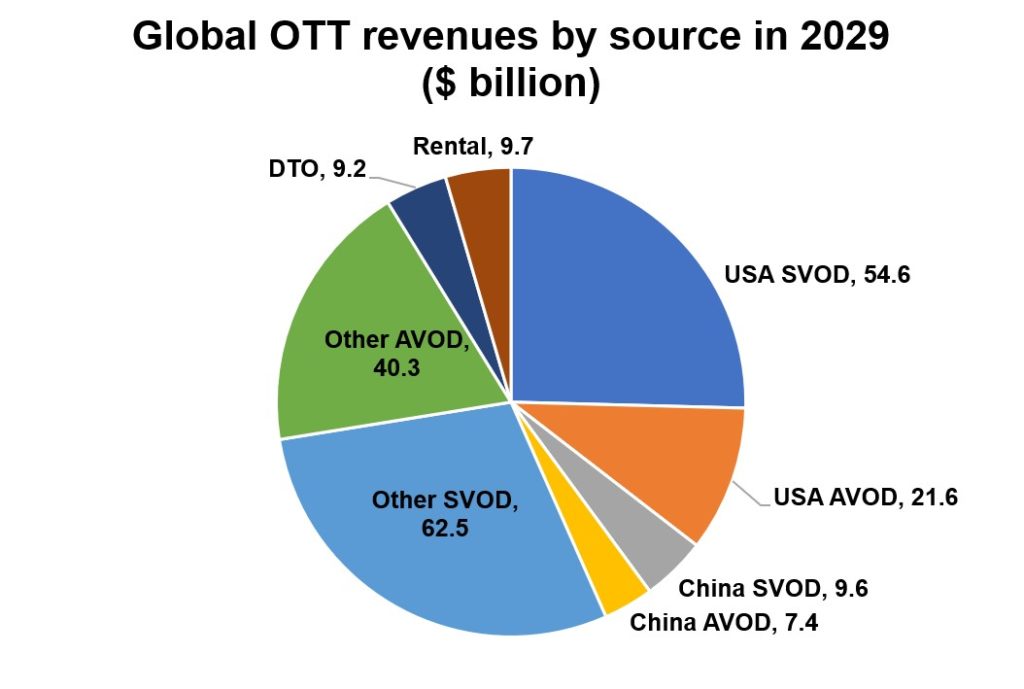
Subscription streaming movie/show services will rack up about $180B with ad supported services accounting for nearly $45B this year.
And the popularity of streaming is growing – rapidly – as is the number of ad-supported services.
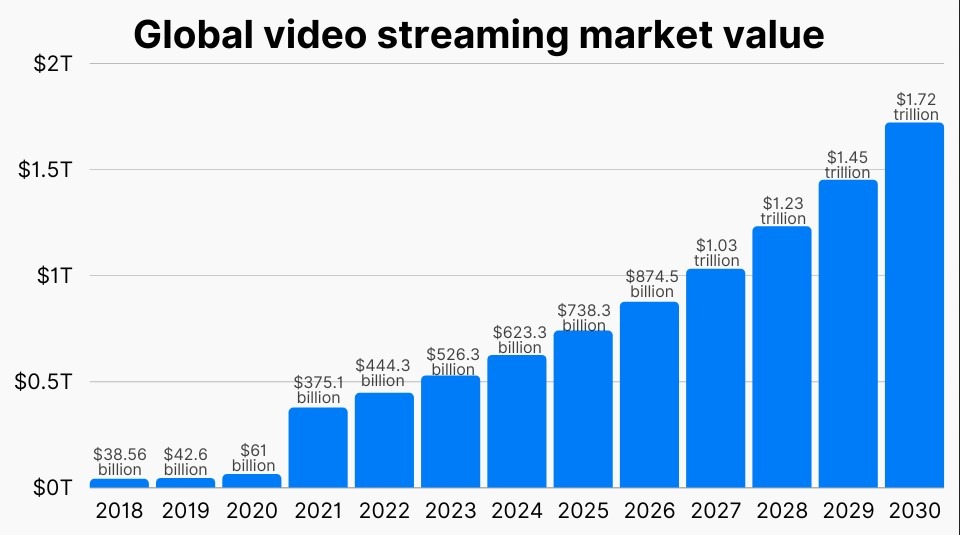
With an estimated 1.81B households having a TV, there’s still plenty of growth opportunities for the more than 200 streaming services around the world.
And with their ability to know everything about your viewing habits, what type of shows you like, what genre of movies you’re partial to, when you watch and on which screen; they’re increasing their understanding about your shifting entertainment habits and mood swings.
Yep, increasingly, they know more about you than you know about you.
But that’s sorta good because it helps them develop new shows/movies to offer to you when you sit down to just mindlessly relax.
You see, unlike the old days when studios/networks picked new movies/shows for their service, they were never quite sure of the outcome.
Back then, they’d wait for the Nielsen report the day after the show/movie appeared to see how many people actually watched the project to determine if it was worth their earlier investment or something they needed to replace as quickly as possible.
None of that second-guessing or blaming (replacing) the person who greenlighted the project.
They were pretty certain how good it was going to be because … you told ‘em.
No one knew/knows that better than the leader of the pack … Netflix.
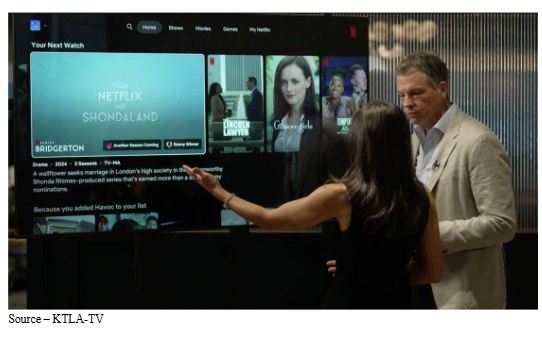
So when they rolled out their new home page – the first major refresh since 2013, it was big news and every streamer boss told her/his tech team to do a deep dive on it to find out what they did, how they did it and how they could “borrow” the best features for themselves.
Improving your home/personal entertainment experience is that important.
Yeah, it’s a cool design but more importantly, they highlighted stuff, moved things around, added neat little doodads and features, not just to make it nicer/easier for you but to keep their 340M subscribers from leaving Netflix and encourage them to tell anyone who will listen what a fantastic entertainment solution they provide.
Even Google’s YouTube paid attention, and they don’t borrow ideas from anyone.
And yes, you’re probably not going to like it because it’s “different” from the menu you’ve been using.
It happens every time services (video, music, gaming, etc.) add new features, capabilities and stuff.
But just calm down and work with it for awhile and you’ll find it won’t be long before you’ll think it’s better than ever … honest.
At the ad upfronts, they made a big thing about how much more meaningful information they were gathering that would be super helpful to advertisers who wanted to reach their audience efficiently and effectively.
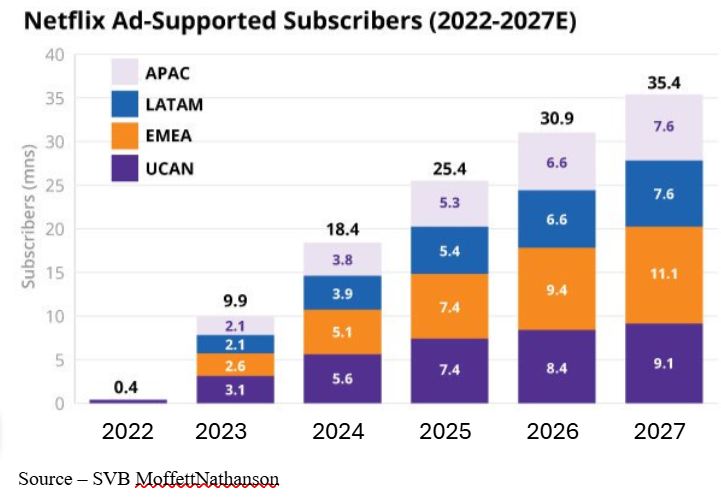
Headroom – There are plenty of opportunities to expand their ad-supported subscription service around the globe and continue the streaming video leader. In addition, it will significantly increase its profits.
True, it’s estimated that they “only” have about 25M AVOD subscribers right now (more than about half of the streaming services), but the numbers are growing … rapidly.
In addition, they know stuff – lots of stuff – about their audience that they’re willing to use to help advertisers do a better job of reaching/influencing folks instead of irritating them.
Of course, with all the AI technology that is being thrown at the industry, they are far from alone because now people know stuff … lots of stuff. Stuff like the fact that people really want fewer ads (typically 3-4 minutes of ads/hr.), they want them to be hyper-personalized, and they don’t want to see the same ads again and again and …

In addition, it helps them help advertisers be more efficient, more effective and less repetitively … boring!
Okay, so our never ads friends don’t agree; but then, people can agree to disagree without calling each other names … right?
The thing about the ad upfronts that really ticked us off this year was the brazen case the TV screen makers made to become the “official” gatekeeper between the streaming services and the home viewer.

Yes, we like our 50-in LG OLED screen, but we didn’t buy into the pitch the kid at the big box store presented when he told us how great our new, smart TV connection was going to be for us.
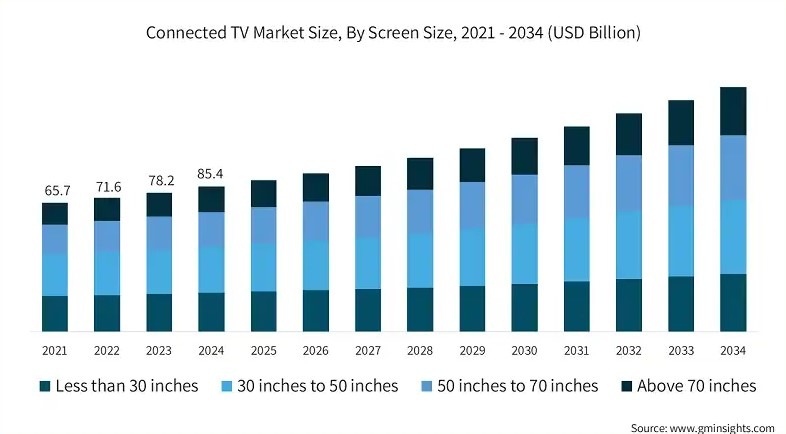
Screen Growth – 4K flat panel TVs have increased in sales as people want the “theatrical experience” in their home entertainment. At the same time, the industry has been able to maintain economic prices.
Yeah, we know every TV screen manufacturer now offers a smart/connected TV – LG, Samsung, Panasonic, Vizio (Walmart), TCL, Sony, Hisense, you name it.
According to Statista, 262.9M plus households have a connected TV in their home and smart TVs will top $246B – 147.2 users – this year.
All of them want to be the main portal for your smart home.
You’ll be able to control everything – thermostat, refrigerator, stove, auto vacuum, lights, security system, bed warmer, everything.
And it will even connect with your smart car.
OMG, it will be beautiful!
In addition, connecting your TV to the internet, your services and the world around you is a snap.
Sorry we just didn’t buy the pitch for a few reasons:
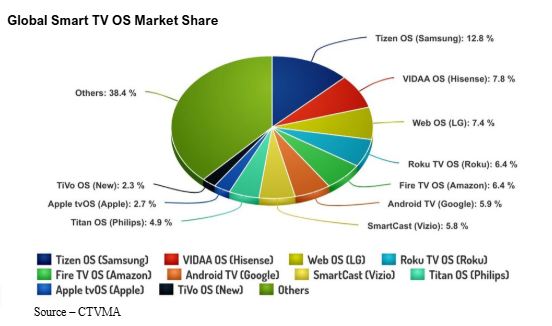
Wild West – The smart/connected TV market has become the wild west with everyone trying to have their “unique” operating system control the internet/app connection to the screen and gain a piece of the ad budget.
- There are just too many smart TV Oss, which means if we replace our LG set with Samsung or Sony or someone else who’s “hot” at the time, we have to change the set OS or hope the entire smart house is compatible … yeah, like that kind of “cooperation” exists.
- It has to be constantly updated with the newest releases and “added features.” And if they decide to no longer support that version of the OS, they assure us they will give you “a discount” to upgrade your screen and their OS … goodie.
- If it’s connected to everything in our smart home, then that also means: a) certain folks only have to penetrate one area to borrow all the data in the house, car and everything else that it touches and b) the more our house is connected the more things the smart TV guys/gals can monitor/check and encourage us to buy new/better appliances, etc. … nope.
But the thing that really tightens our jaws is that we paid full price for their screen so they can control the connection to our house, the internet and the world. At the same time, they intend on making more profit by streaming us ads because they’re the “gatekeeper” to our home/entertainment. IMO, that’s double-dipping!
We had to have a box with our old cable pay TV connection so having one with streaming seemed reasonable.
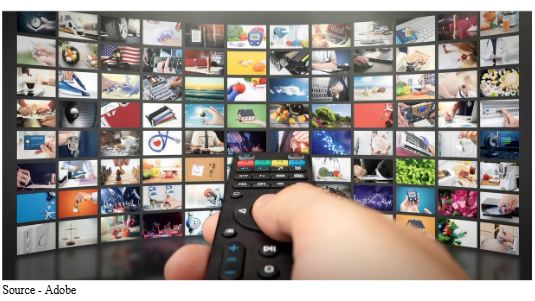
There are plenty to choose from – Apple TV, Roku, Amazon Fire TV and Google Chromecast as well as gaming consoles like Xbox, PlayStation and the powerful Nvidia Shield game/4K UHD streaming device which is the weapon of choice for our gaming friends.
They all connect to the internet, you can add the gaming/streaming apps, browse the web and yes, they’ll serve up ads.
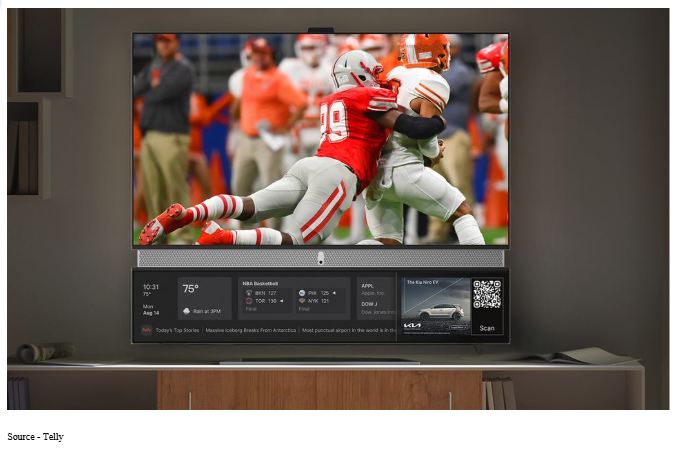
If the smart TV folks were a little more upfront about things like Telly (https://tinyurl.com/533mm8k2) that offers you a free 55-in theater display screen and a second smart screen, six speakers and more. It would be nice. Sure, there’s a catch.
You have to let them stream ads to the set’s bottom screen which “pays” for the TV and a little profit for them.
Hey, there’s no such thing as a free lunch!
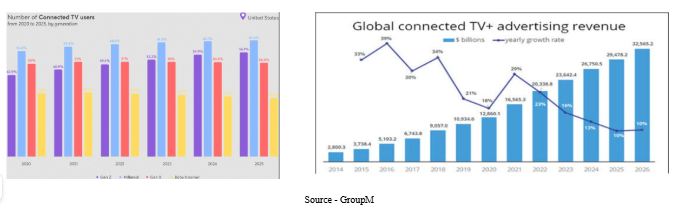
Connected Ad Growth – The interest in having a connected TV in their home is universal among all age groups. The growing ability to more accurately reach specific individuals who are most likely to be interested in your product/service will continue to grow despite the recent/temporary disruptions of the world market. Once people can count on a predictable future, advertisers and consumers will return to their investments in tomorrow.
Connected TV penetration in homes around the globe will continue to grow and so will connected TV advertising.
Netflix may have won the streaming wars, but the improvement of connected TV advertising will make entertainment and marketing better for everyone.
The increased use of data-driven advertising will enable marketers to quickly, easily and effectively show ads specific to where you live, based on your viewing habits and ads that are appropriate for your income level, gender and age–all based on still private but very accurate first-party data.
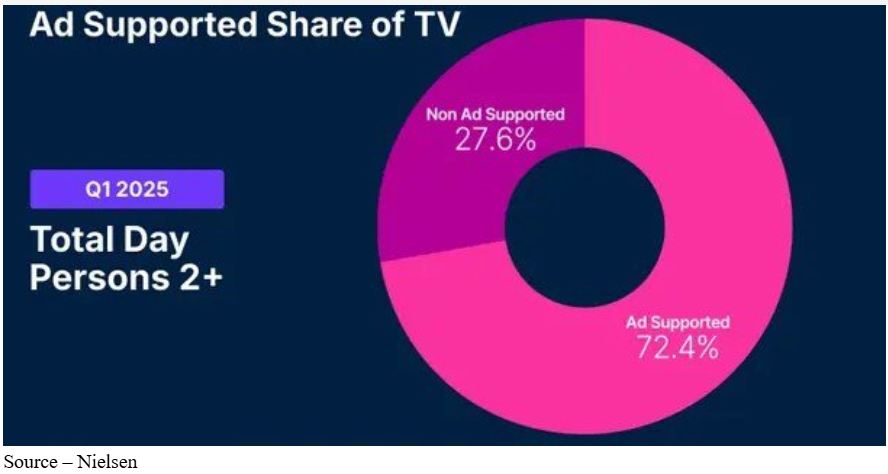
There will always be those people who are willing to pay their streaming service for the privilege of avoiding ads but we believe that number will decrease when the ad delivery and ads become more intelligent, less abrasive, more selective, less frequent and more educational, informational and … entertaining.

The enhancements will benefit everyone especially viewers because soon you’ll be getting the complete package and it will enable The Wild Robot’s Roz to confidently tell you, “I still heard you. Because I was listening with a different part of myself. Wherever that is, that’s where I keep me.”
Think about it.
Your entertainment will be more entertaining, and your ads will be more engaging, more effective, more entertaining.
Soon … very soon–we hope.
Andy Marken – andy@markencom.com – is an author of more than 800 articles on management, marketing, communications, industry trends in media & entertainment, consumer electronics, software and applications. An internationally recognized marketing/communications consultant with a broad range of technical and industry expertise especially in storage, storage management and film/video production fields; he has an extended range of relationships with business, industry trade press, online media and industry analysts/consultants.