A Little Creative AI is Fine, But…
Content Insider #923 – Rogues
By Andy Marken – andy@markencom.com

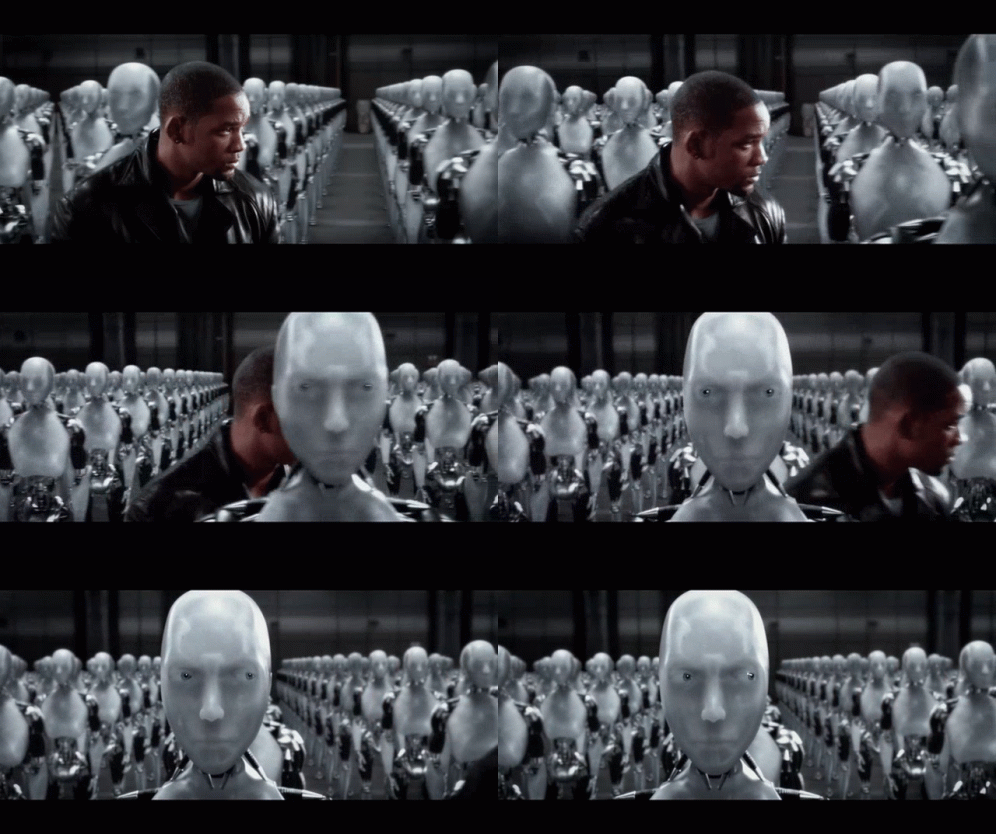
“There have always been ghosts in the machine. Random segments of code, that have grouped together to form unexpected protocols. Unanticipated, these free radicals engender questions of free will, creativity, and even the nature of what we might call the soul. – Dr. Alfred Lanning, “I Robot,” 20th Century Fox, 2004
Let’s first say we’re not really anti-AI and we’re a long way from all in pro-AI.
Let’s simply say we’ve never seen a movie that ended well when AI was wantonly released to do its own thing.
And everyone knows what follows AI. Yes, robots because “they” like to say that AI will give you a little freedom. But add a few robots to take over your mundane tasks and you’ll have even more freedom.

Perhaps that’s why AI was one of the biggest hurdles the industry faced a couple of years ago during the dual writers/actors strikes and it’s still that … a hurdle.
The unions did their darndest trying to set up definitive guardrails to protect creators (people types) but that has been and will continue to be difficult.
The problem is, AI is everything and it’s nothing.

It’s just something looming out there until management, creatives, technologists step in and use it to do their thing … entertain folks.
Back at his last Disney shareholder meeting, CEO Bob Iger said, “AI may be the most powerful technology that our company has ever seen.”
Jeez, that’s putting it mildly.
Disney has already begun using it to speed Imagineering’s animation workflow.
Post production/VFX teams have been using AI-enriched Adobe, Avid, internally developed and other tools and processes to help audiences connect with characters/storylines more quickly to enjoy the films/shows.
The biggest concern for IP owners like Disney that have huge vaults of valuable intellectual property is that their application of AI might end up “copying/borrowing” from the past and diluting the worth of the valuable property.
Once it’s out in the unfettered public, the value goes down dramatically.
The problem is there are two opposing segments of the service/support groups with significantly different goals.
First, there are the organizations that are embedded in and committed to the creative industry to help them develop/create future content growth – Avid, Adobe, and a bed rock of services and products.
Then there are the AI folks – OpenAI, Google DeepMind, Anthropic and other AI organizations including China’s DeepSeek – who want their technology distributed and used as broadly/quickly as possible.
Their approach/goal is to develop and release new versions as rapidly as possible and as entertainment folks say … fix it in post.
This is especially as AGI (artificial general intelligence) begins to appear on the horizon.
Hey, technology that can match/exceed human-level performance, never gets tired/wants a break, never asks for a raise and is willing to work for a few kilowatts of power … great!
We won’t make that major leap into darkness because there are too many areas where it is being successfully used to the benefit of the studio/streamer, creatives and content consumer.

The areas where it is being used successfully include:
- Preproduction/scriptwriting assistance
- Content creation, personalization
- VFX, CGI, post
- Pre/post audience engagement, analysis
Yes, in each of these areas there will be some people replaced by automation; but we’re optimistic that most of these positions will be revised, expanded by the next generation of creatives to make their work more interesting/fulfilling and fewer projects will be delivered that sorta, kinda, maybe … suck.
Pre/Post
While they are at different sides of the spectrum, we view the pre and viewer feedback uses of AI as intertwined because to a large extent they’re based on subscriber/viewer data.
Perhaps the most successful in leveraging this data has been Netflix because it was early to capture, process, mine and make decisions based on viewer data globally and in each country it is in. It is in 190 countries where it determines which projects to acquire/greenlight and project/genre mixtures that will attract and retain subscribers.
Also successful are Amazon Prime and Disney (a creative studio that has increasingly built its success by understanding and knowing how to use technology to capture more and more viewer data).
Today, instead of having data that scientists pour through to make sense of it, AI is used to focus on people’s key pressure/decision points.
The technology helps management and creative teams better understand what viewers are feeling/experiencing based on the shows/movies they watch, when they watch them, how long they watch them and when/why they disconnect with the video story.
We know it sounds boring as h*** and it is to everyone but data analysts who really get off on that sorta stuff.
The information that comes out of that data doesn’t dictate a project, write the script/shot list or honestly even ensure that the finished project is going to be a winner regardless of where people put their seats.
But it provides some guidelines that give creatives a better idea that the final film/show is going to attract and keep audiences seated till the end.
And that, not reviewers’ analysis/discussion is really what counts to people involved in the video story.

That’s how anyone in the creative industry wants — keep people from getting up and leaving the theater/room, falling asleep or getting ill. Instead, they stay involved in the story until the closing credits and then sit back or go out and tell others… “Gawd that was good!”
Viewers are happy, studio/streamer bosses/shareholders are happy, and yes, everyone involved in the project is proud of what they created/delivered regardless of what some overbearing critic has to say.
Show/film production has always been a labor-intensive ordeal with teams of folks working together locally and remotely. Selective use of AI-powered tools can streamline and speed various aspects of the projects.

AI is already widely used by studios/streamers to determine projects even before the first frame is shot.
One of the first uses of AI type tools was with products like ScriptBook which analyzes/evaluates scripts, can project proposed success and recommend changes which can be considered/implemented to improve audience acceptance.
If this feels a little “sterile,”it is but then, the analytical aspect of it helps reduce the writers’/directors’ emotional attachment to segments, locations, and other aspects so all of the team can focus on arriving at a script and project that attracts/involves the audience.
But when it comes to actual script writing, we agree with WGA … the stuff stays out of the writers’ room.
AI can consume vast amounts of film/story data from across time, analyze the strengths/weaknesses and even make suggestions/recommendations but it can’t feel or express emotion.
That’s what we watch movies/shows to connect with because it could check all the boxes technically but if it doesn’t resonate with the viewer, it’s just … nice!

AI has great potential to simplify the pre-production process by helping to plan schedules, find locations that best fit the storylines and support in other preparatory processes.
Implementing AI will automate the planning of shooting schedules according to the availability of actors that will save time and increase efficiency.
In addition, AI systems can analyze the locations described in the screenplays and recommend actual sites for shooting the scene, saving lots of resources in location scouting.
Teams are increasingly using AI tools to help plan schedules/production windows. It can also find just the right locations that work well within the storyline and the budget as well as support the preparatory processes including even recommending actors for specific roles based on predetermined criteria including emotion they project.
The area where we have mixed feelings about is character manipulation/making.

Some films have used deepfakes to de-age actors in The Irishman; and heavy makeup work and CGI has been used extensively but both are time-consuming and project budget killers in today’s cost-reduction environment.
But the aging/deaging of Tom Hanks in Here would have time- and budget-prohibitive without AI tools.
There has been a constant battle when it comes to deepfakes with some studios/project owners initially having background actors have pictures of them taken during a project so they “might” be used in future projects.
In other words, one project, one paycheck and they own your image going forward.
Well, that worry has been taken off the table and agreements have to be signed that clarify that the individual owns her/his image/voice in perpetuity.
Scarlett Johansson and others have challenged – and won – studios and AI techies on their use of their physical likeness and voice so that concern should be put to bed.

Hanks has said publicly that he is willing to sign an agreement that would authorize “someone” to use his likeness in projects after he retires or dies with the agreement that his beneficiaries be paid for his “future work” and they have final decision approval as to “his” appearances.
Personally, we would love to see Chad Boseman, Brandon Lee, Patrick Swayze and several other actors in projects they never got to perform in but watching some deepfake of them?
Nope … that’s BS!
We’ll settle for rewatching the old stuff and celebrate/enjoy what they actually did because we’ll know they’re realistic, not real.
That makes a huge difference that any seat in the seat can understand, embrace.

Adobe rolled out a ton of new features, capabilities and services this year at NAB for Adobe Firefly and their Creative Cloud.
The new AI solutions still keep the creative production pro squarely in control of the production/post process but most attendees at the show said it relieved them of a lot of the drudge/grunge work and enabled them to focus on the fun, important stuff … the creative post production.
VFX and CGI have taken giant leaps forward in improving project quality/appearance while dramatically reducing the cost and postproduction time requirements.
The new tools have enabled James Cameron to reduce the total cost of the upcoming Avatar 3” Fire and Ash while making dramatic advances in the film’s “look and feel.”
As with The Planet of the Apes, it will be very interesting to see how the new technologies have been used to make the film real rather than artificial.
That’s the real test!
While China’s Ne Zha 2 surprised almost everyone by capturing the interest and ticket investment around the world this year, Disney’s Inside Out 2 production team can still be proud of the VFX work they did to deliver a great film for people of all ages.
In all of the above projects, it’s amazing to see what a dedicated and creative artists can do with AI and advanced tools to make a good video story great and a great film/show mind boggling.

And, thanks to today’s global streaming services, we get the opportunity to enjoy international projects right at home.
Before, finding and watching them usually meant hunting down an art theatre and watching whatever they offered.
Prior to the introduction of AI localization tools, lip-syncing and matching facial expressions was really expensive and time-consuming and even adding subtitles wasn’t cheap.
But with AI-enabled subtitling tools, it quickly became economic and is increasingly accepted by audiences around the globe.
Allan McLennan, president/CEO of PADEM Media Group, emphasized that James Cameron made a fast turnaround of the initial release of Avatat Blockbuster in nearly 50 subtitled languages, but it was Bong Joon Ho’s Parasite that proved English-speaking audiences told studios that they were more interested in the content rather than the audio delivery.
McLennan noted, “Now that studios and streamers are able to quickly, effectively and economically translate and add the appropriate subtitles with AI-enabled tools, more very interesting projects from Africa, Central/South America, SEA are finding new audiences regardless of where they have been created.”
We enjoy hearing the film/show in the native language but also being able to follow the dialogue on the bottom inch of the screen. That includes a lot of “English” projects from Australia, Canada, British Isles; and at times, even those produced in the US.

But the biggest subscriber issue streamers haven’t solved is helping viewers find the show/movie they might want to watch if it happens to be in “the other service’s” library.
They have all of our subscription/viewing history so they probably know better than we do what stuff in their library we’d probably find interesting.
The problem is we have three ad-supported and two FAST services and sometimes we catch a trailer or review on a project we think we might be interested in.
Yeah, good luck in finding it!
Open any one of them and even before you can tell it what you’re really interested in, the service simply says, “Here’s a list of stuff you’ll like so … keep subscribing.”
After 10-15 minutes of searching, we usually simply “settle” on something or dumb luck leads us to the video project we were looking for.
Someday, they’ll agree not to just go back to the old bundling solution but an intelligent front end that let’s you sign in and check out which shows/movies you want across all of your subscription services.

Yeah right!
Okay, maybe that’s not an AI tool they’ll develop and release to streaming users but…
There are still plenty of tools streamers and creatives will embrace.
Front end tools that help streamer/studio bosses determine which projects are going to resonate with seats in seats?
Sure!
We all know bosses don’t want to be wrong … especially when their job is on the line.
Subscriber/viewer tools that make it easy to choose the next show/movie to watch so the subscriber doesn’t have to think?
Sure!
After “one of those days,” all folks want to watch what they want to watch without a lot of decision making.
Creators will embrace the pre project/production work because jeezz, it’s a real pain in the behind, not really creative but rather necessary “busy work.”
We’re already knee deep in VFX. CGI and production/post people are doing some fantastic work with AI tools to turn out great projects and still get home in time for dinner.
But the idea that AI is going to write and produce a film/show from beginning to end?

Nope … that dog ain’t gonna hunt!
Oh sure, techies would love to see their s**t make a movie and maybe/probably some viewers wouldn’t see the difference between the human and AI projects, but real creatives would.
In addition, they’ll laugh their ***es off when I Robot’s Spooner looks at them and says, “You must be the dumbest, smart person in the world.”
After all, no one would put their money on the line because once that project was released, there would be nothing to copyright and make a profit on.
And if you can’t copyright it, you can’t get an award/statue and folks who aren’t really creative or scrupulous will strip off and monetize/sell the stuff that’s valuable leaving the studio, streamer, creative with a ravaged idea.
As Spooner said, “Human beings have dreams. Even dogs have dreams, but not you, you are just a machine. An imitation of life.”
It’s okay that you use the tools today as long as everyone stays alert as to how it’s going to affect and impact the creative work you want to do and view tomorrow.
Forget the “we’re here to help you, make your job easier,” BS from Open AI and the rest.
They think a show without feeling, without emotion, without conscience is really cool.
Andy Marken – andy@markencom.com – is an author of more than 800 articles on management, marketing, communications, industry trends in media & entertainment, consumer electronics, software and applications. An internationally recognized marketing/communications consultant with a broad range of technical and industry expertise especially in storage, storage management and film/video production fields; he has an extended range of relationships with business, industry trade press, online media and industry analysts/consultants.